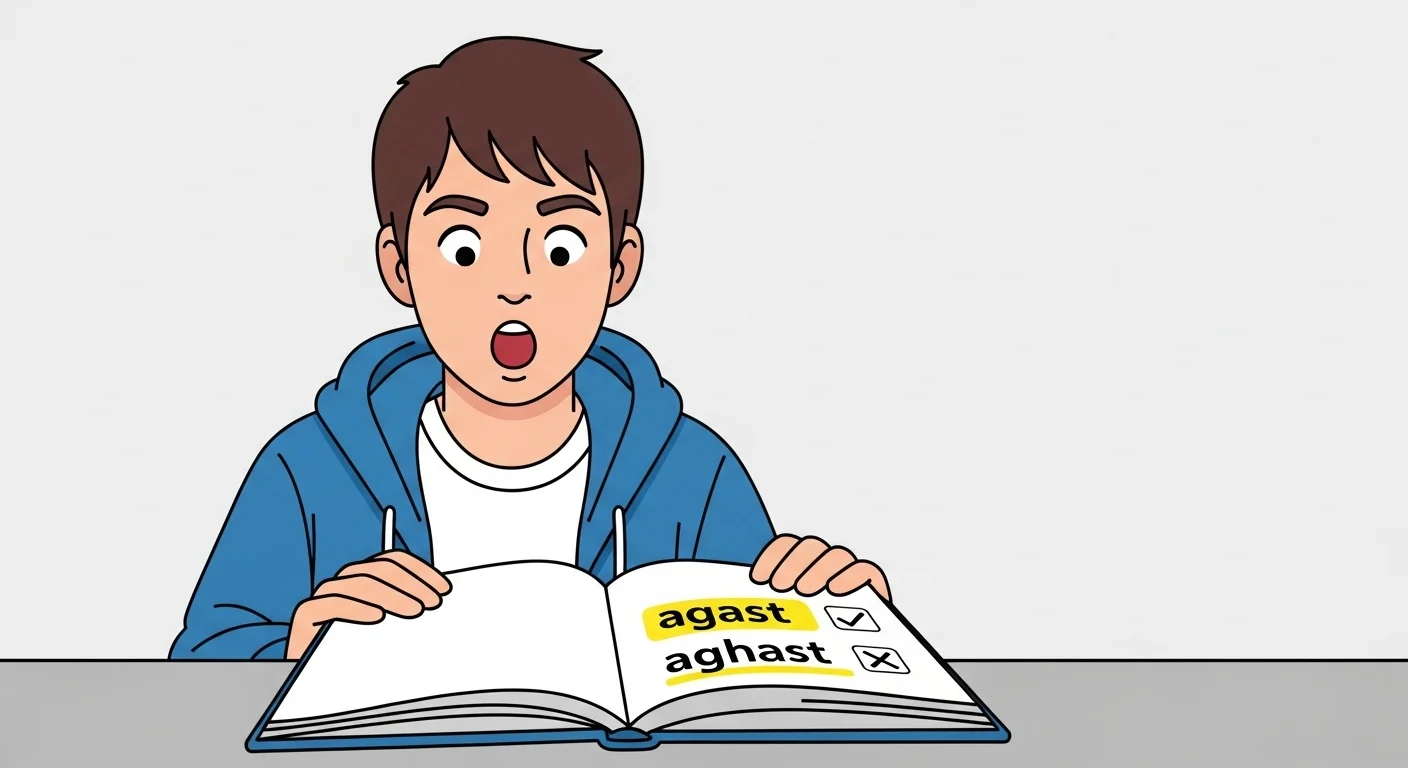
Many learners get confused between agast and aghast because they look almost the same. Just one small letter makes them different. But this small change also creates a big difference in meaning.
The truth is simple: one of these words is correct in English, and the other is usually a mistake. In this article, you will learn the clear difference in very easy English so you never feel confused again.
Quick Answer
- Aghast is a correct English word
- It means feeling very shocked, surprised, or upset
- Agast is not a standard English word
- It is usually a spelling mistake of aghast
Simple Origin or Background
The word aghast comes from an old English word that means “to frighten” or “to shock.” Over time, it became a word used to describe a strong feeling of surprise or fear.
The spelling agast sometimes appears in very old texts, but in modern English, it is not used. Today, people use aghast as the correct form.
Clear Explanation of the Difference
Let’s make this very simple.
What does “aghast” mean?
Aghast is an adjective. It describes a feeling.
When you are aghast, you feel:
- Very shocked
- Very surprised
- Sometimes upset or worried
Example:
- I was aghast when I heard the news.
This means the person felt very shocked.
What about “agast”?
Agast is not used in modern English.
If you see it, it is most likely:
- A spelling mistake
- A typing error
- Or very rare old English usage
So, in everyday writing and speaking, you should not use “agast.”
Comparison Table
| Feature | Aghast | Agast |
| Correct word | Yes | No |
| Meaning | Shocked or very surprised | No clear meaning today |
| Usage | Common in English | Not used |
| Part of speech | Adjective | Not standard |
| Example | She was aghast at the news | Incorrect usage |
Which One to Use and When
You should always use aghast when you want to show strong surprise or shock.
Use aghast in sentences like:
- I was aghast at his behavior.
- She looked aghast after hearing the story.
- They were aghast at the sudden change.
Avoid using agast because it is not correct in modern English.
A simple rule to remember:
- If you want to express shock, use aghast
- Never use agast in normal writing
Common Mistakes People Make
Here are some mistakes learners often make:
1. Dropping the “h”
Many people write agast instead of aghast.
Incorrect:
- I was agast to see the result.
Correct:
- I was aghast to see the result.
2. Thinking both words are correct
Some learners think both spellings are fine. This is not true.
Only aghast is correct today.
3. Using the word in the wrong way
Some people try to use aghast as a verb.
Incorrect:
- I aghast when I saw it.
Correct:
- I was aghast when I saw it.
4. Confusing it with similar looking words
Words like “against” or “adjust” may look similar, but they are completely different in meaning.
Everyday Real-Life Examples
Here are simple examples from daily life to help you understand better.
In emails
- I was aghast to learn about the mistake in the report.
- We were aghast at the sudden cancellation of the meeting.
In news
- People were aghast at the unexpected event.
- The public was aghast after hearing the shocking news.
On social media
- I am aghast at what just happened.
- Everyone is aghast right now.
In daily conversation
- She looked aghast when she saw the mess.
- He was aghast at the price of the product.
Short Learning Section for Students and Beginners
Here is a simple way to remember the difference:
Memory trick
Think of the letter h in aghast as standing for shock or heart-stopping surprise.
- Aghast = has “h” = strong shock feeling
- Agast = no “h” = wrong spelling
Practice sentences
Fill in the blank:
- I was ______ when I saw the damage.
- She looked ______ after hearing the news.
- They were ______ at the sudden change.
Answers:
- aghast
- aghast
- aghast
FAQ Section
1. Is “agast” a real English word?
No, it is not used in modern English. It is usually a spelling mistake of “aghast.”
2. What does “aghast” mean in simple words?
It means feeling very shocked or very surprised.
3. Can I use “agast” in formal writing?
No, you should never use “agast” in formal or informal writing.
4. Is “aghast” a verb or adjective?
It is an adjective. It describes a feeling.
5. How do I use “aghast” in a sentence?
You can say:
- I was aghast at the news.
6. Why do people write “agast”?
Because they forget to include the letter “h” or do not know the correct spelling.
7. Is “aghast” a common word?
Yes, it is quite common, especially when talking about shocking or surprising situations.
8. What is a simple synonym for “aghast”?
Some simple words are:
- shocked
- surprised
- amazed
Conclusion
The difference between agast and aghast is very simple once you understand it.
- Aghast is the correct word. It means feeling very shocked or surprised.
- Agast is not correct in modern English and should be avoided.
Always remember to include the letter h in aghast. That one small letter makes your writing correct and clear.
With this simple understanding, you can now use the word confidently in your daily writing and speaking.