Many learners feel confused when they see the words “insue” and “ensue.” They look very similar, and both seem like real English words. Because of this, people often use them without knowing which one is correct.
The truth is simple: one of these words is correct, and the other is not a standard English word. In this guide, you will learn the clear difference in very easy English so you never feel confused again.
Let’s make it simple and clear.
Quick Answer
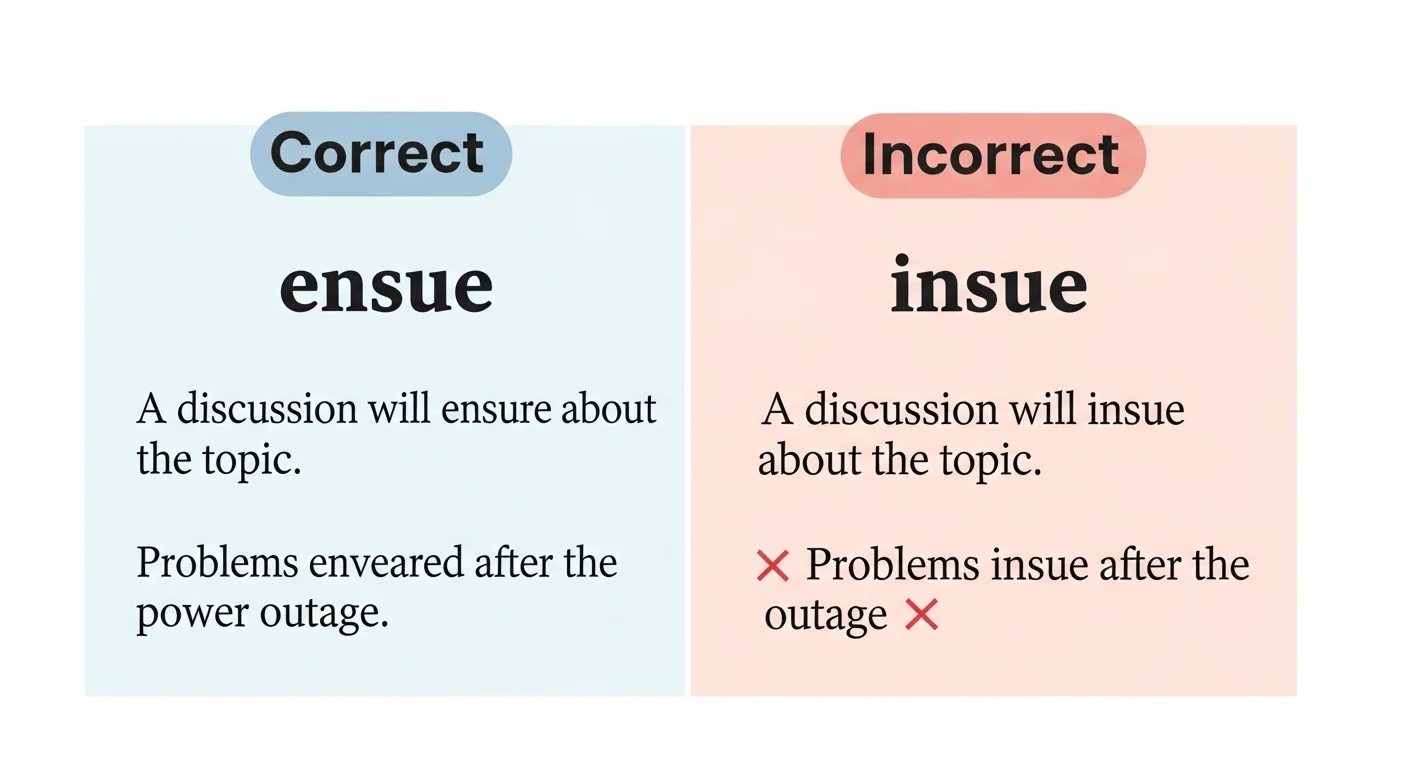
- Ensue is the correct word
- Insue is not a correct spelling in modern English
- Use ensue when you mean “to happen next” or “to follow after something”
- Avoid using insue in writing and speaking
Simple Origin or Background
The word ensue comes from an old French word that means “to follow.” Over time, it became part of English and kept the same basic meaning.
The word insue is not part of standard English. It may appear because of spelling mistakes or confusion with similar words like “issue” or “ensure.”
So, the confusion usually happens because:
- The words look similar
- People guess the spelling
- Some learners are not sure how to pronounce “ensue”
Clear Explanation of the Difference
What Does “Ensue” Mean?
Ensue means something happens as a result of something else. It usually comes after an action or event.
Think of it like this:
👉 First something happens
👉 Then something else follows
That second thing is what “ensue” describes.
Examples:
- A big argument started, and chaos ensued.
- The rain stopped, and silence ensued.
- If you don’t study, problems may ensue.
What About “Insue”?
Insue is simply a mistake.
It is not used in correct English writing. If you see it, it is likely:
- A spelling error
- A typing mistake
- Confusion with another word
So, you should not use “insue” at all.
Comparison Table
| Feature | Ensue | Insue |
| Correct word | Yes | No |
| Meaning | To happen next | No meaning |
| Usage | Common in writing | Not used |
| Example | Trouble ensued | Incorrect form |
| Should you use it | Yes | No |
Which One to Use and When
You should always use ensue when you want to show that something happens after something else.
Use “ensue” when:
- You describe results
- You talk about what happens next
- You explain outcomes
Examples:
- After the announcement, confusion ensued.
- If the rules are broken, punishment will ensue.
- The meeting ended, and a discussion ensued.
Do NOT use “insue”
Instead of writing:
❌ Problems will insue
Write:
✅ Problems will ensue
Common Mistakes People Make
Here are some common mistakes learners make with these words:
1. Spelling mistake
Many people write “insue” instead of “ensue.”
✔ Correct: ensue
❌ Incorrect: insue
2. Mixing with similar words
People sometimes confuse “ensue” with:
- Ensure
- Issue
- Pursue
These words have different meanings.
3. Wrong pronunciation
Some learners mispronounce “ensue,” which leads to spelling errors.
Correct pronunciation sounds like:
en-soo
4. Using “ensue” in the wrong context
“Ensue” is used for results, not actions.
❌ I will ensue my plan
✅ I will follow my plan
✔ Correct use:
A problem may ensue
Everyday Real Life Examples
Let’s look at how “ensue” is used in daily life.
In Emails
- If the payment is late, extra charges may ensue.
- Please follow the rules, or issues may ensue.
In News
- The protest began, and violence ensued.
- Heavy rain started, and flooding ensued.
On Social Media
- He posted a joke, and drama ensued.
- One comment led to a long debate that ensued.
In Daily Conversations
- Don’t start that topic, or an argument will ensue.
- She forgot the keys, and panic ensued.
Short Learning Section for Students and Beginners
Here is an easy way to remember:
👉 Ensue = comes next
Think of it like a chain:
Event 1 → Event 2 (ensue)
Simple Practice
Fill in the blank:
- He shouted, and silence ______.
- If you break the rules, trouble will ______.
- The lights went out, and fear ______.
Answers:
- ensued
- ensue
- ensued
Easy Tip
Whenever you think of “what happens next,” use ensue.
FAQ Section
1. Is “insue” a real English word?
No, “insue” is not a correct English word. It is a spelling mistake.
2. What does “ensue” mean in simple words?
It means “to happen next” or “to follow after something.”
3. Can I use “insue” in formal writing?
No, you should never use “insue” in any type of writing.
4. What is the past form of “ensue”?
The past form is ensued.
Example: A fight ensued.
5. Is “ensue” a formal word?
Yes, it is more common in formal or semi formal writing, but it is also used in daily speech.
6. What is a simple synonym for “ensue”?
Some simple similar words are:
- Follow
- Happen
- Come next
7. Why do people confuse “insue” and “ensue”?
Because they sound similar and look similar when written.
8. How can I remember the correct spelling?
Remember this:
👉 “En” in ensue = event next
Conclusion
The difference between “insue” and “ensue” is very simple once you understand it clearly.
- Ensue is the correct word and means something happens after something else
- Insue is just a spelling mistake and should not be used
Whenever you want to talk about what happens next, choose ensue. With a little practice, you will never confuse these words again.
Keep learning step by step, and your English will become stronger every day.
Understand insue vs ensue easily.