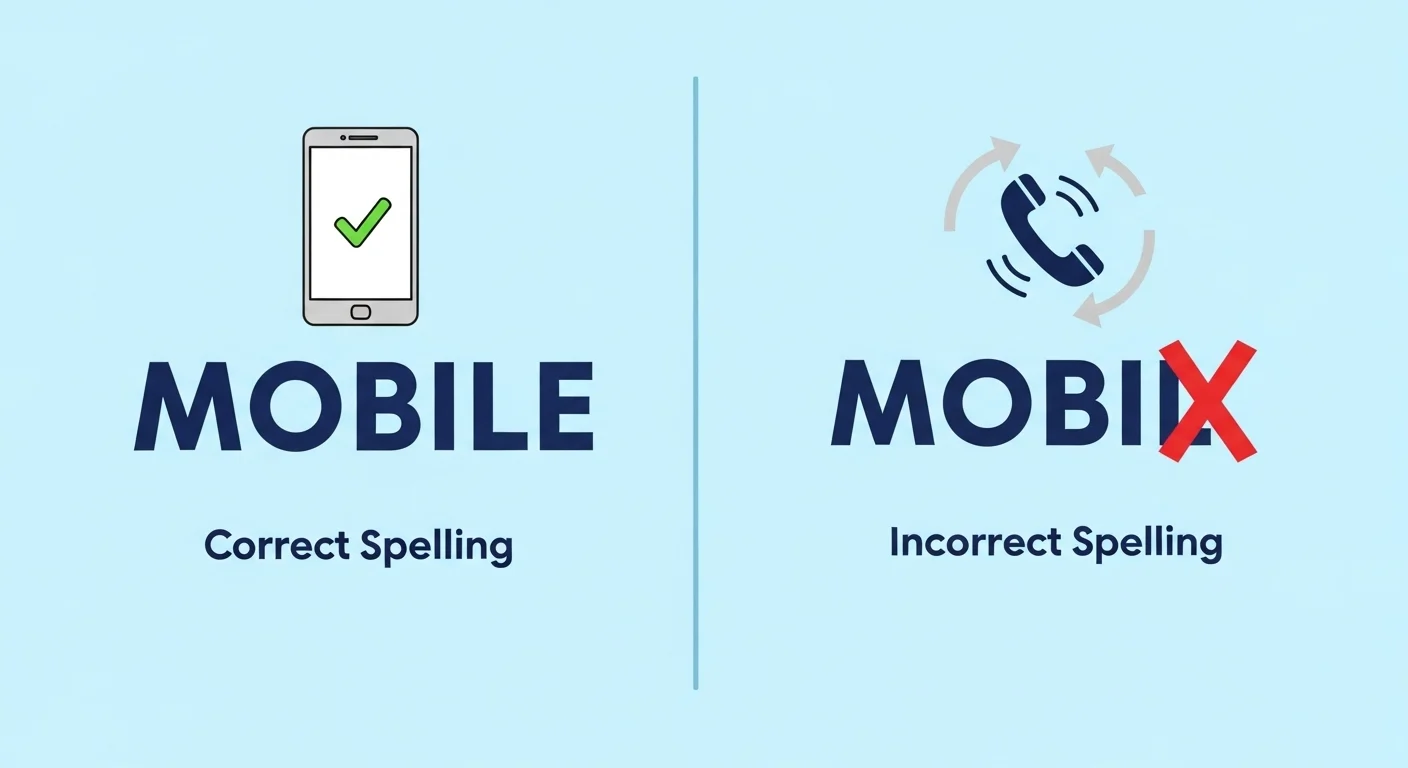
Many people feel confused when they see the words mobil and mobile. They look almost the same, and the only difference is one extra letter at the end. Because of this, students and English learners often wonder if both words are correct or if they have different meanings.
This confusion usually happens when typing quickly or when learning spelling rules. The good news is that the difference is very simple. Once you understand it, you will never mix them up again.
Let’s make everything clear step by step.
Quick Answer
- Mobile is the correct English word
- Mobil is usually incorrect in everyday English
- Use mobile when talking about phones, movement, or things that can move
- Avoid mobil unless it is part of a name or brand
Simple Origin or Background
The word mobile comes from Latin. It means “able to move.” Over time, this word became part of everyday English.
Today, mobile is used in many ways:
- Mobile phone
- Mobile app
- Mobile device
- Something that can move easily
The word mobil, on the other hand, is not commonly used as a normal English word. It sometimes appears in names or special cases, but not in regular writing.
So, in simple terms:
- Mobile has a clear meaning and history
- Mobil is not used in standard English sentences
Clear Explanation of the Difference
What does “mobile” mean?
Mobile is an adjective and sometimes a noun.
As an adjective, it means:
- Able to move
- Not fixed in one place
Examples:
- This chair is mobile and easy to move
- He needs a mobile device for work
As a noun, it can mean:
- A mobile phone
Examples:
- I forgot my mobile at home
- She bought a new mobile
What does “mobil” mean?
Mobil does not have a standard meaning in everyday English. It is not used in normal sentences.
However, you might see mobil in:
- Brand names
- Company names
- Special terms
But for general writing and speaking, you should not use mobil.
So remember:
- Mobile = correct and useful word
- Mobil = not used in normal English
Comparison Table
| Feature | Mobile | Mobil |
| Is it a real word? | Yes | Not in general use |
| Meaning | Able to move or phone | No clear meaning |
| Usage | Very common | Rare and special cases |
| Correct spelling | Yes | Usually incorrect |
| Example | I use a mobile phone | Not used in sentences |
Which One to Use and When
You should use mobile in almost all situations.
Use mobile when:
- Talking about phones
- Talking about movement
- Talking about technology
Examples:
- I need a mobile charger
- This is a mobile application
- The team works in a mobile office
Do not use mobil in normal writing.
Only use mobil if:
- It is part of a name
- You are copying a specific title
For everyday English, always choose mobile.
Common Mistakes People Make
1. Dropping the “e” at the end
Many people write mobil instead of mobile by mistake.
Wrong:
- I bought a new mobil
Correct:
- I bought a new mobile
2. Thinking both are correct
Some learners believe both words are correct.
Truth:
- Only mobile is correct in normal English
3. Typing too fast
When typing quickly, the last letter “e” is often missed.
Tip:
Take a moment to check your spelling.
4. Confusing with other similar words
English has many words with silent letters, so learners sometimes remove them.
But in this case:
- The “e” in mobile is important
5. Copying incorrect spelling
Sometimes people learn the wrong spelling from others.
Always double check new words you learn.
Everyday Real Life Examples
Here are some simple examples of how mobile is used in daily life.
In Emails
- Please contact me on my mobile
- I will send the file to your mobile device
In News
- Mobile technology is growing fast
- Many people use mobile banking today
On Social Media
- I posted this from my mobile
- This app works best on mobile
In Daily Conversations
- Where is my mobile
- My mobile battery is low
- She uses her mobile for studying
These examples show that mobile is a very common and useful word.
Short Learning Section for Students and Beginners
Here are some easy tips to help you remember the correct word.
1. Always add “e” at the end
The correct spelling is:
- m o b i l e
2. Think of “phone”
When you hear mobile, think of a phone.
This helps you remember the correct word.
3. Practice simple sentences
Write and speak:
- I use a mobile
- My mobile is new
4. Read more
When you read books or messages, notice how mobile is used.
5. Check your writing
Before sending messages, check if you wrote mobile, not mobil.
FAQ Section
1. Is “mobil” a correct English word?
No, mobil is not used in normal English. It is usually a mistake.
2. What is the correct spelling: mobil or mobile?
The correct spelling is mobile.
3. What does “mobile” mean?
It means something that can move or a mobile phone.
4. Can “mobile” be a noun?
Yes, it can mean a mobile phone.
5. Why do people write “mobil”?
People write it by mistake, often because they forget the last letter.
6. Is “mobil” used anywhere?
It may appear in names, but not in everyday sentences.
7. How can I remember the correct spelling?
Remember that mobile always ends with “e”.
8. Is “mobile phone” correct?
Yes, mobile phone is a correct and common phrase.
Conclusion
The difference between mobil and mobile is very simple.
- Mobile is the correct and widely used word
- Mobil is usually a spelling mistake and should be avoided
Whenever you write or speak, always choose mobile. It is the right word for phones, movement, and modern technology.
With a little practice, you will never confuse these words again.
Keep learning, keep practicing, and your English will become stronger every day.