Many learners feel confused when they see the words “panic” and “panick.” They look very similar, so it is easy to think both are correct. This confusion is common for students, ESL learners, and even native speakers. The truth is simple, but it is important to understand clearly so you can use the right spelling every time.
In this article, you will learn the real difference in very easy English. By the end, you will never be confused again.
Quick Answer
Here is the simple truth:
- Panic is the correct word
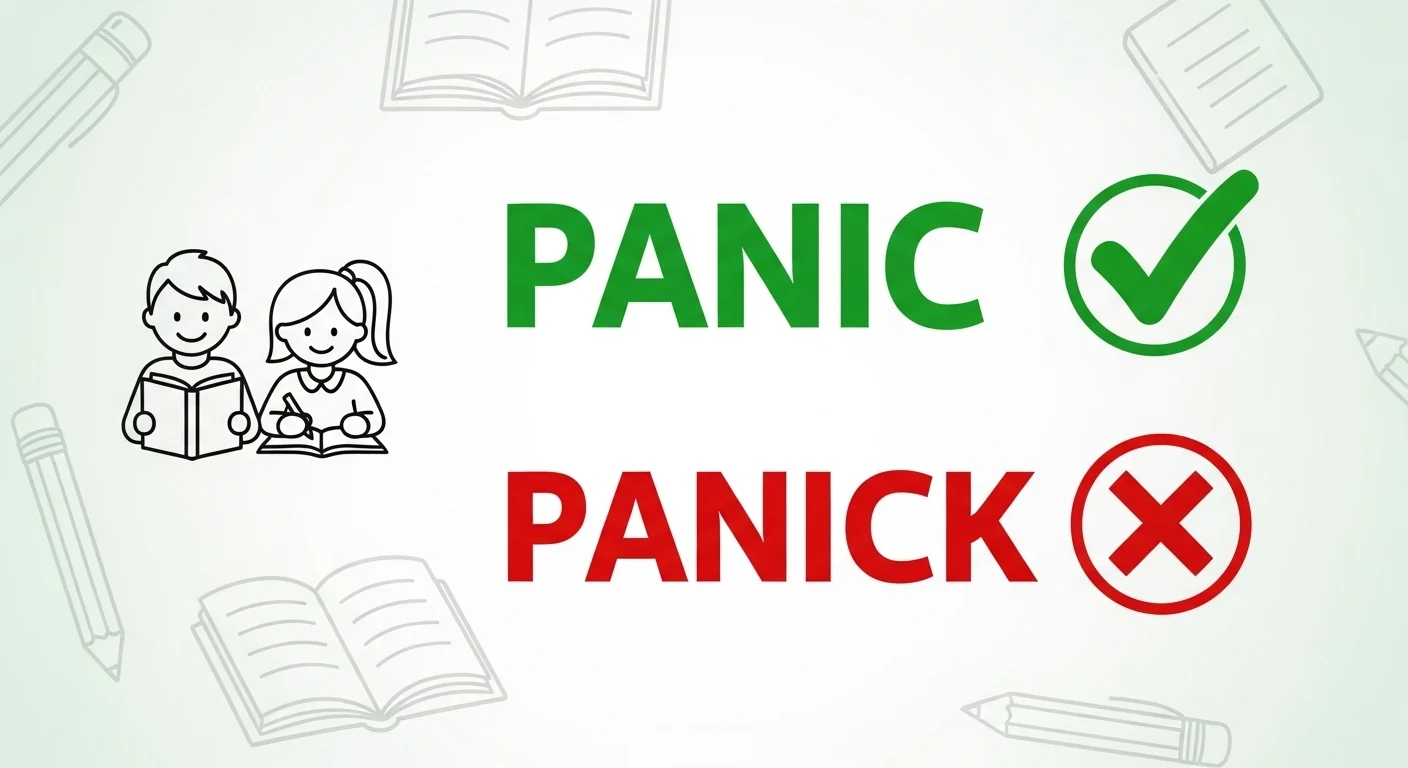
- Panick is not correct in standard English
- Always use panic when writing or speaking
- The word panic can be a noun or a verb
Simple Origin or Background
The word “panic” comes from an old Greek word. It is connected to sudden fear or strong worry. Over time, the spelling became fixed as “panic” in English.
English spelling rules can be tricky. Sometimes we add letters when we change a word, like adding “k” before “ing” in some cases. That is why some people think “panick” is correct. But in this case, English does not follow that pattern.
So even though “panick” may look right, it is not a real word.
Clear Explanation of the Difference
Let us explain it in the easiest way.
What is “panic”?
“Panic” is a real English word. It means a sudden strong feeling of fear.
It can be used in two ways:
As a noun
- I felt panic during the exam.
As a verb
- Do not panic in difficult situations.
What is “panick”?
“Panick” is not a correct word in English.
People sometimes write it by mistake because:
- They think a “k” is needed for pronunciation
- They confuse it with words like “traffic” or “picnic”
- They do not know the correct spelling
But in correct English writing, “panick” should never be used.
Comparison Table
| Feature | Panic | Panick |
| Correct word | Yes | No |
| Meaning | Sudden fear | No meaning |
| Usage | Common and correct | Incorrect spelling |
| Dictionary | Found in all | Not found |
| Example | I panic easily | Incorrect usage |
Which One to Use and When
You should always use “panic” in all situations.
Use “panic” when talking about fear
- There was panic in the crowd
Use “panic” when giving advice
- Do not panic during exams
Use “panic” in writing messages
- I started to panic when I lost my phone
Never use “panick” in any situation. It is always wrong.
Special Note About Forms of “Panic”
Sometimes learners get confused when adding endings.
Correct forms include:
- Panicking
- Panicked
Examples:
- She is panicking right now
- He panicked before the test
Notice something important:
When adding “ing” or “ed,” we add a “k”
So:
- panic becomes panicking
- panic becomes panicked
But the base word is still “panic,” not “panick.”
Common Mistakes People Make
Here are some mistakes learners often make:
Mistake 1: Writing “panick” instead of “panic”
Wrong:
- I feel panick before exams
Correct:
- I feel panic before exams
Mistake 2: Thinking “panick” is British spelling
Some people think:
- panic is American
- panick is British
This is not true. Both American and British English use “panic.”
Mistake 3: Confusing spelling rules
Learners sometimes think:
- If we write “panicking,” then “panick” must be correct
But this is not how English works here.
Mistake 4: Typing errors
Sometimes people type fast and add “k” by mistake. Always check your writing.
Everyday Real Life Examples
Let us look at how “panic” is used in daily life.
In Emails
- I started to panic when I did not get your reply
- Please do not panic, the issue is solved
In News
- There was panic in the city after the loud noise
- The government asked people not to panic
On Social Media
- I always panic before posting something important
- Do not panic, everything will be fine
In School Life
- Students panic before exams
- She told her friend not to panic during the test
In Daily Conversations
- I panicked when I lost my keys
- Why do you panic so quickly
All these examples use the correct word “panic.”
Short Learning Section for Students and Beginners
Here is a simple way to remember:
Only remember one thing
- Panic is correct
- Panick is wrong
Try this trick:
Think of the word “picnic”
- It has a “k” at the end
But “panic” does not follow that pattern
Practice sentences:
- I panic when I am late
- Do not panic in hard situations
- She panicked yesterday
- He is panicking now
Say them out loud and write them down. This will help you remember.
FAQ Section
1. Is “panick” ever correct?
No. “Panick” is never correct in standard English.
2. Why do people write “panick”?
Because they think a “k” is needed, or they follow wrong spelling patterns.
3. Is “panic” a noun or a verb?
It can be both.
- Noun: I felt panic
- Verb: Do not panic
4. What is the correct form: panicing or panicking?
The correct form is “panicking.”
5. What is the past tense of panic?
The past tense is “panicked.”
6. Is this mistake common?
Yes. Many learners and even native speakers make this mistake.
7. How can I avoid this mistake?
Always remember:
Only “panic” is correct. Never add “k” at the end.
8. Is “panic” used in formal writing?
Yes. It is used in both formal and informal writing.
Conclusion
The difference between “panic” and “panick” is very simple.
“Panic” is the correct and real English word. It means a strong feeling of fear and can be used in many situations.
“Panick” is not a real word and should never be used.
If you remember just one rule, it should be this:
Always write “panic” and never “panick.”
With a little practice, this confusion will completely disappear, and your English will become clearer and more confident.