Many students and English learners feel confused when they see the words recognization and recognition. Both look very similar. Both come from the verb recognize. Because of this, people often think both words are correct.
But here is the truth: only one of these words is correct in standard English. The other one is a common mistake.
In this article, you will learn the difference in very simple English. By the end, you will feel confident and never get confused again.
Quick Answer
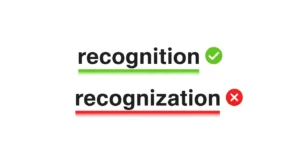
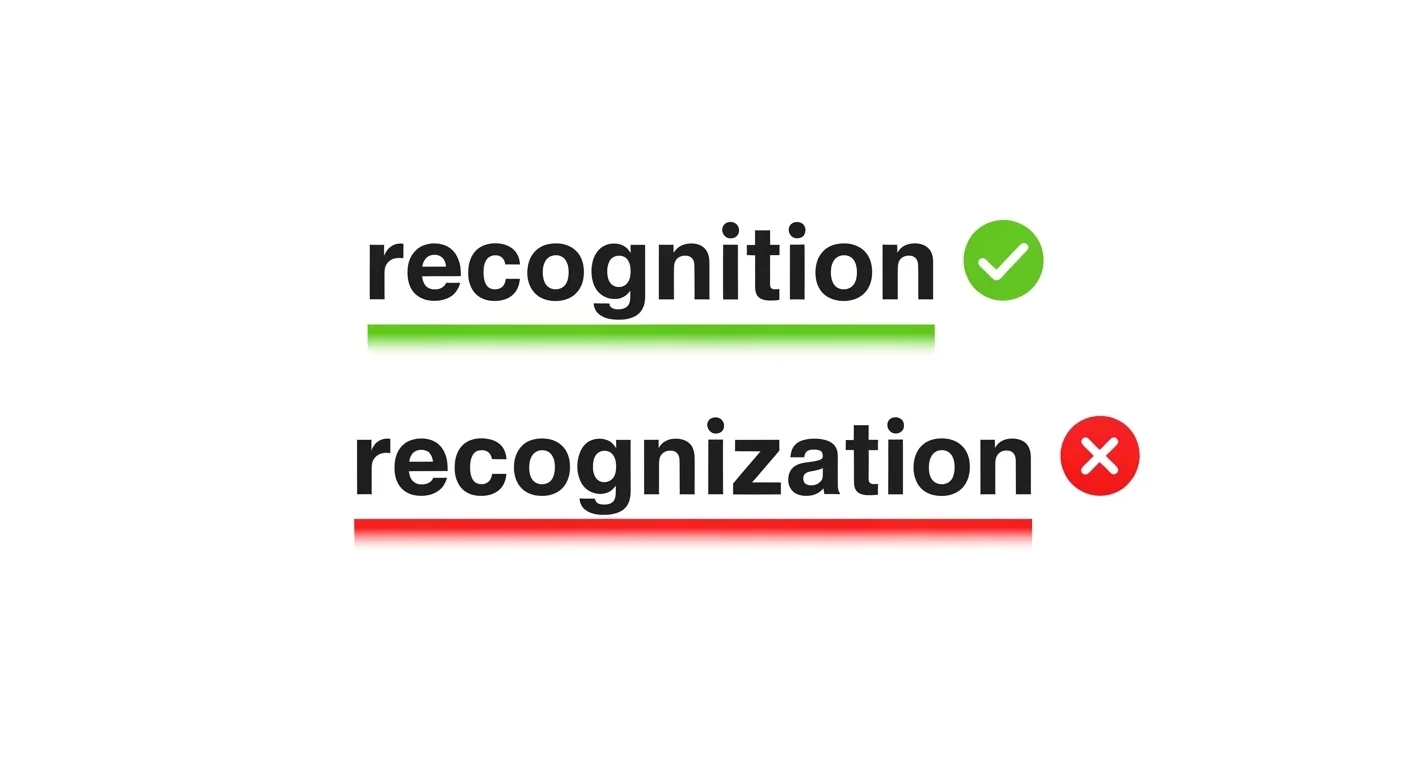
- Recognition is the correct word ✔
- Recognization is not correct in standard English ✘
- Always use recognition in writing, speaking, exams, and daily use
- Avoid recognization because it is considered incorrect
Simple Origin and Background
Let’s understand where these words come from.
The base verb is recognize, which means:
- to know someone or something again
- to accept something as true or important
Example:
- I recognize your face.
- She recognized his hard work.
From this verb, we form a noun. In English, many verbs change into nouns by adding endings like:
- tion
- ment
- ness
For recognize, the correct noun form is recognition.
Why not recognization?
Because English does not always follow one fixed rule. Some words simply have accepted forms that people have used for a long time. Over time, recognition became the standard word, and recognization did not.
Clear Explanation of the Difference
Recognition
Recognition is a real English word. It is used in all situations.
It means:
- the act of knowing someone or something
- the act of giving respect or praise
- official acceptance of something
Examples:
- He smiled in recognition of his old friend.
- She received recognition for her hard work.
- The country gave recognition to the new government.
Recognization
Recognization is not a standard English word.
Some people try to form it by adding ization to recognize. But this form is not accepted in modern English.
If you use it:
- it may sound strange
- it may be marked wrong in exams
- it may confuse readers
So, it is best to avoid it completely.
Comparison Table
| Feature | Recognition | Recognization |
| Is it correct | Yes | No |
| Common usage | Very common | Rare and incorrect |
| Used in exams | Yes | No |
| Sounds natural | Yes | No |
| Dictionary status | Accepted | Not standard |
| Should you use it | Always | Never |
Which One to Use and When
You should always use recognition in every situation.
Use recognition when:
- You talk about knowing someone
Example: I smiled in recognition of her voice - You talk about praise or reward
Example: He got recognition for his work - You talk about official approval
Example: The law received recognition - You write emails, essays, or reports
- You take exams or tests
- You speak in formal or informal situations
Never use recognization
Even if it feels correct, avoid it. Native speakers do not use it.
Common Mistakes People Make
Here are some mistakes many learners make:
1. Adding extra letters
Some people think longer words are more correct. So they write recognization. This is not true.
Correct: recognition
Incorrect: recognization
2. Following patterns blindly
Many words end with ization, like:
- organization
- realization
So learners assume recognization must be correct. But English has exceptions.
3. Spelling confusion
Because recognize ends in ize, learners try to keep that pattern. But the noun changes differently.
Recognize becomes recognition
Not recognization
4. Using it in exams
Some students lose marks because they use recognization. Always remember the correct form.
Everyday Real Life Examples
Let’s see how recognition is used in daily life.
In emails
- Thank you for your recognition of my efforts
- I appreciate the recognition you gave me
In school or college
- She received recognition for her top grades
- The teacher gave recognition to hardworking students
In news
- The athlete gained international recognition
- The company received recognition for its success
In social media
- He posted about getting recognition at work
- She thanked her fans for their support and recognition
In daily conversation
- I recognized him immediately
- She smiled in recognition
Notice that recognition fits naturally everywhere.
Short Learning Section for Students and Beginners
Here is a simple way to remember:
Easy Rule
- Verb: recognize
- Noun: recognition
Do not try to add ization here.
Memory Trick
Think like this:
Recognize → Recognition
Just remove ize and add ition
Practice Sentences
Fill in the blank with the correct word:
- She got ______ for her work
- I smiled in ______ of his voice
- The award is a form of ______
Answers:
- recognition
- recognition
- recognition
FAQ Section
1. Is recognization a real word?
No. It is not accepted in standard English. You should not use it.
2. Why do people use recognization?
People use it by mistake. They think it follows a pattern like other words, but it does not.
3. What is the correct noun of recognize?
The correct noun is recognition.
4. Can I use recognization in informal writing?
It is better not to use it at all. Even in informal writing, it may look wrong.
5. Will I lose marks if I use recognization?
Yes, in most cases. Teachers and examiners expect the correct word, which is recognition.
6. Is recognition used in both speaking and writing?
Yes. It is used in all types of communication.
7. What does recognition mean in simple words?
It means:
- knowing someone or something
- giving respect or praise
8. Are there other words like this in English?
Yes. English has many words that do not follow simple patterns. That is why practice is important.
Conclusion
The confusion between recognization and recognition is very common, especially for students and English learners. Both words look similar, but only one is correct.
Recognition is the correct and accepted word.
Recognization is incorrect and should be avoided.
The best way to remember is simple:
- Use recognition every time
- Never use recognization
With this clear understanding, you can now write and speak with confidence. Keep practicing, and your English will improve step by step.