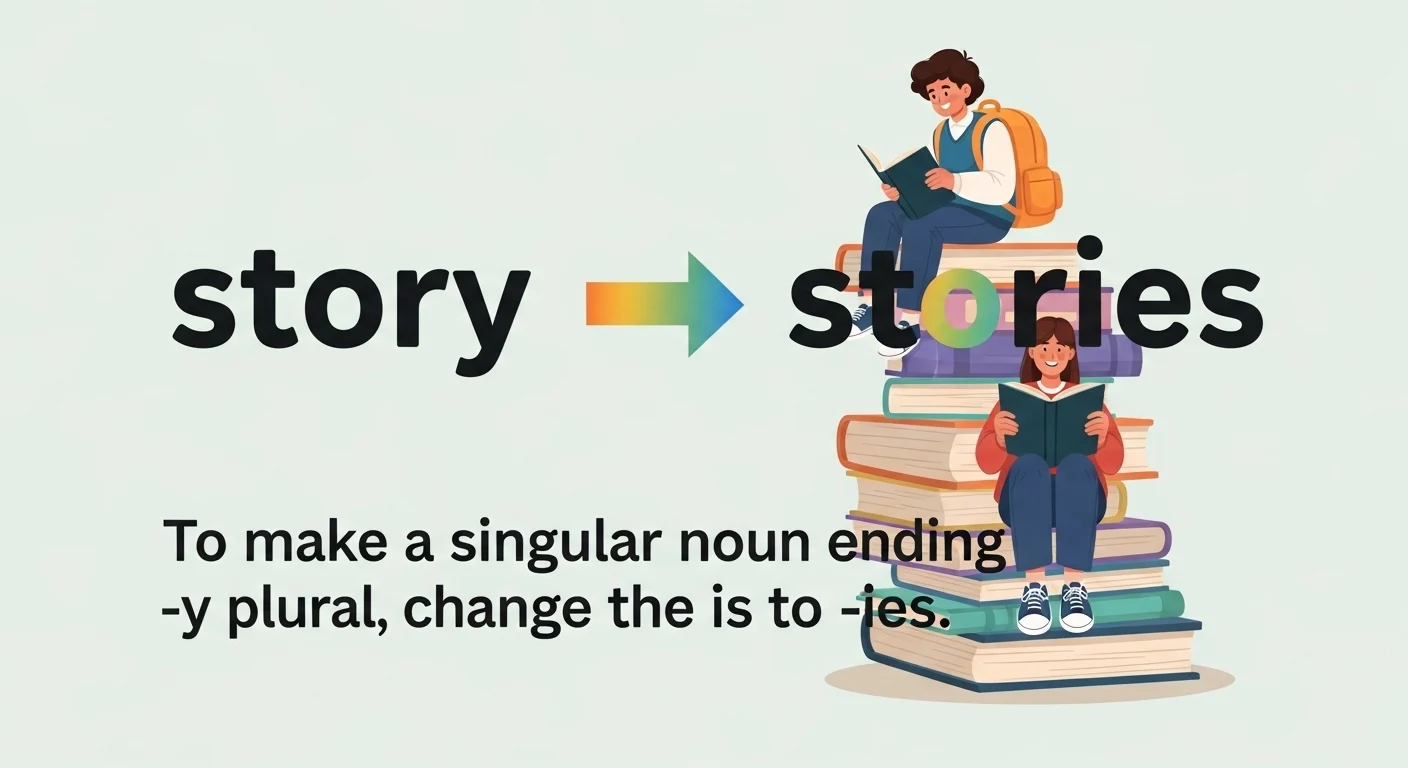
Many learners feel confused when they see “storys” and “stories.” Both look similar, but only one is correct. This confusion usually happens because English spelling rules can change when we make words plural.
If you are a student or learning English, this small difference can feel tricky. But don’t worry. This guide will explain everything in very simple English so you can understand it easily.
Quick Answer
Here is the simple truth:
- Stories is the correct plural form of “story”
- Storys is incorrect and should not be used
- When a word ends in y, we often change y to ies to make it plural
Simple Background Explanation
In English, we often add s to make a word plural:
- book → books
- pen → pens
But not all words follow this simple rule. Some words change spelling before adding s.
Words that end with a consonant + y follow a special rule. A consonant is any letter except vowels (a, e, i, o, u).
For example:
- story
- baby
- city
For these words, we remove the y and add ies instead of just s.
Clear Explanation of the Difference
What is “Stories”?
“Stories” is the correct plural form of “story.”
A “story” means:
- A tale or narrative
- Something you read, hear, or tell
Examples:
- I read many stories last night.
- She writes interesting stories.
What is “Storys”?
“Storys” is not a correct word in English.
People sometimes write it by mistake because they think adding s is enough. But for words ending in y, this rule changes.
So remember:
- ❌ Storys → wrong
- ✅ Stories → correct
Comparison Table
| Word | Correct or Incorrect | Meaning | Example Sentence |
| Story | Correct | One tale or narrative | This is a good story. |
| Stories | Correct | More than one story | I love reading stories. |
| Storys | Incorrect | Not a real English word | ❌ I read many storys. |
Which One to Use and When
Use story when you are talking about one:
- This story is interesting.
Use stories when you are talking about more than one:
- These stories are fun to read.
Never use storys, because it is always incorrect.
Common Mistakes People Make
Here are some mistakes learners often make:
1. Adding only “s”
- ❌ storys
- ✅ stories
2. Forgetting the spelling rule
Some learners forget that “y” changes to “ies.”
3. Mixing singular and plural
- ❌ These story is good
- ✅ These stories are good
4. Writing quickly without checking
Typing fast can lead to small spelling errors like “storys.”
Everyday Real Life Examples
In Emails
- I enjoyed your stories about travel.
- Please send more stories next week.
In Social Media
- She shares amazing stories every day.
- I love funny stories online.
In School
- Students read short stories in class.
- The teacher explained different stories.
In News
- The newspaper published many stories today.
In Daily Conversation
- My grandmother tells great stories.
- Kids enjoy bedtime stories.
Short Learning Section for Students
Here is an easy rule to remember:
Rule
If a word ends in consonant + y:
- Change y → ies
Examples
- story → stories
- baby → babies
- city → cities
Quick Tip
Ask yourself:
- Is there a consonant before “y”?
If yes, change it to ies.
FAQ Section
1. Is “storys” ever correct?
No, “storys” is never correct in English.
2. Why do we write “stories” instead of “storys”?
Because of the spelling rule: words ending in consonant + y change to “ies.”
3. Is “story” singular or plural?
“Story” is singular. It means one.
4. What is the plural of “story”?
The plural is “stories.”
5. Do all words ending in “y” follow this rule?
No. Only words with a consonant before “y” follow this rule.
Example:
- boy → boys (not boies)
6. How can I remember this rule easily?
Just remember:
“Consonant + y = ies”
7. Is this rule used in exams?
Yes, this is a basic grammar rule often tested in school.
8. Can native speakers make this mistake?
Yes, sometimes people make typing mistakes, but they know “stories” is correct.
Conclusion
The difference between “storys” and “stories” is simple once you understand the rule. “Stories” is the correct plural form, while “storys” is incorrect and should never be used.
When a word ends in consonant + y, always change “y” to “ies” to make it plural. With a little practice, this rule becomes easy to remember.
Keep practicing with simple words, and soon you will use “stories” correctly without even thinking about it.