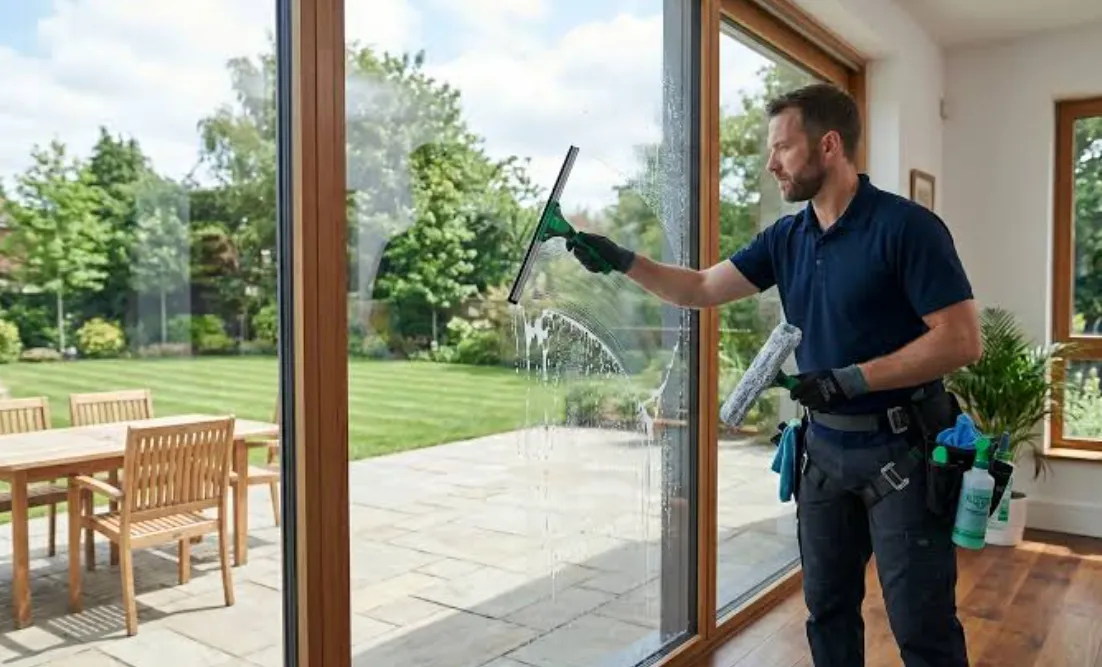
Streaky windows tend to stem from the wrong technique rather than insufficient effort.
Croydon’s mix of terraced houses and high-rise flats brings its own window-cleaning quirks, but a few simple changes to your tools and method will make all the difference.
Here’s what actually works best for a streak-free clean, so your view looks amazing for longer.
So, Why Windows Streak Even After Cleaning
Streaks almost always come from one of three causes: dirty water being reused, too much product left on the glass, or drying with the wrong material. Wiping glass with kitchen roll or an old t-shirt often leaves behind tiny fibres or lint that catch the light once the window dries.
Sunlight is another common culprit. Cleaning windows during sunny parts of the day causes the solution to dry too quickly, leaving streaky patches before it can be properly wiped away.
That’s why you should know that overcast days and cleaning in the early morning and evening are the best times for this kind of task.
Rubbing glass in small circles is another huge no-no because it tends to spread dirt around rather than lifting it off. This is exactly why so many DIY jobs end up patchy rather than genuinely clean in the end.
Lastly, remember that a straight, overlapping stroke in one direction gives a far more even finish across the whole pane.
The Right Tools For A Streak-Free Finish
A proper squeegee, a soft microfibre cloth, and a bucket of clean water beat almost any spray-and-wipe product on its own.
The squeegee removes most of the liquid in just one motion. This effectively reduces drips and smears that build up from your wiping alone.
For the solution itself, a few drops of washing-up liquid in warm water works well for most glass, cutting through grime effectively without leaving a heavy film. A splash of white vinegar helps with tougher spots, particularly where hard water has left a chalky residue on the glass.
An extendable pole with a squeegee head is worth having for upstairs windows in Croydon’s many two- and three-storey terraces, since it avoids the need to lean out of a window or balance on a ladder, which can be dangerous.
Keep in mind that 2 microfibre cloths are better than 1: a damp one for cleaning, and a completely dry one kept solely for the final polish.
Step-By-Step Method For Spotless Windows
Getting a consistent finish comes down to following the same routine every time:
- Dust the frame and sill first so loose dirt doesn’t run into streaks once the glass is wet.
- Apply the cleaning solution generously with a sponge or cloth, covering the whole pane.
- Pull the squeegee across in a single, steady stroke, wiping the blade dry between passes.
- Finish edges and corners with a dry microfibre cloth to catch any leftover moisture.
Working top to bottom stops drips from ruining a section that’s already been finished, which saves having to redo the same pane twice.
Also, a final check from a few steps back, at an angle to the light, usually reveals any missed patches while there’s still time to fix them.
Why Croydon’s Hard Water Causes Extra Streaking
Much of Croydon sits on a hard water supply, which carries more dissolved minerals than soft water areas further north. Left to dry naturally on glass, that mineral content forms the faint white haze often mistaken for a poor cleaning job.
Rinsing with distilled or filtered water on the final pass helps avoid this, since it carries far fewer minerals than water straight from the tap.
For homes without easy access to filtered water, adding a splash of vinegar to the rinse water considerably reduces mineral spotting.
Conservatories and large patio doors show hard water marks more obviously than smaller panes, simply because there’s more glass for the residue to settle on.
These areas benefit most from a proper squeegee technique rather than a quick wipe, and from being rinsed thoroughly rather than left to air-dry on their own.
Cleaning Upper-Floor And Hard-To-Reach Windows Safely
Plenty of Croydon homes have windows above ground level that are awkward to reach from indoors, particularly in older terraces without easy tilt-and-turn access.
An extendable pole and squeegee combination handles most of these from the ground or an upstairs windowsill, without needing a ladder at all.
Where a ladder genuinely is necessary, make sure it should always rest on firm, level ground, with someone else nearby if possible.
Overreaching to one side is one of the more common causes of falls during DIY window cleaning, so repositioning the ladder rather than stretching is always the safest option. You don’t want to take any risks, believe us.
For windows on the third floor or higher, or anywhere access feels genuinely unsafe, it’s worth accepting that some jobs are better left to window cleaning experts in Croydon than risking your health for the sake of a streak-free pane.
Some Common DIY Mistakes That Leave Marks
A few habits quietly undo an otherwise decent cleaning job.
The first one is using too much cleaning product. The excess solution takes longer to dry and often leaves a filmy residue rather than a clear finish.
As we said, cleaning windows on a hot, sunny afternoon is another frequent mistake, since fast drying rarely gives you an even result.
Newspaper, which was once the most popular drying material, tends to leave ink residue on modern glass coatings and is best avoided altogether.
Skipping the frames and sills is easy to overlook, too, but they matter. Dirt sitting there can run down onto freshly cleaned glass the next time it rains, undoing the work within days rather than weeks.
Lastly, reusing the same cloudy bucket of water for every window has a similar effect, since it just redistributes grime from pane to pane instead of removing it.
So, make sure to avoid all these, so your windows always look spotless after you’ve cleaned them.
Conclusion
As you can see, a streak-free finish comes down to the right tools, a decent technique, and picking the right weather to work in.
Keep in mind it’s best to set a simple routine: try cleaning them every few weeks rather than waiting until grime builds up, so each session is quick and easy.
Give these tips above a try, and you’ll always have the best results!