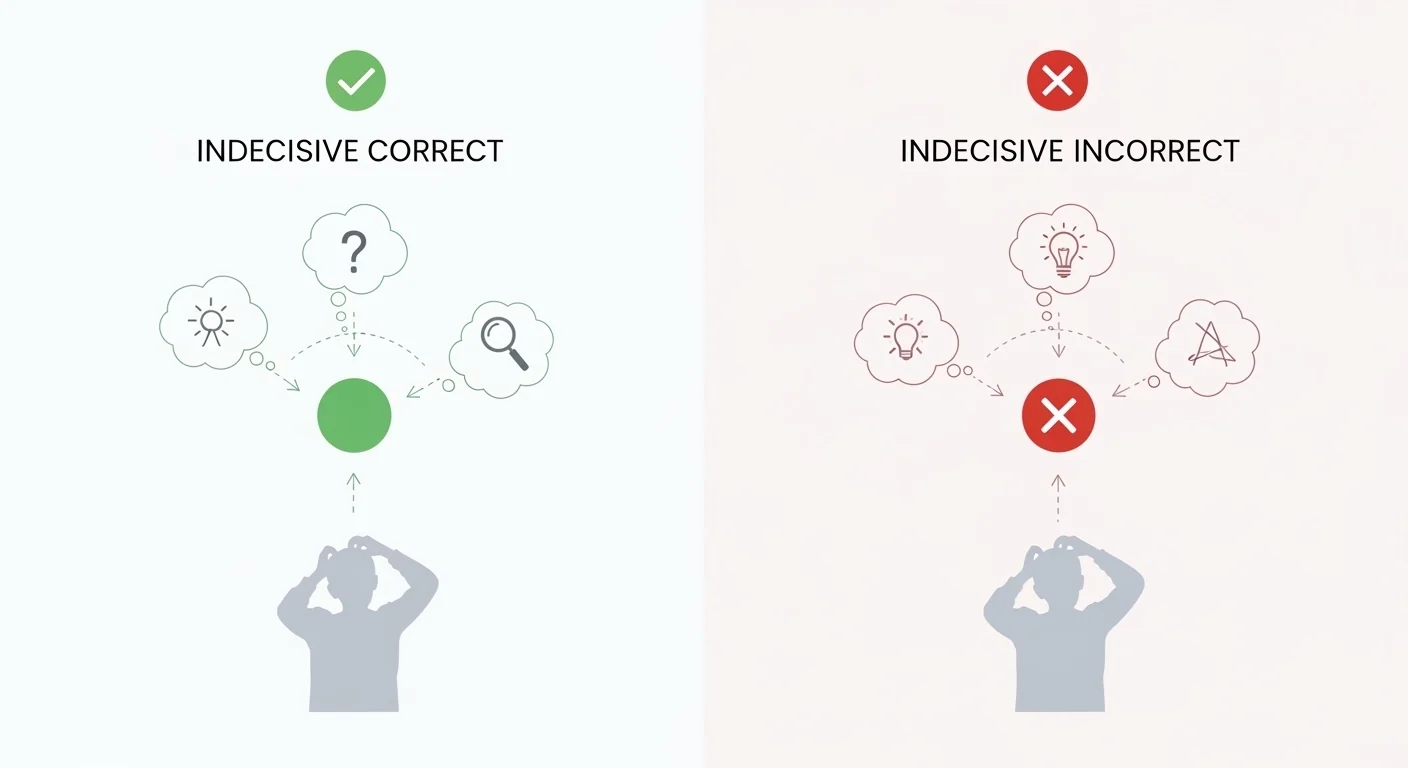
“Undecisive” and “indecisive” often confuse learners because both look logical. Since English uses prefixes like “un” and “in,” many people are unsure which one is correct.
Both seem possible, but in standard English, only one form is correct.
Let’s make this simple so you can understand it clearly and never mix them up again.
Quick Answer
- “Indecisive” is the correct word
- “Undecisive” is incorrect
- Always use “indecisive” in writing and speaking
- “Undecisive” is a common mistake
Simple Background Explanation
The word “decisive” means able to make decisions quickly and clearly.
To make the opposite meaning, English uses the prefix “in” (not), not “un” in this case.
So:
- decisive → indecisive
Even though “un” is used in many words, it is not used here.
Clear Explanation of the Difference
Let’s make it very simple.
“Indecisive”
This is the correct word. It means someone cannot make decisions easily.
Examples:
- He is indecisive and takes too long to choose.
- She felt indecisive about the plan.
“Undecisive”
This is incorrect and not used in standard English.
Example:
- He is undecisive ❌ wrong
So the difference is about correct prefix usage.
Comparison Table
| Word | Correct or Not | Meaning | Should You Use It |
|---|---|---|---|
| Indecisive | Correct | Unable to make decisions easily | Yes |
| Undecisive | Incorrect | No meaning | No |
What “Indecisive” Means
“Indecisive” describes a person who:
- Finds it hard to choose
- Changes decisions often
- Feels unsure
Examples:
- I am indecisive about what to eat.
- She is indecisive when shopping.
- He feels indecisive about his future.
When to Use “Indecisive”
Use “indecisive” when talking about:
- People who cannot decide
- Situations with uncertainty
- Difficulty in choosing
Examples:
- He is indecisive in important matters.
- She remained indecisive during the meeting.
- I feel indecisive today.
- They were indecisive about the trip.
There is never a correct situation to use “undecisive.”
Why People Make This Mistake
Here are the main reasons:
Confusion with prefixes
People think “un” works for all words.
Similar patterns
Words like “unhappy” make learners guess.
Lack of rule awareness
Not all words follow the same pattern.
Spelling guess
People try what looks right.
Simple tip:
Remember:
decisive → indecisive
Common Mistakes to Avoid
Here are mistakes to watch for:
Using “undecisive”
This is always incorrect.
Using wrong prefix
Not all words use “un.”
Not checking spelling
Always review your writing.
Correct vs incorrect examples:
- She is indecisive ✔️
- She is undecisive ❌
- I feel indecisive ✔️
- I feel undecisive ❌
Everyday Real Life Examples
Here are simple examples from daily life.
In school:
- He is indecisive about his subjects.
- Students feel indecisive during exams.
At work:
- She was indecisive in the meeting.
- Being indecisive can slow progress.
In daily life:
- I am indecisive about dinner.
- He is indecisive when buying clothes.
In conversation:
- Why are you so indecisive
- She seems indecisive today
On social media:
- Feeling indecisive today
- Being indecisive is stressful
Easy Learning Section for Beginners
Here is a simple trick:
Use “in,” not “un”
Memory tip:
in + decisive = indecisive
Practice sentences:
- I am indecisive
- She is indecisive
- They are indecisive
Mini exercise:
Fill in the blanks:
- I feel ______ today
Answer: indecisive - She is ______ about the plan
Answer: indecisive - He is very ______
Answer: indecisive
Never use “undecisive”
Frequently Asked Questions
1. Is “undecisive” a real word
No, it is not correct in standard English.
2. What is the correct word
The correct word is “indecisive.”
3. What does “indecisive” mean
It means unable to make decisions easily.
4. Why do people use “undecisive”
Because they think “un” works for all words.
5. Can I use “undecisive” informally
No, it is still incorrect.
6. Is this mistake common
Yes, many learners make it.
7. How can I remember the correct form
Remember it uses “in,” not “un.”
8. Will this mistake affect my writing
Yes, it can make your writing look incorrect.
Conclusion
The difference between “undecisive” and “indecisive” is simple.
“Indecisive” is the correct word and should always be used.
“Undecisive” is a spelling mistake and should be avoided.
Just remember:
Use “in,” not “un” → indecisive
With this simple rule, you can use the correct word confidently every time.