“Past away” and “passed away” sound almost the same when spoken. That is why many people confuse them in writing. It often happens in messages, emails, and even formal writing.
But here is the key point: only one of these phrases is correct in standard English.
This guide will explain everything in very simple English so you can understand the difference clearly and never make this mistake again.
Quick Answer
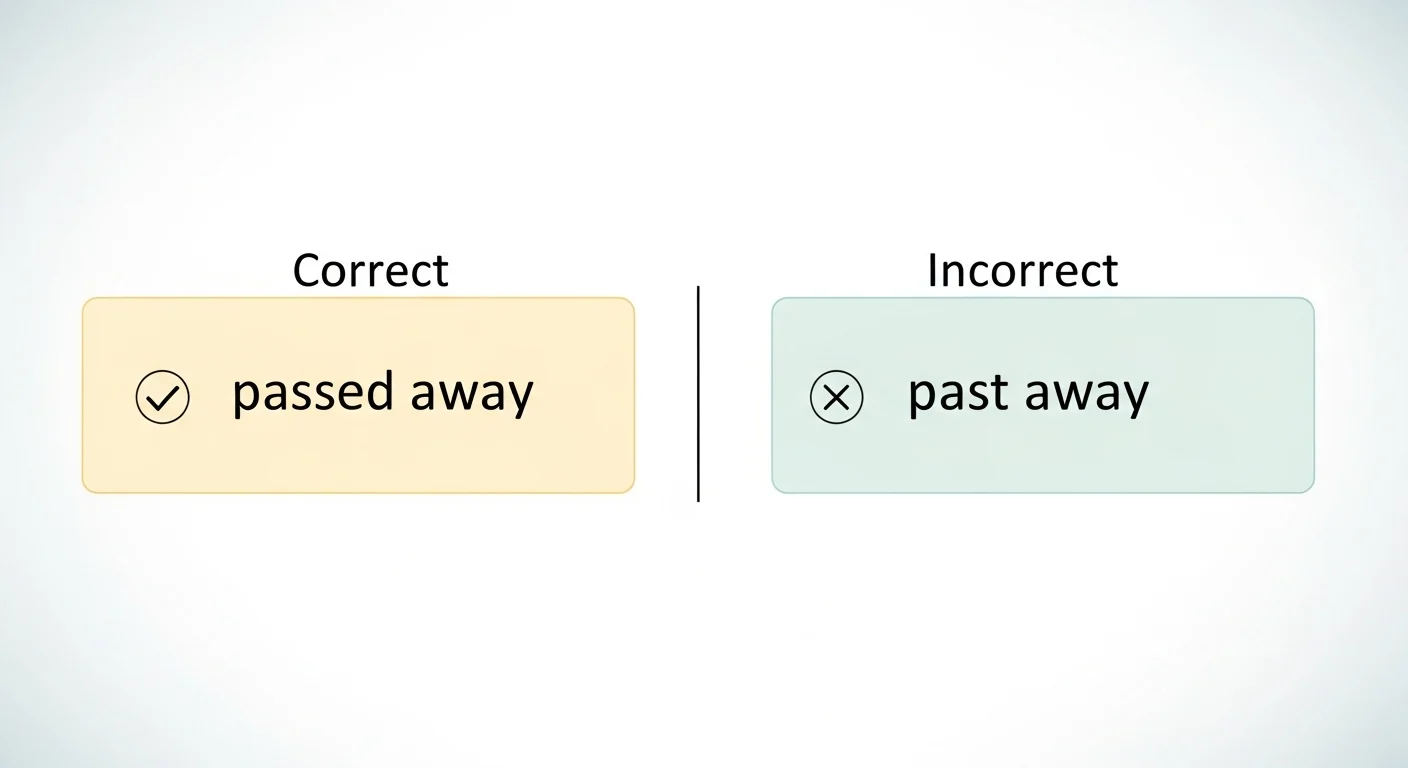
- “Passed away” is the correct phrase
- “Past away” is incorrect
- “Passed away” means someone has died (a polite way to say it)
- Always use “passed away” in writing and speaking
Simple Background Explanation
The word “passed” comes from the verb “pass,” which means to move from one place to another.
The phrase “passed away” is a gentle and respectful way to say that someone has died. It suggests moving on from life in a soft and polite way.
The word “past” is different. It is usually used to talk about time or position.
Example:
- past (time): in the past
- past (position): walk past the door
Because of this, “past away” does not make sense in English.
Clear Explanation of the Difference
Let’s make it very simple.
“Passed away”
This is correct. It is a polite way to say that someone has died.
Examples:
- His grandfather passed away last year.
- She passed away peacefully.
“Past away”
This is incorrect. It does not have a proper meaning.
Example:
- His grandfather past away ❌ wrong
So the difference is about both meaning and grammar.
Comparison Table
| Phrase | Correct or Not | Meaning | Should You Use It |
|---|---|---|---|
| Passed away | Correct | A polite way to say someone died | Yes |
| Past away | Incorrect | No correct meaning | No |
Which One to Use and When
You should always use “passed away” when talking about someone’s death in a respectful way.
Use it in:
- Conversations
- Messages
- Emails
- News or reports
- Formal writing
Examples:
- My neighbor passed away yesterday.
- Her father passed away after a long illness.
- He passed away peacefully at home.
Never use “past away” because it is incorrect.
Understanding “Passed” vs “Past”
To avoid this mistake, it helps to understand the difference between “passed” and “past.”
“Passed”
- Verb (action word)
- Comes from “pass”
- Means moved, went, or finished
Example:
- He passed the test.
“Past”
- Noun, adjective, or preposition
- Talks about time or position
Examples:
- That happened in the past.
- Walk past the building.
Simple tip:
If it is an action, use “passed”
If it is about time or place, use “past”
Common Mistakes People Make
Here are common mistakes:
Using “past away”
This is the most common error.
Mixing “past” and “passed”
Many people do not know the difference.
Typing quickly
Mistakes happen when not checking writing.
Not understanding meaning
People use the wrong word without thinking about meaning.
Correct vs incorrect examples:
- She passed away ✔️
- She past away ❌
- He passed away last night ✔️
- He past away last night ❌
Everyday Real Life Examples
Here are simple examples to help you understand.
In messages:
- I am sorry to hear your uncle passed away.
- Her grandmother passed away peacefully.
In news:
- A famous actor passed away yesterday.
- The leader passed away after illness.
In conversations:
- His father passed away last year.
- She passed away quietly.
In emails:
- We are sad to share that our colleague passed away.
- He passed away surrounded by family.
Short Learning Section for Students and Beginners
Here is an easy way to remember:
Passed = action
Past = time or place
Memory trick:
Passed away → someone moved on from life
Practice sentences:
- He passed away yesterday
- She passed away peacefully
- They passed away years ago
Mini exercise:
Fill in the blanks:
- He ______ away last night
Answer: passed - She ______ away peacefully
Answer: passed - His grandfather ______ away last year
Answer: passed
Never use “past away”
FAQ Section
1. Is “past away” ever correct
No, it is always incorrect.
2. What is the correct phrase
The correct phrase is “passed away.”
3. What does “passed away” mean
It means someone has died in a polite and respectful way.
4. Why do people write “past away”
Because the words sound similar.
5. What is the difference between “past” and “passed”
“Passed” is a verb. “Past” is about time or position.
6. Can I use “passed away” in formal writing
Yes, it is commonly used and polite.
7. Is this mistake common
Yes, many learners make it.
8. Will this mistake affect my writing
Yes, it can make your writing look incorrect.
Conclusion
The difference between “past away” and “passed away” is simple but very important.
“Passed away” is the correct phrase and should always be used when talking about someone’s death.
“Past away” is a mistake and should be avoided.
Just remember:
“Passed” is the action word, and it is always correct in this phrase.
With this simple rule, you can use the right phrase confidently every time.