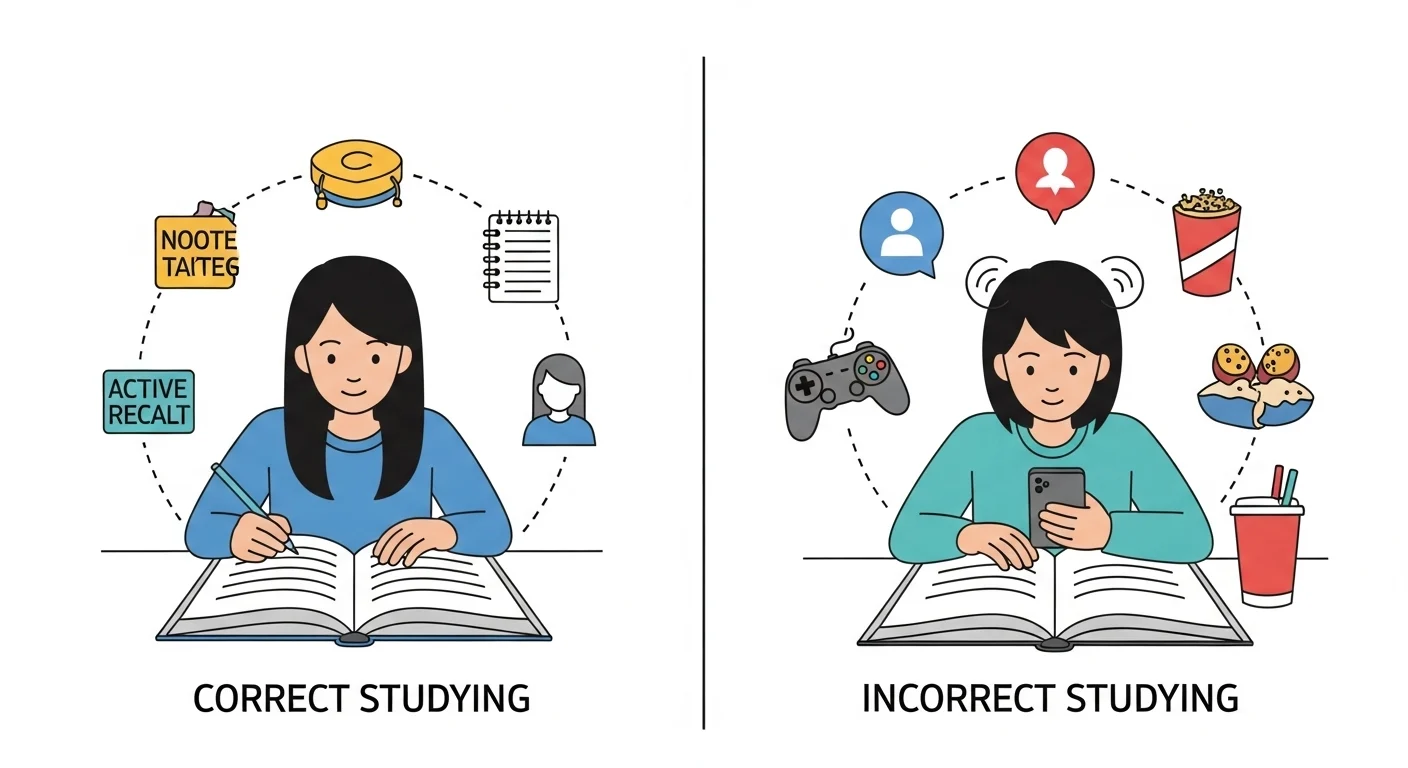
Many learners write “studing” instead of “studying” without realizing it. The two words look very similar, and when we speak quickly, the missing letter is hard to notice.
This confusion usually happens because of simple spelling rules that are easy to forget.
The good news is that this mistake is very easy to fix. Once you understand the rule, you will never spell it wrong again.
Quick Answer
- “Studying” is the correct spelling
- “Studing” is incorrect
- Always use “studying” in writing and speaking
- “Studing” is just a common spelling mistake
Simple Background Explanation
The base word is “study,” which means to learn or read to gain knowledge.
When we add “ing” to make the present form, we must follow a spelling rule.
Words that end in a consonant + “y” keep the “y” and simply add “ing.”
So:
study → studying
That is why “studying” is correct.
Clear Explanation of the Difference
Let’s make it very simple.
“Studying”
This is the correct form. It means the action of learning.
Examples:
- I am studying for my exam.
- She is studying English.
“Studing”
This is incorrect. It removes an important letter and breaks the spelling rule.
Example:
- I am studing for my exam ❌ wrong
So the difference is about correct spelling.
Comparison Table
| Word | Correct or Not | Meaning | Should You Use It |
|---|---|---|---|
| Studying | Correct | The act of learning | Yes |
| Studing | Incorrect | No correct meaning | No |
When to Use “Studying”
Use “studying” when talking about learning or reading.
Common situations:
- School or college
- Exams or tests
- Learning new skills
- Reading books
Examples:
- I am studying math.
- He is studying for the test.
- They are studying together.
- She is studying at home.
There is never a correct situation to use “studing.”
Why People Make This Mistake
Here are the main reasons:
Forgetting the “y” rule
Some people think “y” should be removed.
Typing quickly
The letter “y” is often missed.
Sound confusion
The word may sound shorter than it is.
Lack of practice
Spelling improves with regular use.
Simple tip:
If a word ends with “y,” keep it when adding “ing”
study → studying
Common Mistakes to Avoid
Here are mistakes you should avoid:
Removing the “y”
- studing ❌
Mixing spellings
Do not use both forms in one text.
Not proofreading
Always check your writing.
Correct vs incorrect examples:
- I am studying ✔️
- I am studing ❌
- She is studying ✔️
- She is studing ❌
Everyday Real Life Examples
Here are simple examples you can use.
In school:
- I am studying for exams.
- Students are studying in the library.
At home:
- She is studying in her room.
- He is studying all night.
In conversations:
- I am studying English.
- Are you studying today
On social media:
- Studying hard for finals
- Late night studying
Easy Learning Section for Beginners
Here is a simple trick:
Keep the “y” and add “ing”
Memory tip:
study + ing = studying
Practice sentences:
- I am studying now
- She is studying English
- We are studying together
Mini exercise:
Fill in the blanks:
- I am ______ for the test
Answer: studying - She is ______ at home
Answer: studying - They are ______ together
Answer: studying
Never use “studing”
Frequently Asked Questions
1. Is “studing” ever correct
No, it is always incorrect.
2. What is the correct spelling
The correct spelling is “studying.”
3. Why do we keep the “y”
Because words ending in consonant + “y” keep the “y” when adding “ing.”
4. What does “studying” mean
It means learning or reading to gain knowledge.
5. Can I use “studing” informally
No, it is still incorrect.
6. Is this mistake common
Yes, many learners make it.
7. How can I remember the correct spelling
Remember: keep the “y” when adding “ing.”
8. Will this mistake affect my writing
Yes, it can make your writing look incorrect.
Conclusion
The difference between “studing” and “studying” is simple but important.
“Studying” is the correct spelling and should always be used.
“Studing” is a spelling mistake and should be avoided.
Just remember this rule:
Keep the “y” and add “ing.”
With this simple tip, you can write “studying” correctly every time.