Many English learners confuse flakey and flaky because both spellings appear online and in casual writing. Since the words sound exactly the same, people often wonder which spelling is considered correct.
The good news is simple:
Both spellings exist, but one is much more common and preferred in modern English.
This guide explains the difference in very simple English with clear examples and beginner friendly tips.
Quick Answer
- Flaky is the preferred and more common spelling
- Flakey is an alternative spelling but less common
- Both words describe something breaking into flakes or someone unreliable
- Flaky is the standard modern choice
Simple Origin or Background
The word comes from the noun:
- flake
English added the “y” ending to create:
- flaky
Over time, some people also started writing:
- flakey
However, dictionaries and modern writing usually prefer:
- flaky
Because both forms appear online, learners often become confused.
Clear Explanation of the Difference
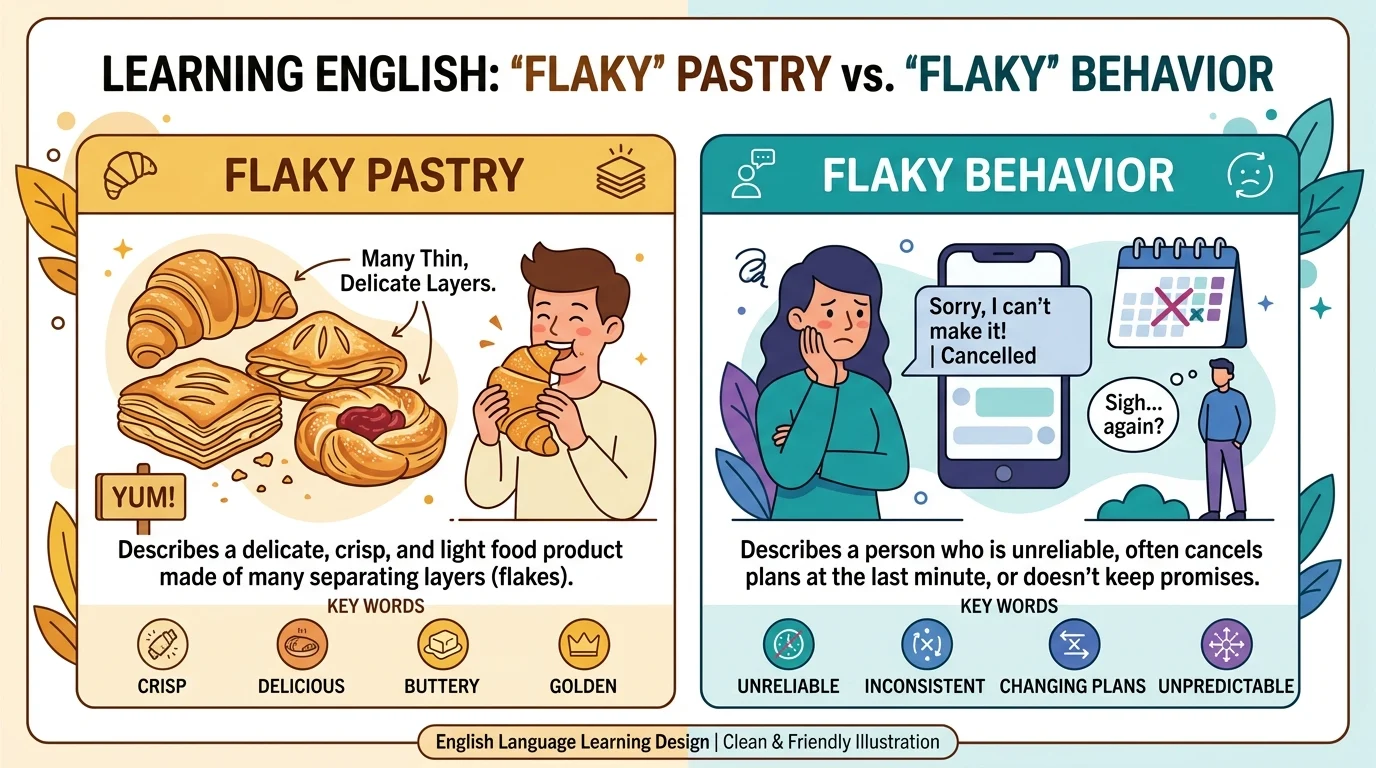
What does “flaky” mean
Flaky is an adjective.
It can mean:
- breaking into small thin pieces
or - unreliable or forgetful
Examples:
- The pie crust is flaky
- He has been flaky lately
- My skin feels dry and flaky
This is the standard and preferred spelling.
What does “flakey” mean
Flakey has the same meaning:
- crumbly
or - unreliable
Examples:
- Her behavior seemed flakey
- The pastry looked flakey
Although accepted by some dictionaries, this spelling is less common.
Comparison Table
| Feature | Flakey | Flaky |
|---|---|---|
| Correct English | Yes, but less common | Yes, preferred form |
| Common usage | Less common | More common |
| Meaning | Crumbly or unreliable | Crumbly or unreliable |
| Preferred style | Alternative spelling | Standard modern spelling |
Which One to Use and When
Use flaky in most situations because it is:
- more common
- more modern
- preferred in standard English writing
Examples:
- The biscuits are flaky
- He can be flaky sometimes
You may still see:
- flakey
in casual writing or personal style choices.
Common Mistakes People Make
1. Thinking “flakey” is completely wrong
It is not completely wrong, but it is less common.
2. Mixing spellings in the same article
Choose one style and stay consistent.
3. Assuming both forms are equally popular
Modern English strongly prefers:
- flaky
4. Forgetting the adjective form
The adjective usually follows:
- flake → flaky
Everyday Real Life Examples
In Emails
- The pastry was perfectly flaky
- His response seemed a little flakey
In News
- Dry weather caused flaky skin problems
- Critics described the plan as flaky
On Social Media
- I love flaky croissants
- Stop acting so flaky lately
In Daily Conversations
- This pie crust is flaky
- She can be flaky about plans
Short Learning Section for Students and Beginners
1. Learn the simple rule
- both forms exist
- flaky is preferred
2. Focus on modern usage
In everyday English:
- flaky is usually the best choice
3. Practice simple examples
- Flaky pastry
- Flaky behavior
4. Use memory tricks
- flaky = common standard spelling
FAQ Section
1. Is “flakey” correct
Yes, but it is less common.
2. Is “flaky” correct
Yes.
3. Which spelling is more common
Flaky.
4. Do both words mean the same thing
Yes.
5. Which spelling should students use
Flaky is usually the safest choice.
6. Can “flaky” describe people
Yes.
It can mean:
- unreliable
- forgetful
7. Why do both spellings exist
English sometimes develops alternative spellings over time.
8. How can I remember the preferred spelling
Remember:
- flaky is the modern standard spelling.
Conclusion
The difference between flakey and flaky is mainly about spelling preference.
- Both spellings exist
- Both have the same meaning
- Flaky is the preferred modern spelling
A simple memory trick:
- flaky = standard everyday English form
With practice and clear examples, you can confidently choose the spelling that sounds natural and correct.