Introduction
“Hung” and “hanged” both come from the verb “hang,” but they are not interchangeable. This is one of the most important small grammar rules in English—and it’s actually very easy once you learn it.
Let’s make it simple so you never get it wrong again.
Quick Answer
- “Hung” is used for objects and general situations
- “Hanged” is used only for execution (death by hanging)
- Always use “hung” in everyday situations
- Use “hanged” only in legal or historical contexts
Simple Background Explanation
In older English, both forms were used more freely. Over time, the language became more specific:
- “Hung” became the normal past tense
- “Hanged” became reserved only for execution
That’s why today the difference is very strict.
Clear Explanation of the Difference
Let’s make it very simple.
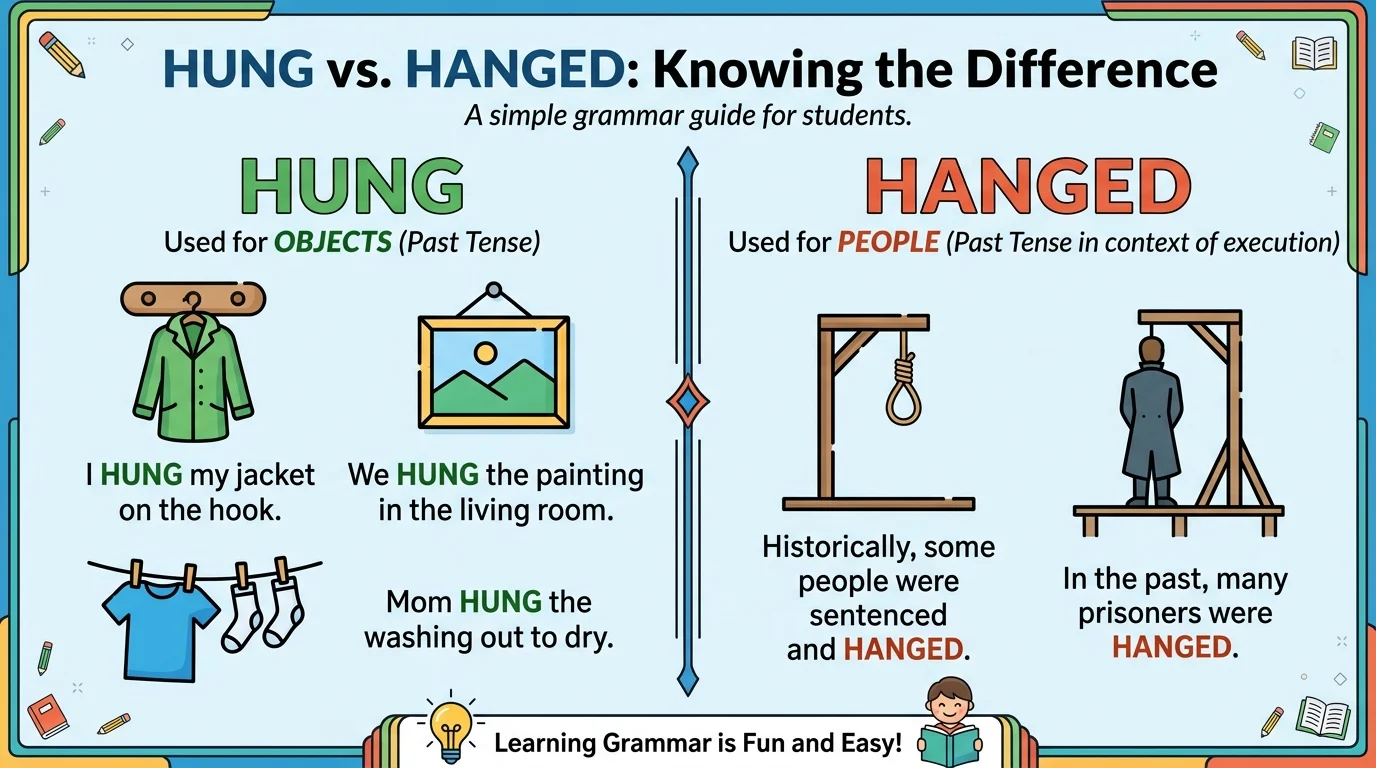
“Hung”
This is the common past tense of “hang.” It is used for objects or general actions.
Examples:
- She hung the picture on the wall.
- He hung his coat by the door.
“Hanged”
This is used only when someone is put to death by hanging.
Examples:
- The criminal was hanged.
- He was hanged for his crimes.
So the difference is everyday use vs execution.
Comparison Table
| Word | Meaning | When to Use |
|---|---|---|
| Hung | General past tense of hang | Everyday use |
| Hanged | Execution by hanging | Legal/historical |
What “Hung” Means
“Hung” is used in normal, everyday situations.
Examples:
- She hung the clothes outside.
- He hung the painting.
- They hung decorations.
It is the form you will use most of the time.
What “Hanged” Means
“Hanged” is used only in a very specific situation:
- Execution by hanging
Examples:
- The prisoner was hanged.
- He was hanged in the past.
It is rare and mostly used in history or legal writing.
Which One to Use and When
Use “hung” when:
- Talking about objects
- Talking about normal actions
Examples:
- She hung the picture.
- He hung his jacket.
Use “hanged” when:
- Talking about execution
Examples:
- The criminal was hanged.
Easy Trick to Remember
Here is a simple rule:
Hung = everything
Hanged = execution
Memory tip:
If it’s not about death, use “hung”
Why People Get Confused
Here are the main reasons:
Same base verb
Both come from “hang.”
Two past forms
Unusual in English.
Rare usage
“Hanged” is not used often.
Lack of awareness
Many learners don’t know the rule.
Common Mistakes to Avoid
Here are mistakes to watch for:
Using “hanged” for objects
- She hanged the picture ❌
Using “hung” for execution
- He was hung for his crimes ❌
Correct vs incorrect examples:
- She hung the picture ✔️
- She hanged the picture ❌
- He was hanged ✔️
- He was hung ❌
Everyday Real Life Examples
Here are simple examples from daily life.
At home:
- She hung the clothes.
- He hung the painting.
In history:
- The criminal was hanged.
In conversation:
- I hung my jacket
- She hung the picture
Easy Learning Section for Beginners
Here is a simple trick:
Ask yourself:
Is it about execution?
Memory tip:
No = hung
Yes = hanged
Practice sentences:
- She hung the picture
- He hung his coat
- The criminal was hanged
Mini exercise:
Fill in the blanks:
- She ______ the picture
Answer: hung - The criminal was ______
Answer: hanged - He ______ his coat
Answer: hung
Frequently Asked Questions
1. What is the difference between “hung” and “hanged”
“Hung” is for normal use, while “hanged” is for execution.
2. Can I use them interchangeably
No, they have different meanings.
3. Which one is more common
“Hung” is much more common.
4. Is “hanged” used often
No, mostly in legal or historical contexts.
5. Why is this confusing
Because both come from “hang.”
6. How can I remember the difference
Think everyday vs execution.
7. Is this mistake serious
Yes, it can change meaning.
8. Will this affect my writing
Yes, especially in formal writing.
Conclusion
The difference between “hung” and “hanged” is simple.
“Hung” is used for everyday situations.
“Hanged” is used only for execution.
Just remember:
Hung = normal
Hanged = execution
With this simple rule, you can use both forms correctly and confidently.