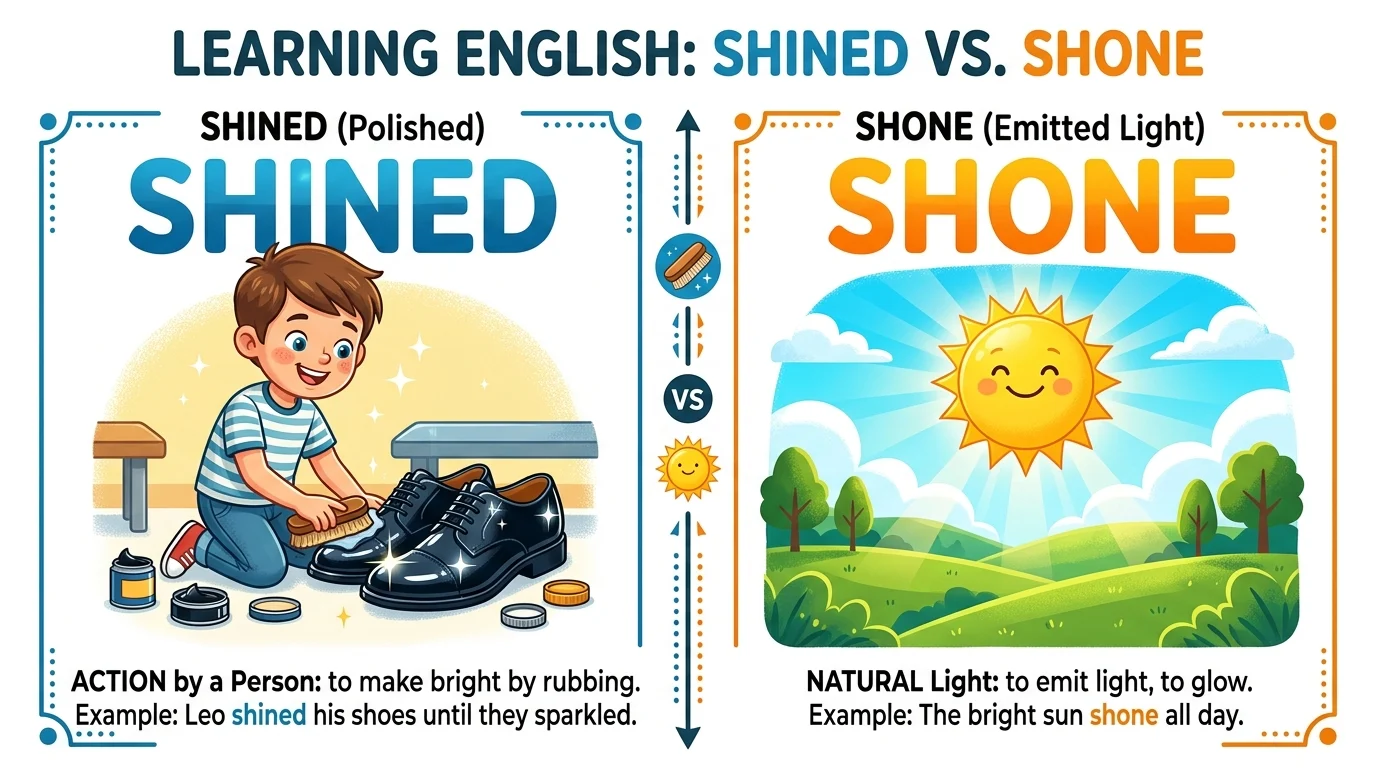
Many English learners get confused between shined and shone because both are accepted forms of the verb shine. When reading books, news articles, or online content, you may see both words and wonder which one is correct.
The good news is simple: both shined and shone are correct, but they are often used in different situations.
This guide explains the difference in very simple English with clear examples and beginner friendly tips.
Quick Answer
- Shined and shone are both correct.
- Shone is often used when something gives off light.
- Shined is often used when someone causes something to shine, such as polishing shoes.
- In modern English, there is some overlap, and both forms may appear in similar contexts.
Simple Origin or Background
Both words come from the verb shine, which means:
- to give light
- to glow
- to become bright
- to make something bright
Over time, English developed two past tense forms:
- shined
- shone
Today, both are accepted, but usage patterns have developed that help writers choose between them.
Clear Explanation of the Difference
What Does “Shone” Mean?
Shone is commonly used when a light source naturally gives off light.
Examples:
- The sun shone brightly.
- The moon shone over the ocean.
- Her eyes shone with happiness.
- A light shone through the window.
In these examples, something is glowing or giving light.
What Does “Shined” Mean?
Shined is often used when a person makes something shiny or bright.
Examples:
- He shined his shoes before the interview.
- She shined the silver tray.
- They shined the car until it looked new.
In these examples, someone performs an action to make an object shine.
Comparison Table
| Feature | Shined | Shone |
|---|---|---|
| Correct English | Yes | Yes |
| Common Meaning | Made something shine | Gave off light |
| Often Used With | Shoes, cars, silver | Sun, moon, stars, lights |
| Example | He shined his shoes | The sun shone brightly |
Which One to Use and When
Use “Shone” When
Something naturally emits light.
Examples:
- The stars shone all night.
- The lamp shone in the darkness.
- Sunshine shone through the clouds.
Use “Shined” When
Someone actively makes something bright.
Examples:
- She shined her boots.
- He shined the floor.
- They shined the metal surface.
Modern Usage Note
In everyday English, especially in American English, shined is sometimes used in situations where shone might traditionally be expected.
Example:
- The sun shined brightly.
Many native speakers still understand and accept this usage.
Common Mistakes People Make
Thinking One Form Is Wrong
Both forms are correct.
Using “Shined” and “Shone” Interchangeably Without Understanding the Difference
While there is overlap, the traditional distinction can make writing clearer.
Assuming Only One Past Tense Exists
The verb shine has two accepted past forms.
Forgetting the Context
Ask yourself:
- Is something giving off light?
- Or is someone making something shiny?
Everyday Real Life Examples
In Emails
- The presentation shone as a great example of teamwork.
- He shined his shoes before the meeting.
In News
- The sun shone throughout the day.
- Workers shined the monument before the ceremony.
On Social Media
- Her smile shone in every photo.
- I shined my car this weekend.
In Daily Conversations
- The stars shone brightly last night.
- He shined his boots before leaving.
Short Learning Section for Students and Beginners
Easy Rule
Use:
- shone for light
- shined for polishing or making something bright
Practice Sentences
- The moon shone over the lake.
- The stars shone brightly.
- She shined her shoes.
- He shined the silver bowl.
Memory Trick
Think:
- shone = light was shining
- shined = someone did the shining
FAQ Section
Is “shined” correct?
Yes.
Is “shone” correct?
Yes.
Which one is used for the sun?
Traditionally, shone.
Which one is used for shoes?
Usually, shined.
Can I say “the sun shined”?
Yes. Many people use it, especially in American English.
Which form is more traditional for light?
Shone.
Are both forms accepted today?
Yes.
How can I remember the difference?
Remember:
- shone = gave off light
- shined = made something shiny
Conclusion
The difference between shined and shone is mostly about how the verb shine is being used.
- Shone is traditionally used when something emits light.
- Shined is often used when someone makes something bright or polished.
- Both forms are correct in modern English.
A simple memory trick is to remember that shone is usually connected to natural light, while shined often involves a person polishing or brightening something.
Once you know this pattern, choosing the right word becomes much easier.