Many English learners confuse sung and sang because both words come from the verb sing. They are both correct English words, but they are used in different grammar situations.
The confusion usually happens because one word is used for simple past tense, while the other is used with helping verbs like:
- has
- have
- had
Once you understand this grammar rule, the difference becomes very easy.
This guide explains everything in very simple English with clear examples and beginner friendly tips.
Quick Answer
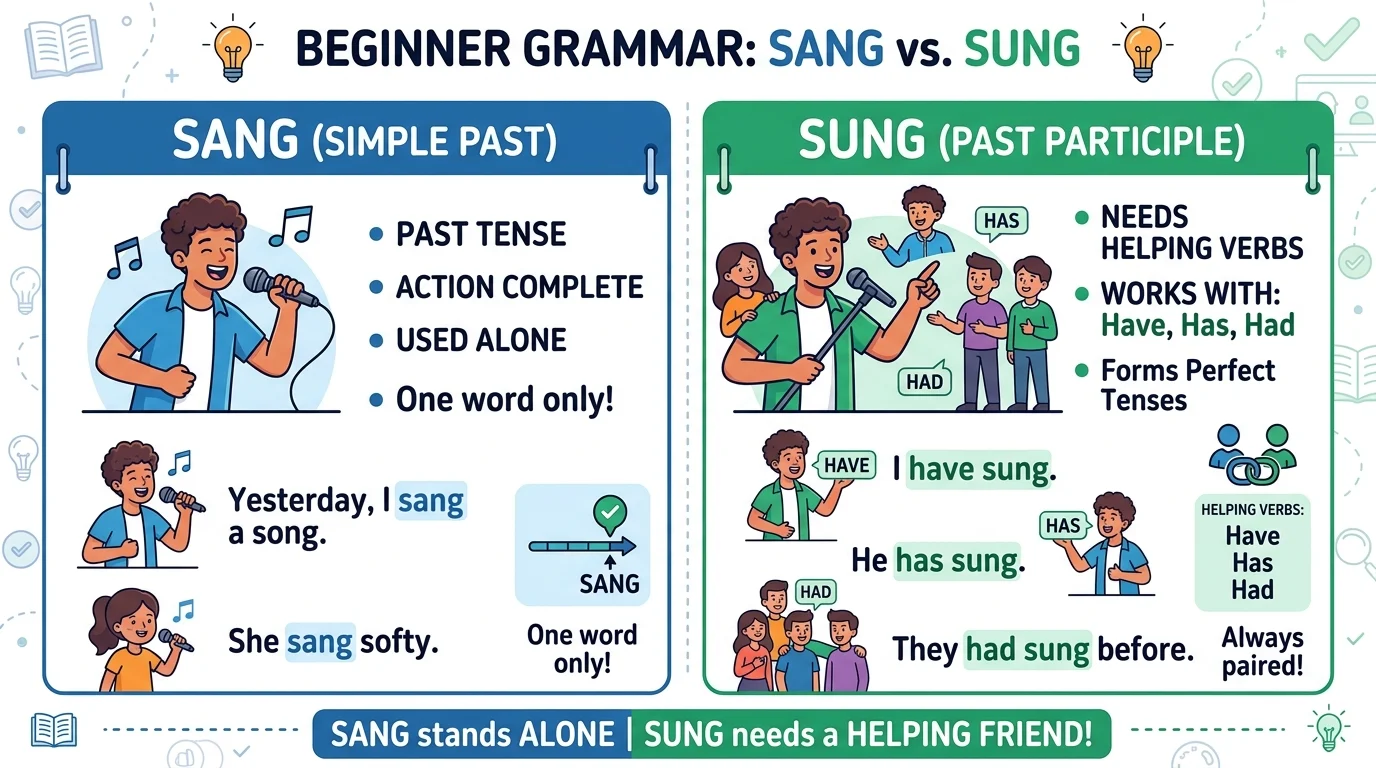
- Sang is the simple past tense of sing
- Sung is the past participle of sing
- Use sang without helping verbs
- Use sung with has, have, or had
Simple Origin or Background
The verb sing is an old English verb with irregular forms.
Its main forms are:
- sing
- sang
- sung
English keeps these older forms instead of adding “ed.”
Because both words refer to past singing actions, learners often confuse them.
Clear Explanation of the Difference
What does “sang” mean
Sang is the simple past tense of sing.
It means:
- someone sang in the past
Examples:
- She sang beautifully yesterday
- They sang at the concert
- I sang my favorite song last night
Use sang for completed past actions without helping verbs.
What does “sung” mean
Sung is the past participle form of sing.
It is usually used with:
- has
- have
- had
- was
- were
Examples:
- She has sung many songs
- The anthem was sung before the game
- They had sung together before
Use sung with helping verbs.
Comparison Table
| Feature | Sang | Sung |
|---|---|---|
| Grammar role | Simple past tense | Past participle |
| Needs helping verb | No | Yes |
| Example | He sang yesterday | He has sung before |
| Time focus | Completed past action | Past action with helper verb |
Which One to Use and When
Use sang when:
- Talking about a past action directly
- No helping verb is present
Examples:
- We sang during the trip
- She sang loudly at school
Use sung when:
- Using has, have, had, was, or were
- Forming perfect or passive structures
Examples:
- He has sung professionally for years
- The song was sung perfectly
Common Mistakes People Make
1. Using “sung” without helping verbs
Wrong:
- She sung yesterday
Correct:
- She sang yesterday
2. Using “sang” with helping verbs
Wrong:
- He has sang before
Correct:
- He has sung before
3. Forgetting grammar structure
Remember:
- sang stands alone
- sung needs a helper verb
4. Mixing past tense and past participle
This is one of the most common irregular verb mistakes.
Everyday Real Life Examples
In Emails
- The children sang at the event
- The national anthem was sung beautifully
In News
- The artist sang live last night
- Traditional songs were sung during the ceremony
On Social Media
- She sang my favorite song today
- That song has been sung for generations
In Daily Conversations
- We sang together at school
- He has sung in many competitions
Short Learning Section for Students and Beginners
1. Learn the verb forms
- sing
- sang
- sung
2. Remember the helper rule
If you see:
- has
- have
- had
use:
- sung
3. Practice simple examples
- I sang yesterday
- I have sung before
4. Use memory tricks
- sang = simple past
- sung = helper verb needed
FAQ Section
1. What does “sang” mean
It is the simple past form of sing.
2. What does “sung” mean
It is the past participle form of sing.
3. Which sentence is correct
She sang yesterday.
4. Which sentence is correct with “has”
She has sung before.
5. Can “sung” stand alone
Usually no.
6. Why do learners confuse these words
Because both describe past singing actions.
7. Is “He has sang” correct
No.
Correct sentence:
- He has sung.
8. How can I remember the difference
Remember:
- sang = no helper
- sung = helper needed
Conclusion
The difference between sung and sang becomes simple once you understand verb tense and helping verbs.
- Sang is the simple past tense
- Sung is the past participle used with helper verbs
A simple memory trick:
- sang = past action alone
- sung = used with has, have, or had
With practice and clear examples, you can use both words correctly and naturally.