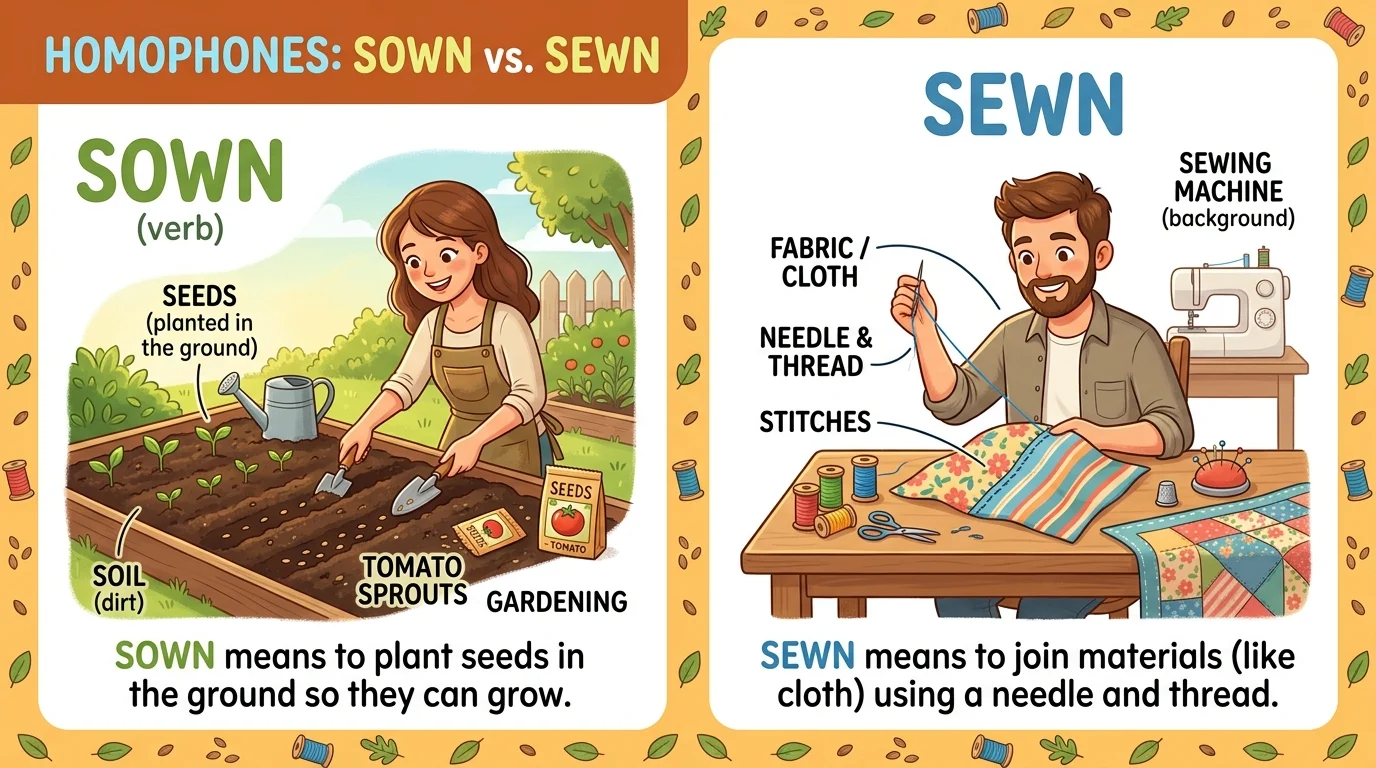
Many English learners confuse sown and sewn because the words sound very similar. Both are past participle forms, and both are used in English writing and conversation.
However, their meanings are completely different. One relates to planting seeds, while the other relates to stitching cloth or fabric.
Because the pronunciation is close, learners often spell the wrong word by mistake.
This guide explains the difference in very simple English with clear examples and beginner friendly tips.
Quick Answer
- Sown relates to planting seeds
- Sewn relates to stitching fabric or clothing
- Sown comes from the verb “sow”
- Sewn comes from the verb “sew”
Simple Origin or Background
The verb sow has old farming roots and means:
- to plant seeds in soil
The verb sew comes from old words connected to stitching cloth together.
Their past participle forms became:
- sow → sown
- sew → sewn
Because the words sound alike, learners often confuse them in writing.
Clear Explanation of the Difference
What does “sown” mean
Sown is the past participle of sow.
It means:
- seeds were planted in soil
Examples:
- Farmers had sown the wheat
- The seeds were sown in spring
- They have sown rice across the fields
This word is connected to farming and planting.
What does “sewn” mean
Sewn is the past participle of sew.
It means:
- cloth or fabric was stitched together
Examples:
- The dress was sewn by hand
- She had sewn a new shirt
- The torn bag was carefully sewn
This word is connected to clothing and fabric.
Comparison Table
| Feature | Sown | Sewn |
|---|---|---|
| Comes from | Sow | Sew |
| Meaning | Planted seeds | Stitched fabric |
| Related to | Farming and gardening | Clothing and sewing |
| Example | Seeds were sown | The shirt was sewn |
Which One to Use and When
Use sown when:
- Talking about farming
- Referring to seeds or planting
- Discussing agriculture or gardening
Examples:
- The farmers have sown corn
- Seeds were sown before rain arrived
Use sewn when:
- Talking about clothing or fabric
- Referring to stitching or repairing cloth
Examples:
- The blanket was sewn carefully
- She has sewn many dresses
Common Mistakes People Make
1. Using “sewn” for planting
Wrong:
- The seeds were sewn yesterday
Correct:
- The seeds were sown yesterday
2. Using “sown” for clothing
Wrong:
- My jacket was sown by hand
Correct:
- My jacket was sewn by hand
3. Confusing pronunciation and spelling
The words sound very similar but belong to different topics.
4. Forgetting the original verb
Remember:
- sow → sown
- sew → sewn
Everyday Real Life Examples
In Emails
- The fields were sown last month
- The uniforms were sewn locally
In News
- Farmers had already sown crops before the storm
- The costumes were sewn by designers
On Social Media
- We finally sown flowers in the garden
- She has sewn her own wedding dress
In Daily Conversations
- Wheat was sown early this year
- My grandmother sewn all our clothes by hand
Short Learning Section for Students and Beginners
1. Learn the simple meanings
- sown = planted
- sewn = stitched
2. Think about the topic
Ask:
- Is it about seeds
or - Is it about fabric
3. Practice simple examples
- The seeds were sown
- The shirt was sewn
4. Use memory tricks
- sown = soil and seeds
- sewn = sewing clothes
FAQ Section
1. What does “sown” mean
It means seeds were planted.
2. What does “sewn” mean
It means fabric or cloth was stitched.
3. Which word relates to farming
Sown.
4. Which word relates to clothing
Sewn.
5. Are these words pronounced similarly
Yes.
6. Is “seeds were sewn” correct
No.
Correct sentence:
- Seeds were sown.
7. Why do learners confuse these words
Because they sound very similar.
8. How can I remember the difference
Remember:
- sown = soil
- sewn = stitching
Conclusion
The difference between sown and sewn becomes simple once you focus on the topic.
- Sown relates to planting seeds
- Sewn relates to stitching fabric
A simple memory trick:
- sown = soil
- sewn = sewing
With practice and clear examples, you can easily use both words correctly and confidently.