Many English learners and even native speakers feel confused when they see the words vender and vendor. The two words look almost the same, and both seem related to selling something. Because of this, people often wonder if they mean the same thing or if one of them is incorrect.
This confusion usually happens when students are writing essays, sending emails, or reading business documents. Some people type vender when they actually mean vendor. Others think both spellings are acceptable in all situations.
The good news is that the difference is simple. Once you understand the meaning and common usage, you will know exactly which word to use.
This guide explains vender vs vendor in very simple English so that students, beginners, and general readers can understand it easily.
Quick Answer
Here is the simple answer to the question about vender vs vendor.
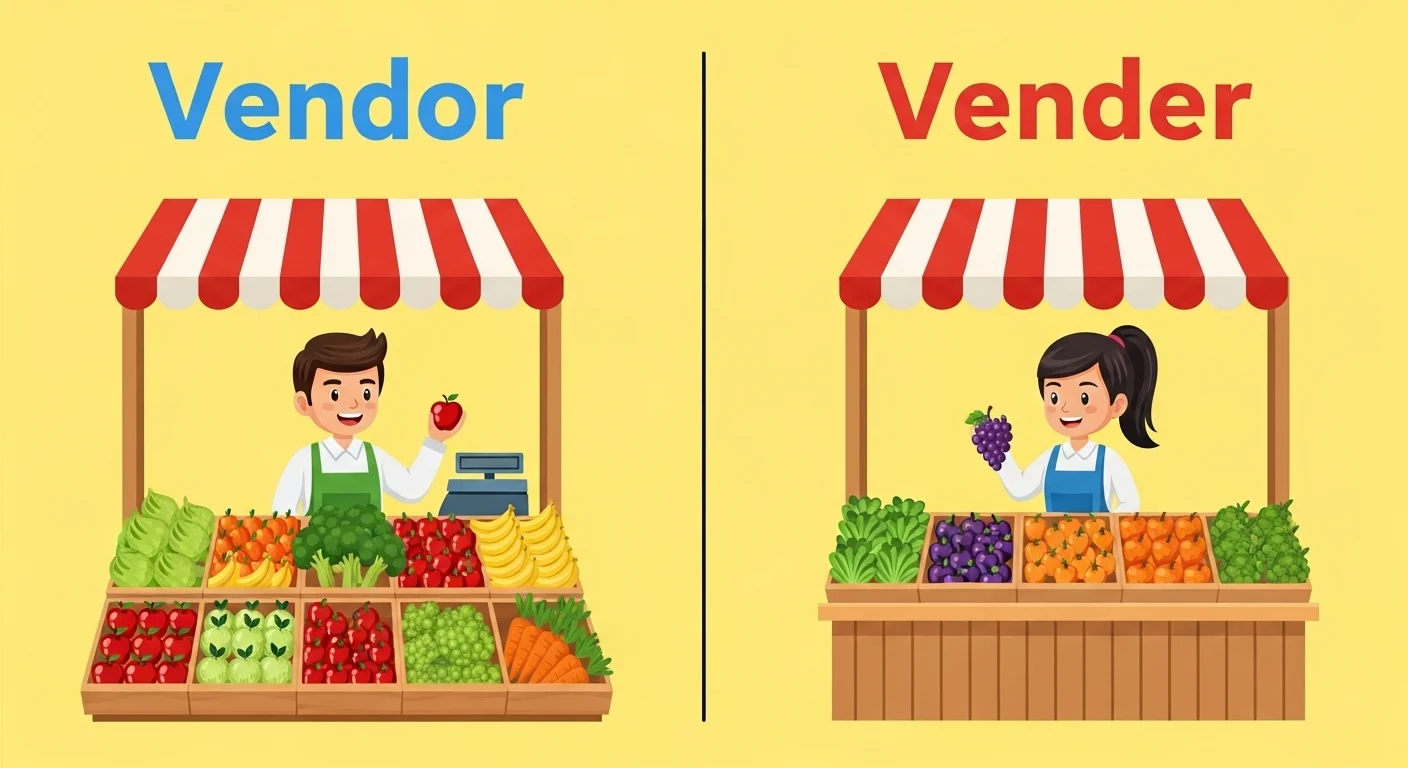
Vendor is the correct and commonly used word for a person or company that sells products or services.
Vender is a very rare spelling and is usually avoided in modern English.
Key points to remember
• Vendor means a person or business that sells something
• Vendor is the standard spelling in modern English
• Vender is rarely used today
• In almost every situation you should use vendor
If you are unsure which word to use, choose vendor.
Simple Origin or Background
Both vender and vendor come from the old English verb vend.
The word vend means to sell something.
For example, if a person sells snacks, drinks, or goods, they are vending those items.
From this verb, the noun vendor was created. A vendor is simply a person who sells something.
In earlier forms of English, the spelling vender sometimes appeared in writing. Over time, however, the spelling vendor became the standard and most widely accepted form.
Today, vendor is used in everyday English, business language, and common writing.
Because of this change in usage, vender is now considered uncommon and rarely appears in modern communication.
Clear Explanation of the Difference
Understanding the difference between vender and vendor is very simple.
Vendor
Vendor is a noun. A noun is a word that names a person, place, or thing.
A vendor is a person or a company that sells goods or services.
You will often hear the word vendor in places like markets, business offices, technology companies, and public events.
Examples
A fruit vendor sells apples and oranges at a market.
A food vendor sells snacks at a festival.
A software vendor sells computer programs to businesses.
In these examples, vendor refers to the seller.
Vendor is the correct word in almost every modern situation.
Vender
Vender is a rare spelling that is sometimes connected to the verb vend.
It may appear in very old writing or in special situations related to selling property or goods.
However, this spelling is not commonly used in everyday English.
Most writers, teachers, and businesses prefer the word vendor.
Because of this, learners should avoid using vender in normal writing.
Comparison Table
The following table makes the difference between vender and vendor easier to understand.
| Feature | Vendor | Vender |
| Common in modern English | Yes | No |
| Meaning | Person or company that sells goods or services | Rare form related to selling |
| Used in business writing | Yes | Almost never |
| Used in everyday communication | Yes | Very rare |
| Recommended spelling | Yes | Usually avoided |
This table shows that vendor is the clear choice in modern English.
Which One to Use and When
In almost every situation, the correct word to use is vendor.
You should use vendor when talking about people or companies that sell products or services.
Examples of correct use
Market situations
The vegetable vendor sells fresh tomatoes every morning.
Business situations
Our company works with a printing vendor for marketing materials.
Events and festivals
Food vendors will serve different dishes at the city festival.
Technology
The software vendor released a new update this week.
Office communication
Please contact the office supply vendor for the delivery schedule.
In all these situations, vendor is the correct word.
The word vender is rarely needed in everyday communication.
Common Mistakes People Make
Many students and writers make small mistakes when using vender and vendor. Let us look at the most common ones.
Using vender instead of vendor
Incorrect sentence
The street vender sells hot coffee.
Correct sentence
The street vendor sells hot coffee.
Thinking both spellings are equally common
Some people believe vender and vendor are used in the same way. In reality, vendor is the standard spelling used today.
Confusing vendor with vending
The word vending is related but different.
A vendor is a person who sells items.
A vending machine is a machine that sells items automatically.
Example
The vendor sells snacks outside the station.
The vending machine sells drinks inside the station.
Understanding this difference helps avoid confusion.
Everyday Real Life Examples
Seeing how the word vendor is used in real life makes it easier to remember.
Email example
Hello James
Please contact the food vendor about tomorrow’s event.
Thank you
Office conversation
Manager
Did the vendor send the invoice today
Employee
Yes the vendor emailed it this morning
News example
Local vendors are preparing their stalls for the weekend market.
Social media example
I bought delicious noodles from a street vendor today.
Event announcement
More than thirty food vendors will join the city festival.
School event example
The school invited local vendors to sell books and snacks during the fair.
These examples show that vendor is commonly used in daily communication.
Short Learning Section for Students and Beginners
Here are some simple tips that help students remember the difference.
Easy memory idea
Vendor means seller.
When you see a person selling food, clothes, or services, that person is a vendor.
Simple practice
Choose the correct word to complete the sentence.
The fruit sells bananas and oranges.
Correct answer
vendor
Our company hired a new compute.
Correct answer
vendor
The street sells fresh lemonade.
Correct answer
vendor
In all these sentences, vendor is the correct word.
Simple rule for beginners
If you are unsure, always choose vendor.
It is the standard and safest spelling.
FAQ About Vender vs Vendor
Is vender a real word
Yes vender exists in English, but it is very rare and not commonly used in modern writing.
What does vendor mean
A vendor is a person or a company that sells goods or services.
Which spelling is correct in modern English
Vendor is the correct and widely accepted spelling today.
Do businesses use vendor or vender
Businesses almost always use the word vendor.
Is a street seller called a vendor
Yes a person selling food or goods on the street is called a street vendor.
What is a vending machine
A vending machine is a machine that sells snacks, drinks, or small items automatically.
Should students use vender in school writing
Students should normally use vendor because it is the standard spelling used today.
Are vendor and seller the same
They are similar. A vendor is a type of seller, usually someone who sells products or services in markets, events, or businesses.
Conclusion
The difference between vender vs vendor is simple once you understand how the words are used.
Vendor is the correct and commonly used word for a person or company that sells goods or services. You will see this word in markets, offices, events, and everyday communication.
Vender is a rare spelling that is not commonly used in modern English. Most writers and speakers avoid it.
For students, beginners, and everyday writing, the best choice is vendor. If you remember this simple rule, you will never feel confused about these two words again.
Clear understanding makes writing easier, and knowing the correct word helps you communicate with confidence.