Many English learners confuse inquiries and queries because both words are connected to asking questions or requesting information.
In business, customer service, technology, schools, and daily English, people use these words in similar situations. Because of this, learners often think they mean exactly the same thing.
While the meanings are close, there are small differences in tone, usage, and context.
This guide explains the difference in very simple English with clear examples and beginner friendly tips.
Quick Answer
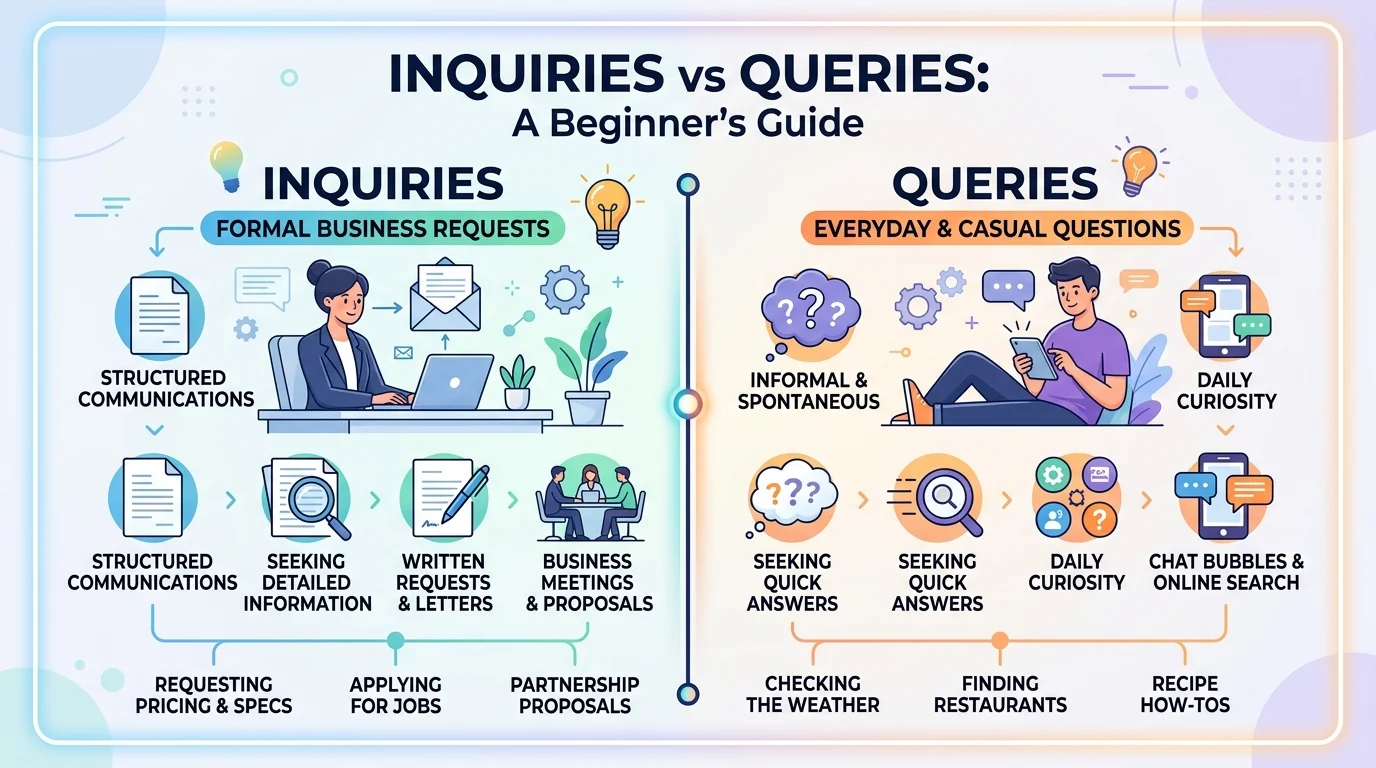
- Inquiries usually means formal requests for information
- Queries usually means questions, doubts, or requests for clarification
- Inquiry often sounds more formal or professional
- Query is common in technology, customer support, and general questioning
Simple Origin or Background
The word inquiry comes from old French and Latin roots related to investigation and searching for information.
The word query comes from Latin roots connected to questioning or asking.
Over time:
- inquiry became common in business, investigations, and official communication
- query became common for direct questions and technical language
Because both involve asking for information, learners often confuse them.
Clear Explanation of the Difference
What does “inquiries” mean
Inquiries is the plural form of inquiry.
It means:
- Requests for information
- Official or formal questions
- Investigations or examinations
Examples:
- The company received customer inquiries
- Police continued their inquiries
- Please send inquiries by email
This word often sounds formal and professional.
What does “queries” mean
Queries is the plural form of query.
It means:
- Questions
- Doubts or concerns
- Requests for clarification
Examples:
- Students asked several queries
- Do you have any queries about the lesson
- The support team answered customer queries
This word is common in everyday and technical English.
Comparison Table
| Feature | Inquiries | Queries |
|---|---|---|
| Meaning | Formal requests for information | Questions or doubts |
| Tone | More formal | More direct or casual |
| Common use | Business and official matters | Questions and technical topics |
| Example | Customer inquiries | Student queries |
Which One to Use and When
Use inquiries when:
- Writing formally
- Talking about investigations or official requests
- Referring to professional communication
Examples:
- We received several business inquiries
- Officials continued their inquiries
Use queries when:
- Talking about questions or doubts
- Referring to customer support or technology
- Discussing clarification
Examples:
- Please send your queries by email
- The teacher answered student queries
Common Mistakes People Make
1. Thinking both words are always identical
They are similar but differ slightly in tone and context.
2. Using “queries” for official investigations
Wrong:
- Police opened several queries
Better:
- Police opened several inquiries
3. Assuming “inquiries” always sounds natural in casual speech
In casual conversation, “questions” or “queries” may sound better.
4. Forgetting technical usage
“Query” is very common in computer and database language.
Everyday Real Life Examples
In Emails
- Please direct inquiries to customer support
- Let us know if you have any queries
In News
- Officials continued inquiries into the accident
- Experts answered public queries about health concerns
On Social Media
- I have a few queries about this product
- The company received many inquiries today
In Daily Conversations
- Do you have any queries
- We made inquiries about the hotel
Short Learning Section for Students and Beginners
1. Learn the simple meanings
- inquiries = formal requests
- queries = questions or doubts
2. Think about tone
- formal communication → inquiries
- direct questions → queries
3. Practice simple examples
- The office received inquiries
- Students asked queries
4. Use memory tricks
- inquiry = investigation or formal request
- query = question
FAQ Section
1. What does “inquiries” mean
It means formal requests for information or investigations.
2. What does “queries” mean
It means questions or requests for clarification.
3. Which word sounds more formal
Inquiries.
4. Which word is common in technology
Queries.
5. Can both words mean questions
Yes, in many situations.
6. Which word is common in business communication
Inquiries.
7. Why do learners confuse these words
Because both involve asking for information.
8. How can I remember the difference
Remember:
- inquiries = formal requests
- queries = questions
Conclusion
The difference between inquiries and queries becomes simple once you understand tone and context.
- Inquiries usually refers to formal requests or investigations
- Queries usually refers to questions, doubts, or clarification requests
A simple memory trick:
- inquiries = formal information request
- queries = direct question
With practice and clear examples, you can use both words correctly and naturally.