Many English learners confuse piqued and peaked because the words sound exactly the same. These words are homophones, which means they share pronunciation but have different spellings and meanings.
The confusion becomes even more common in expressions like:
- “my interest was piqued”
- “sales peaked last year”
Although the words sound alike, they are used in completely different situations.
This guide explains the difference in very simple English with clear examples and beginner friendly tips.
Quick Answer
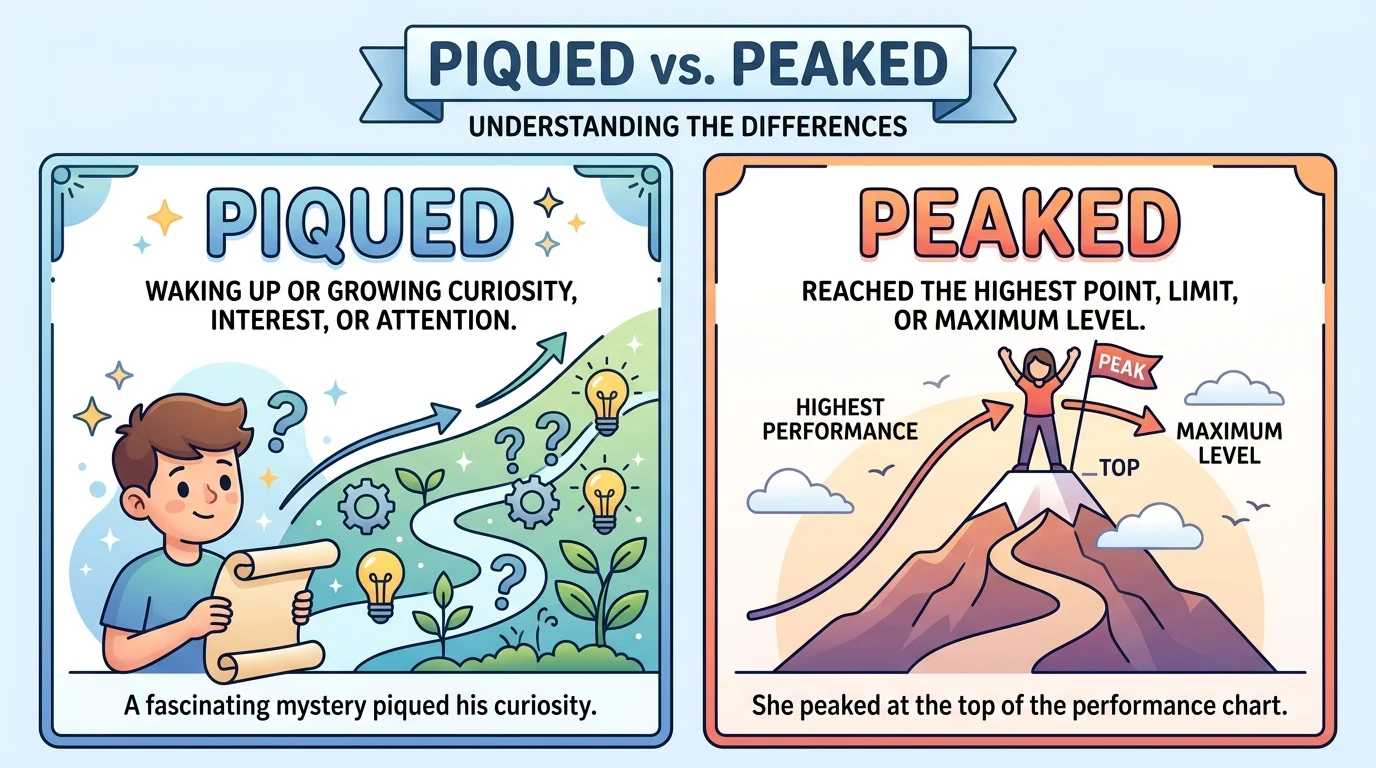
- Piqued usually means excited, interested, or stimulated
- Peaked usually means reached the highest point
- Piqued is often connected to curiosity or emotions
- Peaked is often connected to levels, numbers, or mountains
Simple Origin or Background
The word piqued comes from French roots connected to stimulating or provoking feelings.
The word peaked comes from the noun peak, meaning:
- top point
- highest level
- mountain top
Because both words sound identical, learners often spell them incorrectly.
Clear Explanation of the Difference
What does “piqued” mean
Piqued is usually the past form of pique.
It means:
- Stimulated interest
- Aroused curiosity
- Triggered emotion
Examples:
- The story piqued my interest
- Her curiosity was piqued
- The unusual title piqued attention
This word is commonly used with:
- interest
- curiosity
- emotions
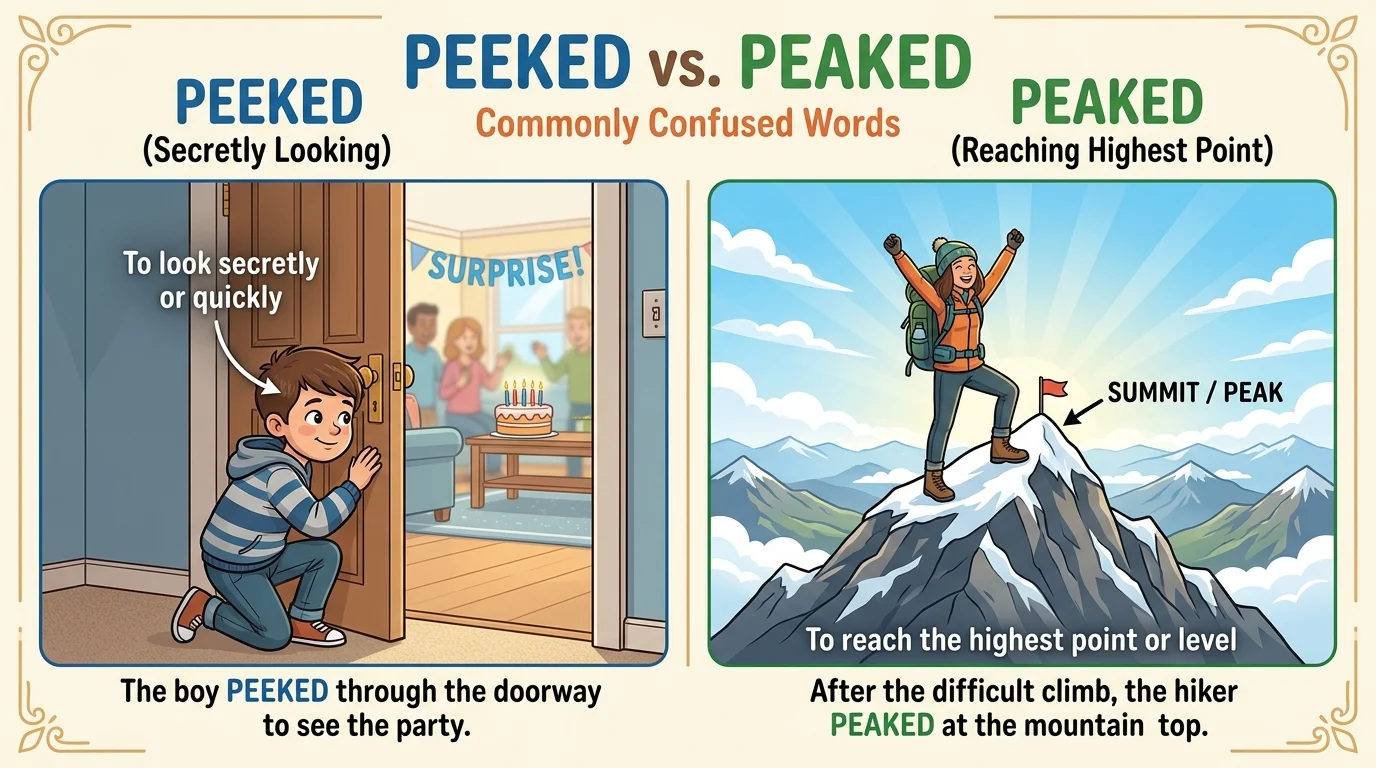
What does “peaked” mean
Peaked is the past form of peak.
It means:
- Reached the highest point
- Rose to the maximum level
Examples:
- Sales peaked in July
- The crowd peaked at midnight
- Temperatures peaked during the afternoon
This word is connected to height, levels, or maximum points.
Comparison Table
| Feature | Piqued | Peaked |
|---|---|---|
| Meaning | Stimulated interest or emotion | Reached highest point |
| Related to | Curiosity and feelings | Levels and maximum points |
| Common phrases | Piqued my interest | Peaked at noon |
| Example | The topic piqued curiosity | Prices peaked last year |
Which One to Use and When
Use piqued when:
- Talking about curiosity or interest
- Describing emotional reactions
- Discussing something stimulating attention
Examples:
- The article piqued my interest
- His comment piqued curiosity
Use peaked when:
- Talking about maximum levels
- Describing highest points
- Discussing growth or increase
Examples:
- Traffic peaked in the evening
- Her performance peaked last season
Common Mistakes People Make
1. Writing “peaked my interest”
Wrong:
- The movie peaked my interest
Correct:
- The movie piqued my interest
2. Using “piqued” for highest levels
Wrong:
- Temperatures piqued at noon
Correct:
- Temperatures peaked at noon
3. Forgetting meaning differences
Remember:
- piqued = curiosity
- peaked = highest point
4. Confusing spelling because of pronunciation
These words sound identical but mean very different things.
Everyday Real Life Examples
In Emails
- Your proposal piqued our interest
- Website traffic peaked yesterday
In News
- Public curiosity was piqued by the announcement
- Fuel prices peaked during summer
On Social Media
- That trailer really piqued my interest
- Interest in the trend peaked last month
In Daily Conversations
- The book piqued my curiosity
- His popularity peaked in college
Short Learning Section for Students and Beginners
1. Learn the simple meanings
- piqued = interested
- peaked = highest point
2. Think about context
Ask:
- Is it about curiosity
or - Is it about reaching the top
3. Practice simple examples
- The lesson piqued interest
- Sales peaked this year
4. Use memory tricks
- piqued = provoke curiosity
- peaked = peak or top point
FAQ Section
1. What does “piqued” mean
It means stimulated interest or curiosity.
2. What does “peaked” mean
It means reached the highest point.
3. Which phrase is correct
Piqued my interest.
4. Which word relates to maximum levels
Peaked.
5. Are these words pronounced the same
Yes.
6. Can “peaked” describe numbers or temperatures
Yes.
7. Why do learners confuse these words
Because they sound identical.
8. How can I remember the difference
Remember:
- piqued = curiosity
- peaked = top level
Conclusion
The difference between piqued and peaked becomes simple once you focus on meaning.
- Piqued relates to interest, curiosity, or emotion
- Peaked relates to reaching the highest point
A simple memory trick:
- piqued = curiosity sparked
- peaked = top point reached
With practice and clear examples, you can easily avoid this common spelling mistake.