“Make do” and “make due” sound exactly the same, so many learners mix them up in writing. When you hear the phrase, it is easy to guess the wrong spelling.
But in standard English, only one of these is correct.
Let’s clear this confusion in a very simple and friendly way.
Quick Answer
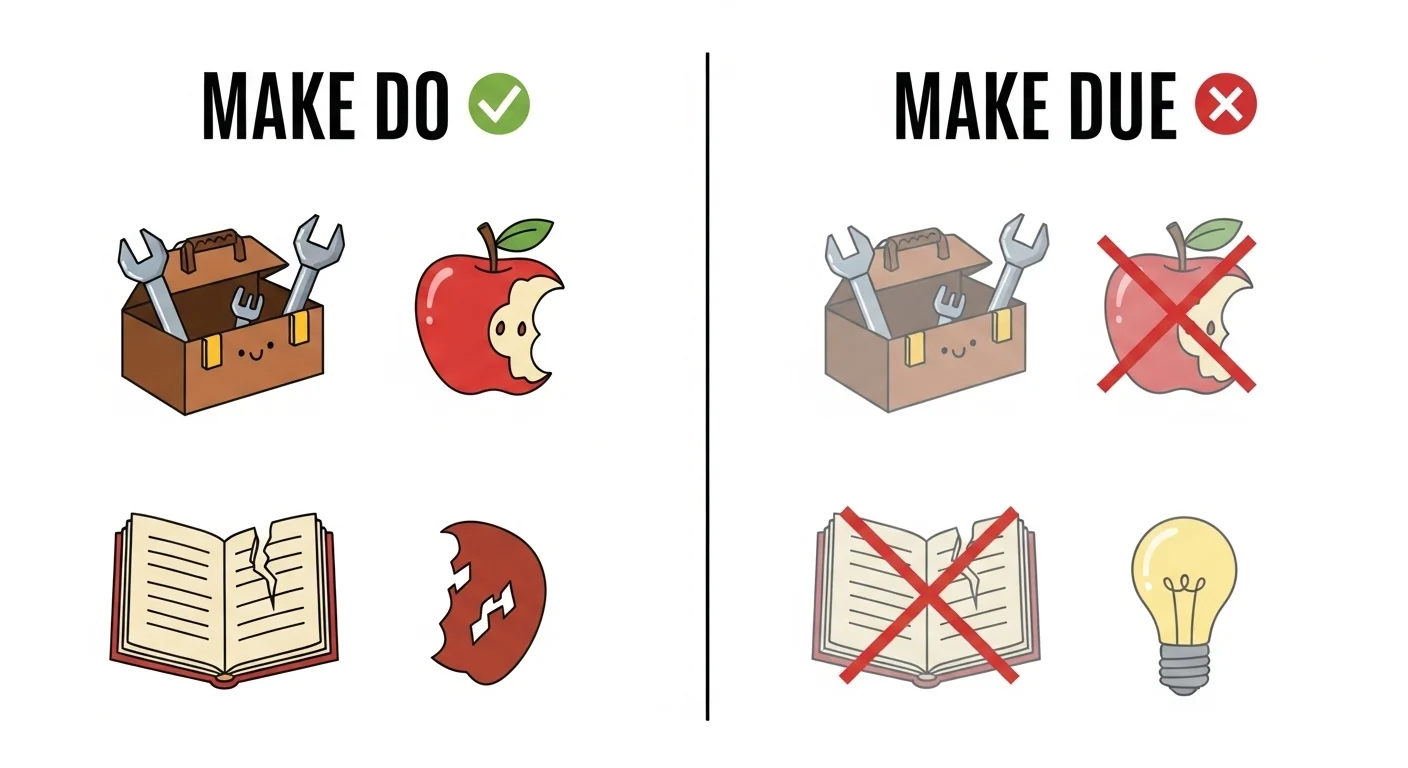
- “Make do” is the correct phrase
- “Make due” is incorrect in this meaning
- “Make do” means to manage with what you have
- Always use “make do” in writing
Simple Background Explanation
The phrase “make do” comes from the idea of “doing with what is available.”
Over time, it became a common expression used when people do not have everything they need but still manage.
“Due” is a different word that means “expected” or “owed,” so it does not fit in this phrase.
Clear Explanation of the Difference
Let’s make it very simple.
“Make do”
This is correct. It means to manage or continue with limited resources.
Examples:
- We will have to make do with what we have.
- He made do with old tools.
“Make due”
This is incorrect in this context.
Example:
- We will make due ❌ wrong
So the difference is about correct vs incorrect usage.
Comparison Table
| Phrase | Correct or Not | Meaning | Should You Use It |
|---|---|---|---|
| Make do | Correct | Manage with what you have | Yes |
| Make due | Incorrect | No correct meaning here | No |
What “Make Do” Means
“Make do” means:
- To manage
- To continue without something better
- To use what is available
Examples:
- We made do without electricity.
- She made do with simple clothes.
- They made do during hard times.
When to Use “Make Do”
Use “make do” when:
- You do not have enough
- You still continue or manage
- You adjust to a situation
Examples:
- We will make do with limited time.
- He made do with basic tools.
- They made do in a small house.
There is never a correct situation to use “make due” for this meaning.
Why People Make This Mistake
Here are the main reasons:
Same pronunciation
“Do” and “due” sound the same.
Spelling confusion
People choose the wrong word.
Common word “due”
It is used often in other contexts.
Lack of awareness
Many learners do not know the phrase.
Simple tip:
Make do = do with what you have
Common Mistakes to Avoid
Here are mistakes to watch for:
Writing “make due”
This is incorrect.
Mixing meanings
“Due” does not fit here.
Not checking spelling
Always review your sentence.
Correct vs incorrect examples:
- We will make do ✔️
- We will make due ❌
- They made do with less ✔️
- They made due with less ❌
Everyday Real Life Examples
Here are simple examples from daily life.
At home:
- We will make do with simple food.
- She made do without help.
At work:
- We had to make do with old equipment.
- The team made do under pressure.
In daily life:
- He made do with what he had.
- They made do during the shortage.
In conversation:
- We will make do
- Just make do for now
Easy Learning Section for Beginners
Here is a simple trick:
“Make do” = manage
Memory tip:
Do = action
So “make do” = take action with what you have
Practice sentences:
- We will make do
- She made do with less
- They will make do
Mini exercise:
Fill in the blanks:
- We will ______ do with this
Answer: make - They ______ do with old tools
Answer: made - She will ______ do for now
Answer: make
Never use “make due”
Frequently Asked Questions
1. Is “make due” correct
No, it is incorrect in this meaning.
2. What is the correct phrase
The correct phrase is “make do.”
3. What does “make do” mean
It means to manage with what you have.
4. Why do people say “make due”
Because “do” and “due” sound the same.
5. Can I use “make due” informally
No, it is incorrect.
6. Is this mistake common
Yes, very common.
7. How can I remember the correct form
Remember “do” means action.
8. Will this mistake affect my writing
Yes, it can make your writing incorrect.
Conclusion
The difference between “make do” and “make due” is simple.
“Make do” is the correct phrase and means to manage with what you have.
“Make due” is incorrect and should be avoided.
Just remember:
Make do = manage
With this simple rule, you can use the correct phrase confidently every time.