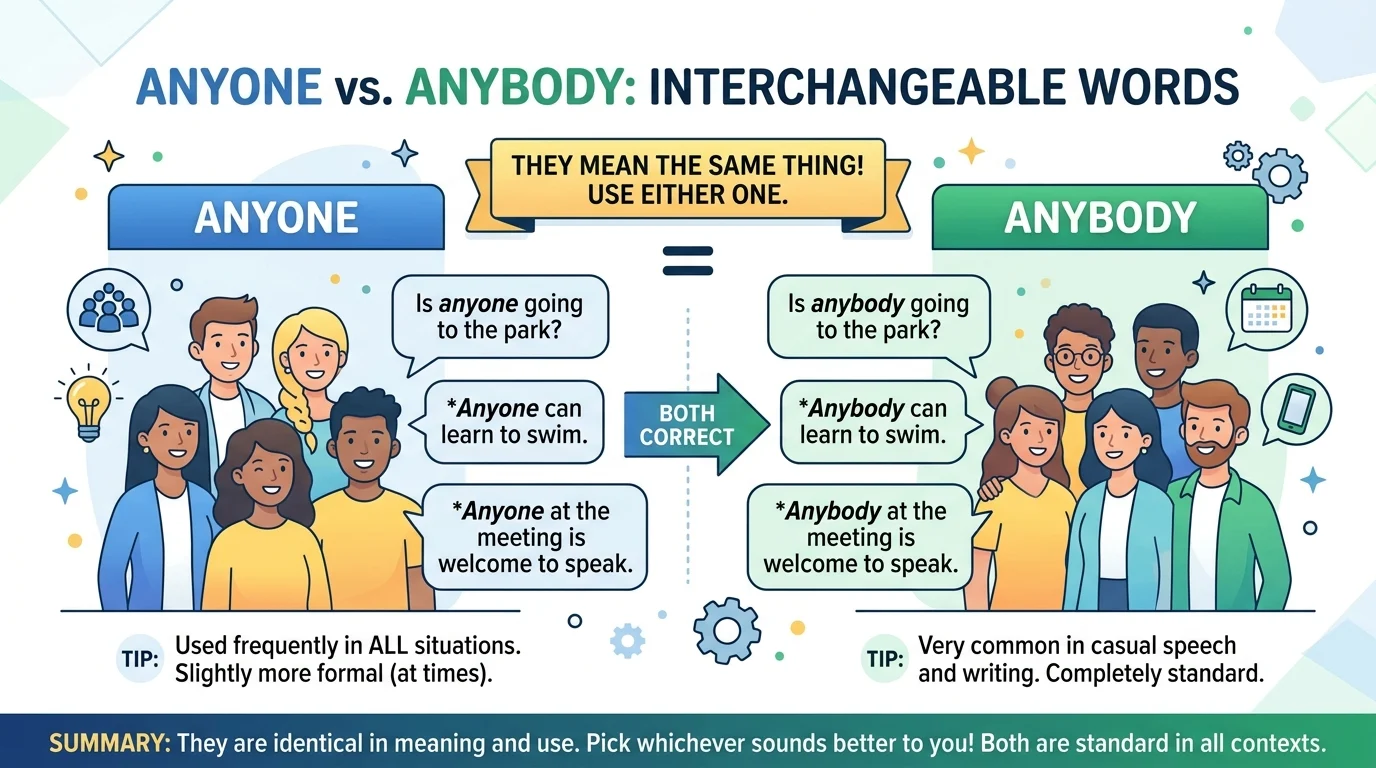
Many English learners wonder if there is a difference between anyone and anybody. Since both words are used to talk about people in a general way, they often seem exactly the same.
The truth is that their meanings are almost identical in most situations. However, there are small differences in tone and usage that can help you sound more natural in English.
This guide explains everything in very simple English with clear examples and beginner friendly tips.
Quick Answer
- Anyone and anybody usually mean the same thing
- Both refer to any person
- Anyone sounds slightly more formal
- Anybody sounds slightly more casual and conversational
Simple Origin or Background
Both words were created by combining:
- any
with - one or body
Over time, English speakers began using both forms in similar ways.
Today, they are mostly interchangeable in everyday English.
Clear Explanation of the Difference
What does “anyone” mean
Anyone means:
- Any person
- No specific person
Examples:
- Does anyone know the answer
- Anyone can join the event
- I did not see anyone there
This word is slightly more common in formal or written English.
What does “anybody” mean
Anybody also means:
- Any person
- No specific person
Examples:
- Does anybody want coffee
- Anybody can learn English
- I did not tell anybody
This word often sounds more relaxed and conversational.
Comparison Table
| Feature | Anyone | Anybody |
|---|---|---|
| Meaning | Any person | Any person |
| Formality | Slightly more formal | Slightly more casual |
| Common in | Writing and formal speech | Conversation and casual speech |
| Example | Anyone can apply | Anybody can apply |
Which One to Use and When
Use anyone when:
- Writing essays or formal emails
- Speaking in professional situations
- Wanting a slightly formal tone
Examples:
- Anyone interested should apply
- Has anyone seen my notebook
Use anybody when:
- Speaking casually with friends
- Having normal conversations
- Using relaxed everyday English
Examples:
- Anybody hungry
- Did anybody call me
In most cases, either word is correct.
Common Mistakes People Make
1. Thinking the meanings are different
In most situations, they mean the same thing.
2. Writing them as two words
Wrong:
- any one
- any body
Correct:
- anyone
- anybody
3. Using both in the same sentence unnecessarily
Example:
- If anyone knows anybody there, tell me.
This is correct, but learners sometimes overuse both forms together.
4. Believing one is incorrect
Both words are standard English.
Everyday Real Life Examples
In Emails
- If anyone has questions, contact me
- Has anybody responded yet
In News
- Anyone caught breaking the law will face punishment
- Anybody interested in volunteering may apply
On Social Media
- Anybody watching this show tonight
- Anyone else tired today
In Daily Conversations
- Does anybody know the time
- Anyone can do this exercise
Short Learning Section for Students and Beginners
1. Remember the main idea
Both words mean:
- any person
2. Learn the tone difference
- anyone = slightly formal
- anybody = slightly casual
3. Practice simple examples
- Anyone can learn
- Anybody can join
4. Focus on natural usage
Both forms are normal and correct in English.
FAQ Section
1. Do anyone and anybody mean the same thing
Yes, in most situations they do.
2. Which word is more formal
Anyone.
3. Which word sounds more casual
Anybody.
4. Can I use them interchangeably
Yes, most of the time.
5. Is “anyone” one word
Yes.
6. Is “anybody” one word
Yes.
7. Which word is more common in conversation
Anybody is slightly more conversational.
8. How can I remember the difference
Remember:
- anyone = slightly formal
- anybody = slightly casual
Conclusion
The difference between anyone and anybody is very small.
- Both words mean any person
- Anyone sounds a little more formal
- Anybody sounds a little more relaxed
In everyday English, both are correct and natural.
With practice and exposure, choosing between them will become easy and automatic.