“Sneaked” and “snuck” both come from the verb “sneak,” and both are used as past tense forms. This makes many learners confused because, unlike other pairs, both forms are actually correct.
So which one should you use?
Let’s make it simple and clear.
Quick Answer
- Both “sneaked” and “snuck” are correct
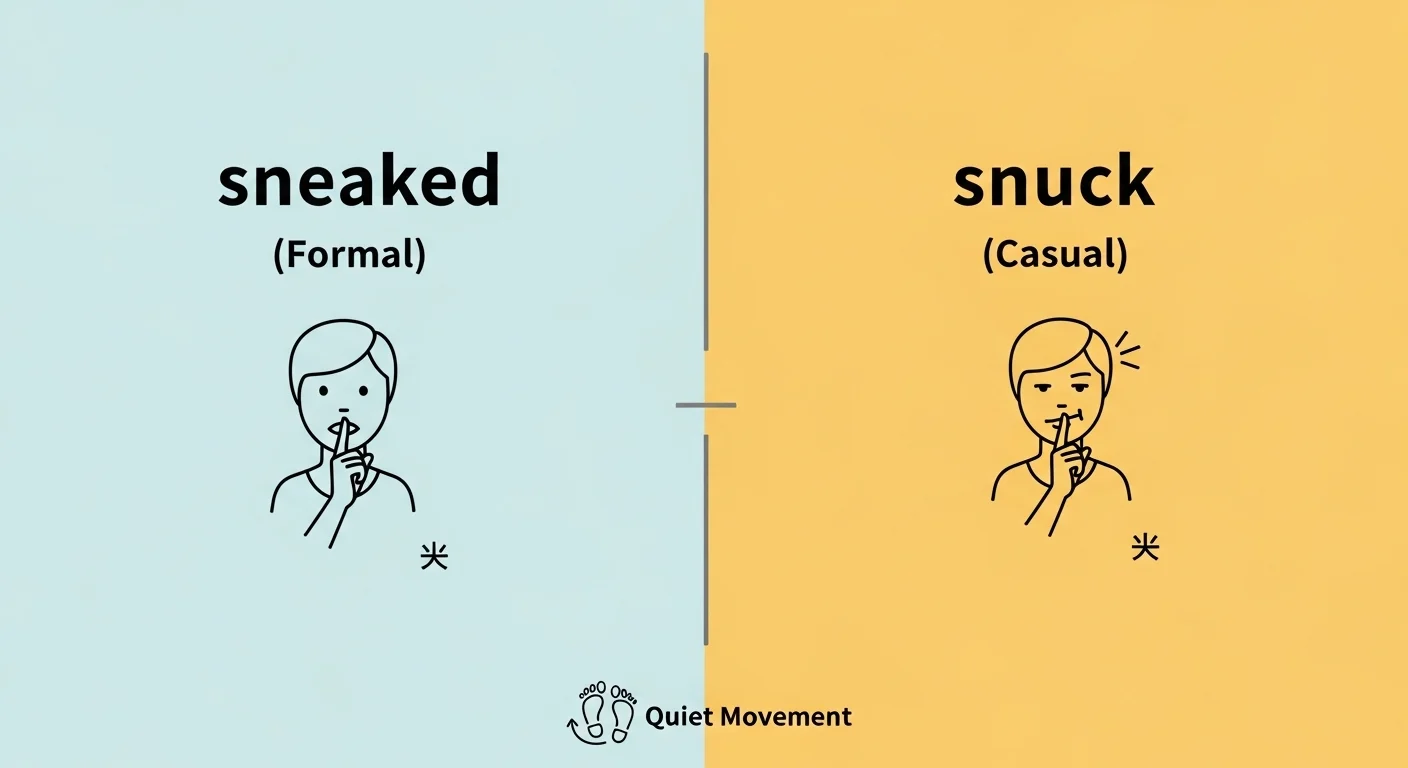
- “Sneaked” is more traditional and formal
- “Snuck” is more informal and common in everyday speech
- You can use either, depending on context
Simple Background Explanation
The verb “sneak” originally formed its past tense as:
- sneak → sneaked
Later, people began using “snuck,” similar to patterns like “stick → stuck.”
Over time, “snuck” became widely accepted, especially in spoken English.
Clear Explanation of the Difference
Let’s make it very simple.
“Sneaked”
This is the original and more formal past tense.
Examples:
- He sneaked into the room.
- She sneaked out quietly.
“Snuck”
This is a newer, informal form that is now widely accepted.
Examples:
- He snuck into the room.
- She snuck out at night.
So the difference is mainly about tone and style.
Comparison Table
| Word | Correct or Not | Tone | When to Use |
|---|---|---|---|
| Sneaked | Correct | Formal | Writing, exams |
| Snuck | Correct | Informal | Speech, casual writing |
What “Sneaked” Means
“Sneaked” is the past tense of “sneak.”
It means:
- To move quietly or secretly
Examples:
- He sneaked into the house.
- She sneaked a look at the paper.
- They sneaked out early.
It is often preferred in formal writing.
What “Snuck” Means
“Snuck” has the same meaning as “sneaked.”
Examples:
- He snuck into the house.
- She snuck a glance.
- They snuck out quietly.
It is very common in everyday conversation.
Which One to Use and When
Use “sneaked” when:
- Writing formally
- Writing essays or exams
- You want a traditional tone
Examples:
- He sneaked into the building.
- She sneaked away silently.
Use “snuck” when:
- Speaking casually
- Writing informally
Examples:
- He snuck in late.
- She snuck out at night.
Easy Trick to Remember
Here is a simple rule:
Sneaked = formal
Snuck = informal
Memory tip:
Snuck sounds shorter and more casual
Why People Get Confused
Here are the main reasons:
Two correct forms
Most words have only one.
Different tones
Formal vs informal use.
Language change
New forms become accepted.
Common usage
People hear both often.
Common Mistakes to Avoid
Here are mistakes to watch for:
Thinking one is wrong
Both are correct.
Using informal form in formal writing
Prefer “sneaked” in exams.
Mixing styles
Stay consistent.
Correct examples:
- He sneaked into the room ✔️
- He snuck into the room ✔️
Everyday Real Life Examples
Here are simple examples from daily life.
In conversation:
- He snuck out last night.
- She snuck into the party.
In writing:
- He sneaked into the building.
- She sneaked a look.
In daily life:
- The cat sneaked inside.
- The child snuck into the kitchen.
Easy Learning Section for Beginners
Here is a simple trick:
Ask yourself:
Is it formal or casual?
Memory tip:
Formal = sneaked
Casual = snuck
Practice sentences:
- He sneaked into the room
- She snuck out
- They sneaked away
Mini exercise:
Fill in the blanks:
- He ______ into the house (formal)
Answer: sneaked - She ______ out last night (casual)
Answer: snuck - They ______ into the room
Answer: sneaked or snuck
Frequently Asked Questions
1. Are “sneaked” and “snuck” both correct
Yes, both are correct.
2. Which one is more formal
“Sneaked” is more formal.
3. Which one is more common in speech
“Snuck” is more common.
4. Can I use “snuck” in writing
Yes, but it is informal.
5. Why are there two forms
Language changes over time.
6. Is this confusing for learners
Yes, very common.
7. How can I remember the difference
Formal vs informal use.
8. Will using the wrong one matter
It can affect tone.
Conclusion
The difference between “sneaked” and “snuck” is simple.
Both are correct, but they differ in tone.
“Sneaked” is more formal, while “snuck” is more casual.
Just remember:
Sneaked = formal
Snuck = casual
With this simple rule, you can choose the right form confidently.