“Disorganized” and “unorganized” look very similar, so many learners think they mean the same thing. While they are close in meaning, there is a small but important difference.
Understanding this difference will help you choose the right word in the right situation.
Let’s make it simple and clear.
Quick Answer
- “Disorganized” means messy or not arranged properly
- “Unorganized” means not yet organized or not arranged at all
- “Disorganized” often sounds more negative
- “Unorganized” can be neutral
Simple Background Explanation
Both words come from the base word “organize.”
- “Dis-” often means “not” or “badly”
- “Un-” means “not yet” or “not done”
So the prefixes change the meaning slightly.
Clear Explanation of the Difference
Let’s make it very simple.
“Disorganized”
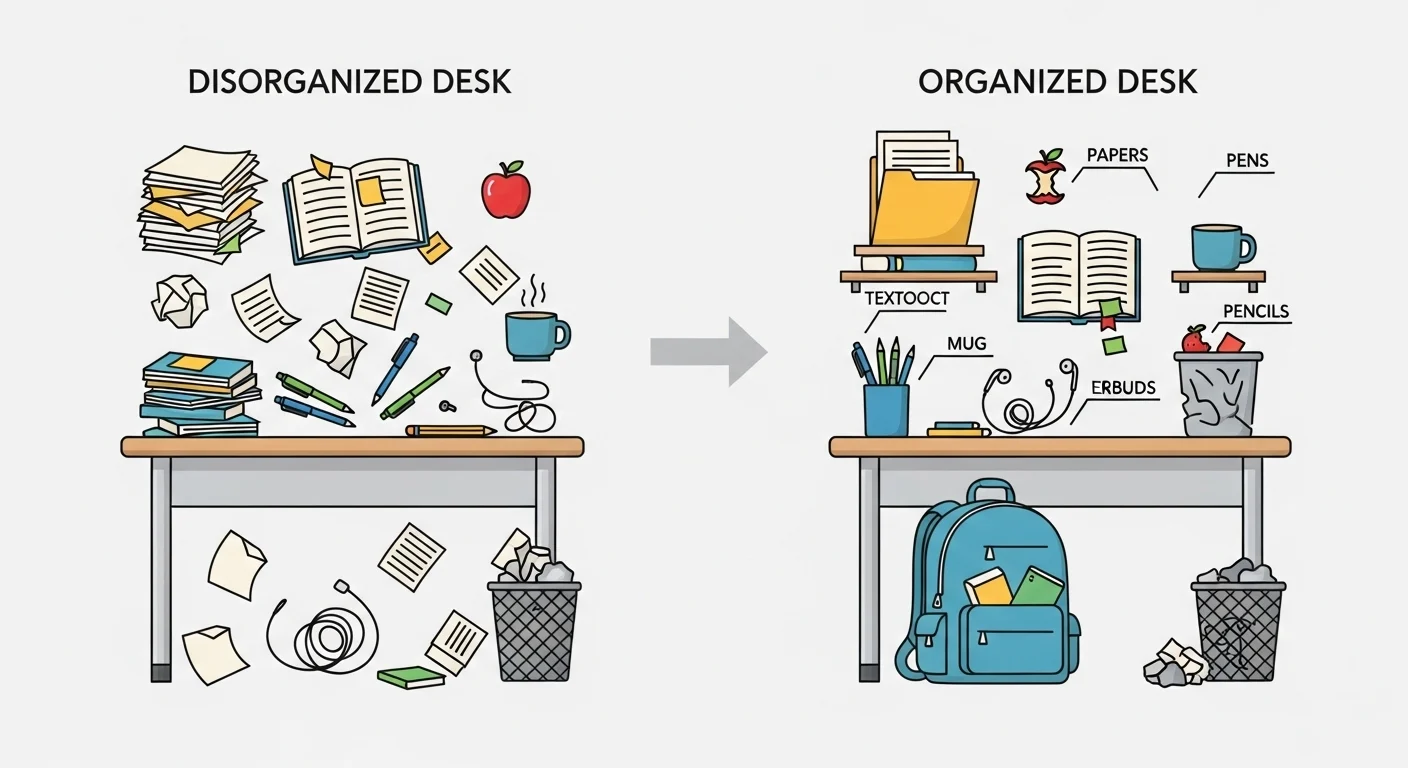
This word means something is messy, confused, or badly arranged.
Examples:
- His desk is disorganized.
- The plan was disorganized.
“Unorganized”
This word means something has not been organized yet.
Examples:
- The files are still unorganized.
- The event is unorganized so far.
So the difference is messy vs not yet arranged.
Comparison Table
| Word | Meaning | Tone | When to Use |
|---|---|---|---|
| Disorganized | Messy or badly arranged | Negative | Poor order |
| Unorganized | Not arranged yet | Neutral | Not started or incomplete |
What “Disorganized” Means
“Disorganized” describes something that is already in a messy or confusing state.
Examples:
- Her room is disorganized.
- The meeting was disorganized.
- His notes are disorganized.
It often shows a problem.
What “Unorganized” Means
“Unorganized” describes something that has not been organized yet.
Examples:
- The documents are unorganized.
- The project is still unorganized.
- The team is unorganized at this stage.
It does not always sound negative.
Which One to Use and When
Use “disorganized” when:
- Something is messy
- Something is poorly arranged
Examples:
- The office is disorganized.
- The system is disorganized.
Use “unorganized” when:
- Something is not arranged yet
- Something is still in progress
Examples:
- The files are unorganized.
- The plan is unorganized for now.
Easy Trick to Remember
Here is a simple rule:
Disorganized = messy
Unorganized = not yet done
Memory tip:
Un = not yet
Dis = bad condition
Why People Get Confused
Here are the main reasons:
Similar spelling
Only the prefix changes.
Same root word
Both come from “organize.”
Close meanings
Both relate to order.
Context confusion
Difference is subtle.
Common Mistakes to Avoid
Here are mistakes to watch for:
Using “unorganized” for messy situations
- His desk is unorganized ❌ (better: disorganized)
Using “disorganized” for something not started
- The files are disorganized before sorting ❌
Correct vs incorrect examples:
- His desk is disorganized ✔️
- His desk is unorganized ❌
- The files are unorganized ✔️
- The files are disorganized (depends on context but less precise)
Everyday Real Life Examples
Here are simple examples from daily life.
At home:
- My room is disorganized.
- The closet is still unorganized.
At work:
- The meeting was disorganized.
- The project is unorganized for now.
In school:
- His notes are disorganized.
- The materials are unorganized.
In conversation:
- This is disorganized
- It is still unorganized
Easy Learning Section for Beginners
Here is a simple trick:
Ask yourself:
Is it messy or just not done?
Memory tip:
Messy = disorganized
Not done = unorganized
Practice sentences:
- My desk is disorganized
- The files are unorganized
- The plan is disorganized
Mini exercise:
Fill in the blanks:
- My room is very ______
Answer: disorganized - The files are still ______
Answer: unorganized - The meeting was ______
Answer: disorganized
Frequently Asked Questions
1. What is the difference between “disorganized” and “unorganized”
“Disorganized” means messy, while “unorganized” means not arranged yet.
2. Can I use them interchangeably
Sometimes, but not always.
3. Which one is more negative
“Disorganized” is more negative.
4. What does “unorganized” mean
It means not yet organized.
5. Why are they confusing
Because they look similar.
6. Is this mistake common
Yes, very common.
7. How can I remember the difference
Think messy vs not done.
8. Will this mistake affect my writing
Yes, it can change tone.
Conclusion
The difference between “disorganized” and “unorganized” is simple once you understand it.
“Disorganized” means messy or poorly arranged.
“Unorganized” means not arranged yet.
Just remember:
Disorganized = messy
Unorganized = not done
With this simple rule, you can use both words correctly and confidently.