Many English learners confuse well and good because both words are connected to positive meanings. People often hear sentences like “I’m good” and “I’m well,” so it becomes difficult to know which one is correct.
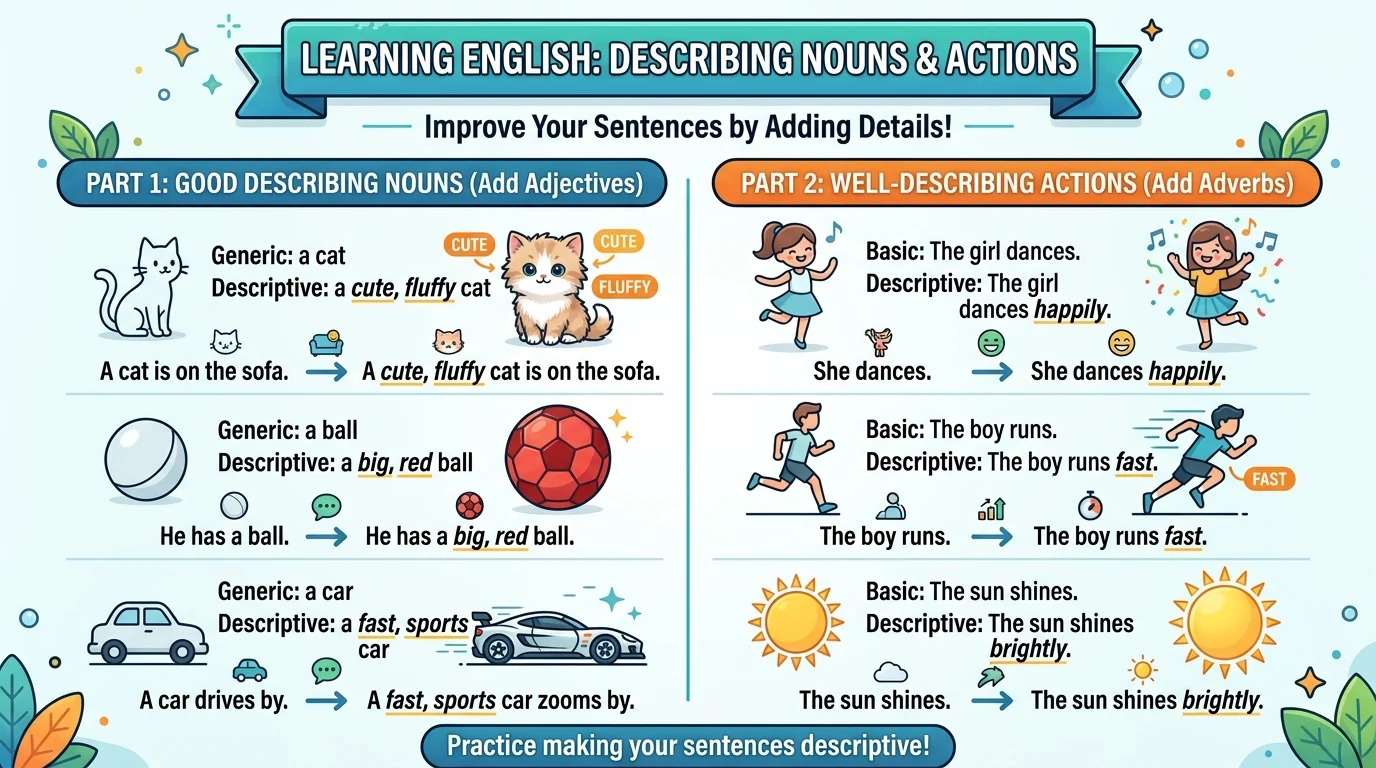
The confusion happens because these words are used differently in grammar. One usually describes nouns, while the other usually describes actions and verbs.
The good news is that the difference is easier than it seems once you learn a few simple rules.
Quick Answer
- Good is usually an adjective
- Well is usually an adverb
- Use good to describe a person, thing, or situation
- Use well to describe actions or health
Simple Origin or Background
The word good comes from very old English and has always meant positive, pleasant, or high quality.
The word well also comes from old English and originally related to doing something in a proper or healthy way.
Over time:
- good became mainly an adjective
- well became mainly an adverb
Because English sometimes breaks grammar rules in casual speech, learners often mix them up.
Clear Explanation of the Difference
What does “good” mean
Good is usually an adjective.
It describes:
- People
- Things
- Places
- Ideas
Examples:
- She is a good teacher
- This food tastes good
- We had a good day
This word describes nouns.
What does “well” mean
Well is usually an adverb.
It describes:
- Actions
- Verbs
- How something happens
Examples:
- She sings well
- He writes well
- The team played well
This word describes actions.
“Well” can also mean healthy
Sometimes well is an adjective when talking about health.
Examples:
- I am feeling well today
- She was not well yesterday
Comparison Table
| Feature | Good | Well |
|---|---|---|
| Main grammar role | Adjective | Adverb |
| Describes | Nouns | Actions or verbs |
| Related to | Quality or condition | How something happens |
| Health meaning | Usually no | Yes |
| Example | Good student | Runs well |
Which One to Use and When
Use good when:
- Describing a person or thing
- Talking about quality
Examples:
- This is a good movie
- She is a good friend
- The cake smells good
Use well when:
- Describing actions
- Talking about health
Examples:
- He speaks English well
- I am feeling well today
- They performed well
Common Mistakes People Make
1. Using “good” instead of “well” for actions
Wrong:
- She sings good
Correct:
- She sings well
2. Using “well” instead of “good” for nouns
Wrong:
- He is a well student
Correct:
- He is a good student
3. Confusion in casual speech
People often say:
- I’m good
This is common in casual English, even when talking about feelings.
4. Forgetting the health meaning
Remember:
- well can mean healthy
Everyday Real Life Examples
In Emails
- You did a good job
- The presentation went well
In News
- The company performed well this year
- She is known for good leadership
On Social Media
- I hope everyone is doing well
- That was a really good idea
In Daily Conversations
- The food tastes good
- He plays football well
Short Learning Section for Students and Beginners
1. Learn the simple rule
- good = describes things
- well = describes actions
2. Remember common examples
- good singer
- sings well
3. Practice easy sentences
- She is good at math
- She explains math well
4. Learn the health exception
- I am well today
FAQ Section
1. What is the main difference between good and well
Good describes nouns. Well describes actions.
2. Is “she sings good” correct
No.
Correct:
- She sings well.
3. Can “well” mean healthy
Yes.
Example:
- I feel well today.
4. Is “I’m good” wrong
Not always. It is common in casual conversation.
5. Which word is an adverb
Well.
6. Which word is an adjective
Good.
7. Why do learners confuse these words
Because both have positive meanings.
8. How can I remember the difference
Remember:
- good = thing
- well = action
Conclusion
The difference between well and good becomes simple once you understand grammar roles.
- Good usually describes people, places, or things
- Well usually describes actions or health
A simple memory trick:
- good = noun description
- well = action description
With practice and simple examples, you can use both words naturally and confidently.