Have you ever written “compair” and wondered if it was correct? You are not alone. Many students, ESL learners, and even experienced writers get confused between “compair” and “compare.”
The reason is simple. Both words sound almost the same when spoken. Because of this, it is easy to guess the spelling and make a mistake.
But here is the good news. This confusion is very easy to fix. Once you understand one simple rule, you will never use the wrong spelling again.
Let’s clear it up step by step in very simple English.
Quick Answer
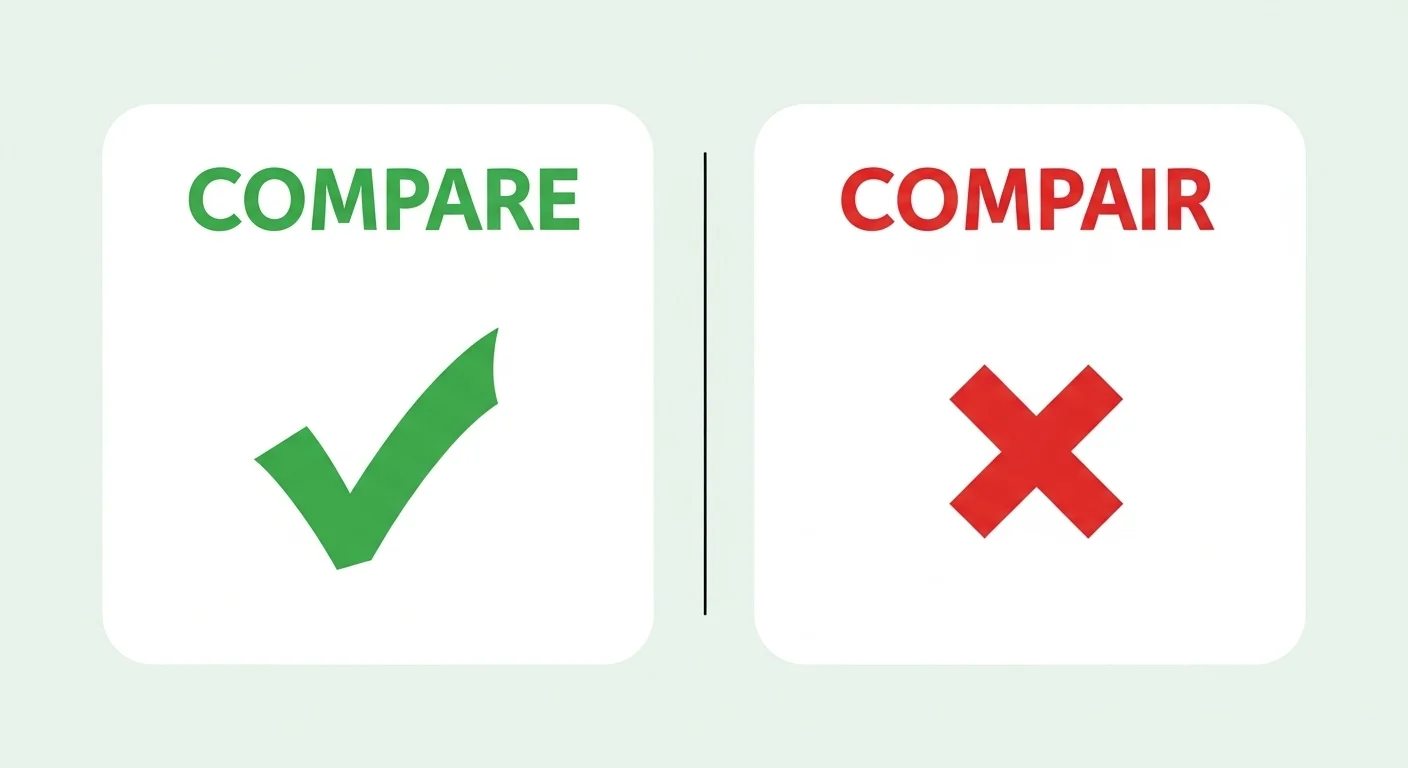
- “Compare” is the correct spelling
- “Compair” is incorrect and not a real English word
- Always use “compare” in writing and speaking
- “Compair” is only a spelling mistake
Where Did the Word “Compare” Come From
The word “compare” comes from an old Latin word that means “to bring together” or “to examine side by side.”
Over time, this word became part of English. Its spelling stayed as “compare,” and it is now used all over the world.
The spelling “compair” has no history in English. It did not come from any language. It is simply a mistake people make when they try to spell the word by sound.
The Real Difference Made Super Simple
Let’s make this very clear.
“Compare” is a real English word. It means to look at two or more things to see how they are similar or different.
Example:
- I want to compare these two laptops before buying.
“Compair” is not a real word. It has no meaning. It should never be used.
Example:
- I want to compair these two laptops ❌ wrong
So the difference is not about meaning. The difference is about correctness.
One is correct. One is wrong.
Compare vs Compair Table at a Glance
| Word | Correct or Not | Meaning | Should You Use It |
| Compare | Correct | To check similarities or differences | Yes |
| Compair | Incorrect | No meaning | No |
When to Use “Compare” in Real Life
You should use “compare” anytime you are looking at two or more things to understand them better.
Use it in these situations:
- When choosing between products
- When writing essays or homework
- When studying in school
- When talking about differences or similarities
- When making decisions
Examples:
- Let’s compare the prices before we buy anything.
- The teacher asked us to compare two stories.
- I compared both options and chose the cheaper one.
- We need to compare these results carefully.
There is never a situation where “compair” is correct.
Why People Make This Mistake So Often
This mistake is very common, and there are clear reasons for it.
Sound confusion
The ending “air” sounds like “are” in many accents, so people mix them up.
Fast typing
When typing quickly, people do not notice the wrong spelling.
Guessing spelling
Some learners write words based on how they sound instead of how they are spelled.
Lack of practice
If you do not read or write often, spelling mistakes happen more easily.
Simple tip to fix it
Always remember that the correct word ends with “are”
comp + are = compare
Common Mistakes to Avoid
Here are some mistakes you should watch out for:
Writing “compair” in essays
This can reduce your marks because it is a spelling error.
Using “compair” in emails
It may look unprofessional.
Mixing both spellings
Sometimes people use “compare” and “compair” in the same text. This should be avoided.
Not checking your writing
Always read your text before sending or submitting it.
Correct vs incorrect examples:
- Please compare these files ✔️
- Please compair these files ❌
- I will compare both plans ✔️
- I will compair both plans ❌
Everyday Examples You Can Relate To
Let’s see how “compare” is used in daily life.
In emails:
- Please compare the two documents and share your thoughts.
- Can you compare these prices for me
In school:
- Students must compare two poems in the exam.
- We compare results in science class.
In shopping:
- Always compare prices before buying something.
- I compared two phones and chose the better one.
In social media:
- People compare products before making a decision.
- Many users compare movies online.
In daily conversation:
- Let’s compare both options.
- I compared both and picked the best one.
These examples show how useful and common the word “compare” is.
Easy Learning Section for Beginners
Here is a simple trick to remember forever:
The correct word is “compare”
It ends with “are” like the word “care” or “share”
Memory tip:
comp + are = compare
Practice sentences:
- I compare my work with others
- We compare ideas in class
- She compares different choices
Mini exercise:
Fill in the blanks:
- I will ______ the two products
Answer: compare - Please ______ these numbers
Answer: compare - They want to ______ both options
Answer: compare
Never use “compair”
Frequently Asked Questions
1. Is “compair” ever correct
No, it is always incorrect.
2. What is the correct spelling
The correct spelling is “compare.”
3. Why does “compair” look correct to some people
Because it sounds similar when spoken, so people guess the spelling.
4. What does “compare” mean in simple words
It means to look at things and see how they are the same or different.
5. Can I use “compair” in informal writing
No, even in informal writing, it is still wrong.
6. How can I avoid this mistake
Remember that the word ends with “are” and check your spelling.
7. Is this mistake common among learners
Yes, many students and ESL learners make this mistake.
8. Will using “compair” affect my writing
Yes, it can make your writing look incorrect and less clear.
Conclusion
The difference between “compair” and “compare” is very simple once you understand it.
“Compare” is the correct and real English word. It means to check similarities and differences between things.
“Compair” is not a real word and should never be used.
If you remember just one thing, remember this:
Always use “compare” with “are” at the end.
With a little practice, this mistake will disappear from your writing forever.