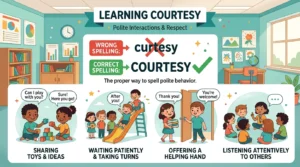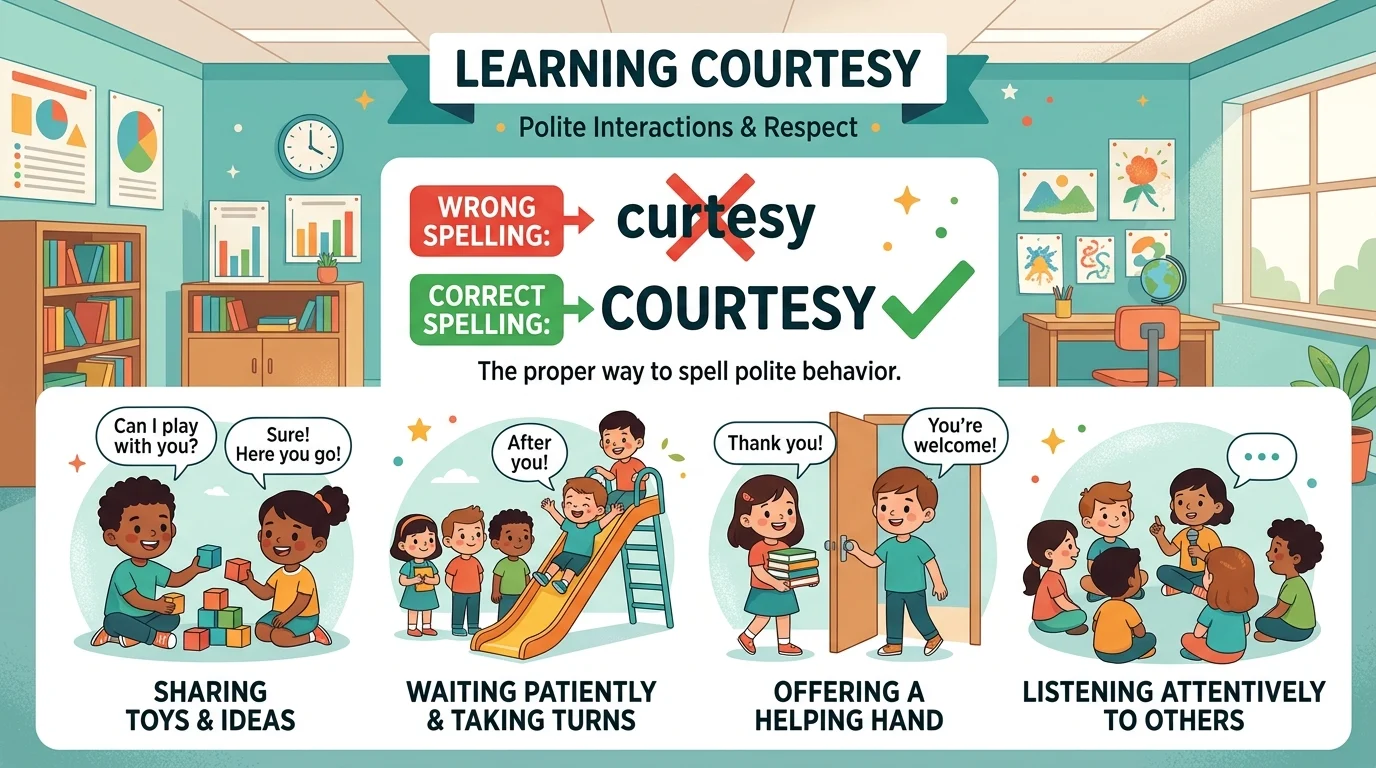
Many English learners and native speakers accidentally write curtesy when they mean courtesy. Because the words sound similar when spoken, it’s easy to confuse their spelling.
The simple answer is that courtesy is the correct spelling for the common word meaning politeness, respect, or a kind gesture. Curtesy is a rare legal term with a completely different meaning.
In everyday English, you almost always need courtesy.
Quick Answer
- Courtesy is the correct spelling in most situations.
- Curtesy is an old legal term and is rarely used today.
- If you mean politeness, good manners, or a kind act, use courtesy.
- Most spelling mistakes occur because people accidentally write curtesy instead of courtesy.
The Basic Difference
| Word | Meaning | Common Usage |
|---|---|---|
| Curtesy | An old legal term related to inheritance rights | Rare |
| Courtesy | Politeness, respect, or a kind gesture | Very common |
What Does “Courtesy” Mean?
Courtesy is a noun.
It refers to:
- politeness
- good manners
- respect for others
- a thoughtful or kind act
Examples
- She treated everyone with courtesy.
- Courtesy costs nothing.
- Thank you for your courtesy and patience.
- The hotel provided complimentary drinks as a courtesy.
Common Expressions
- common courtesy
- professional courtesy
- courtesy call
- courtesy copy
What Does “Curtesy” Mean?
Curtesy is a rare legal term from historical English law.
Traditionally, it referred to a husband’s right to use or inherit property belonging to his deceased wife under certain conditions.
Example
- The case involved the old legal concept of curtesy.
Today, this word is rarely used outside legal history discussions.
Comparison Table
| Feature | Curtesy | Courtesy |
|---|---|---|
| Correct English | Yes | Yes |
| Common Usage | Very rare | Very common |
| Meaning | Historical legal term | Politeness or kindness |
| Used in Everyday Writing | Almost never | Frequently |
| Recommended Choice | Rarely | Usually |
Which One Should You Use?
Use “Courtesy” When
You mean:
- politeness
- respect
- kindness
- good manners
Examples:
- He showed great courtesy.
- Thank you for your courtesy.
- The staff treated customers with courtesy.
Use “Curtesy” When
You are discussing:
- historical legal systems
- inheritance law
- legal history
Examples:
- The document mentioned curtesy rights.
For almost all learners and writers, courtesy is the correct word.
Common Mistakes People Make
Misspelling Courtesy as Curtesy
Incorrect:
- Thank you for your curtesy.
Correct:
- Thank you for your courtesy.
Assuming Both Words Mean Politeness
They do not.
Only courtesy means politeness or respect.
Using Curtesy in Business Writing
Professional writing almost always requires courtesy.
Forgetting the “ou”
Many spelling mistakes happen because people omit the ou in courtesy.
Everyday Examples
In Emails
- Thank you for your courtesy and support.
- We appreciate your courtesy during the meeting.
In Customer Service
- The staff handled the complaint with courtesy.
- Common courtesy improves customer relationships.
In Conversations
- Showing courtesy is important.
- He thanked her for her courtesy.
In Schools
- Students should treat teachers with courtesy.
- Courtesy helps create a positive environment.
Easy Memory Trick
Think of the word:
COURTesy
It contains the beginning of the word court.
People are expected to behave politely in a court, so courtesy relates to good manners and respect.
Remember:
- courtesy = politeness ✅
- curtesy = rare legal term ⚖️
Practice Sentences
Choose the correct word.
- Thank you for your _____.
- The staff showed great _____.
- Common _____ goes a long way.
- The historical law discussed _____ rights.
Answers
- courtesy
- courtesy
- courtesy
- curtesy
Frequently Asked Questions
Is “curtesy” a real word?
Yes.
It is an old legal term.
Is “courtesy” correct?
Yes.
It is the standard spelling for politeness and respect.
Which word is more common?
Courtesy.
What does courtesy mean?
Politeness, respect, and good manners.
What does curtesy mean?
A historical legal right related to inheritance.
Can I write “Thank you for your curtesy”?
No.
The correct phrase is:
- Thank you for your courtesy.
Why do people confuse these words?
Because they sound similar and differ by only one letter.
Conclusion
The difference between curtesy and courtesy is important.
- Courtesy is the common word meaning politeness, respect, and kindness.
- Curtesy is a rare legal term used mainly in historical contexts.
- In everyday English, professional writing, emails, and conversations, courtesy is almost always the correct choice.
A simple rule to remember is:
If you’re talking about good manners or respect, use “courtesy,” not “curtesy.”