“Laying” and “lying” confuse many learners because they come from two similar verbs: “lay” and “lie.” They sound close, and both relate to position or rest.
But their meanings are different, and using the wrong one can change your sentence.
Let’s make this clear and simple so you can use them correctly every time.
Quick Answer
- “Laying” comes from “lay” (to put something down)
- “Lying” comes from “lie” (to rest or recline)
- “Laying” needs an object (something)
- “Lying” does not need an object
Simple Background Explanation
There are two different verbs:
- Lay (to put something somewhere)
- Present: lay / laying
- Past: laid
- Lie (to rest or be in a position)
- Present: lie / lying
- Past: lay
This is why it becomes confusing.
Clear Explanation of the Difference
Let’s make it very simple.
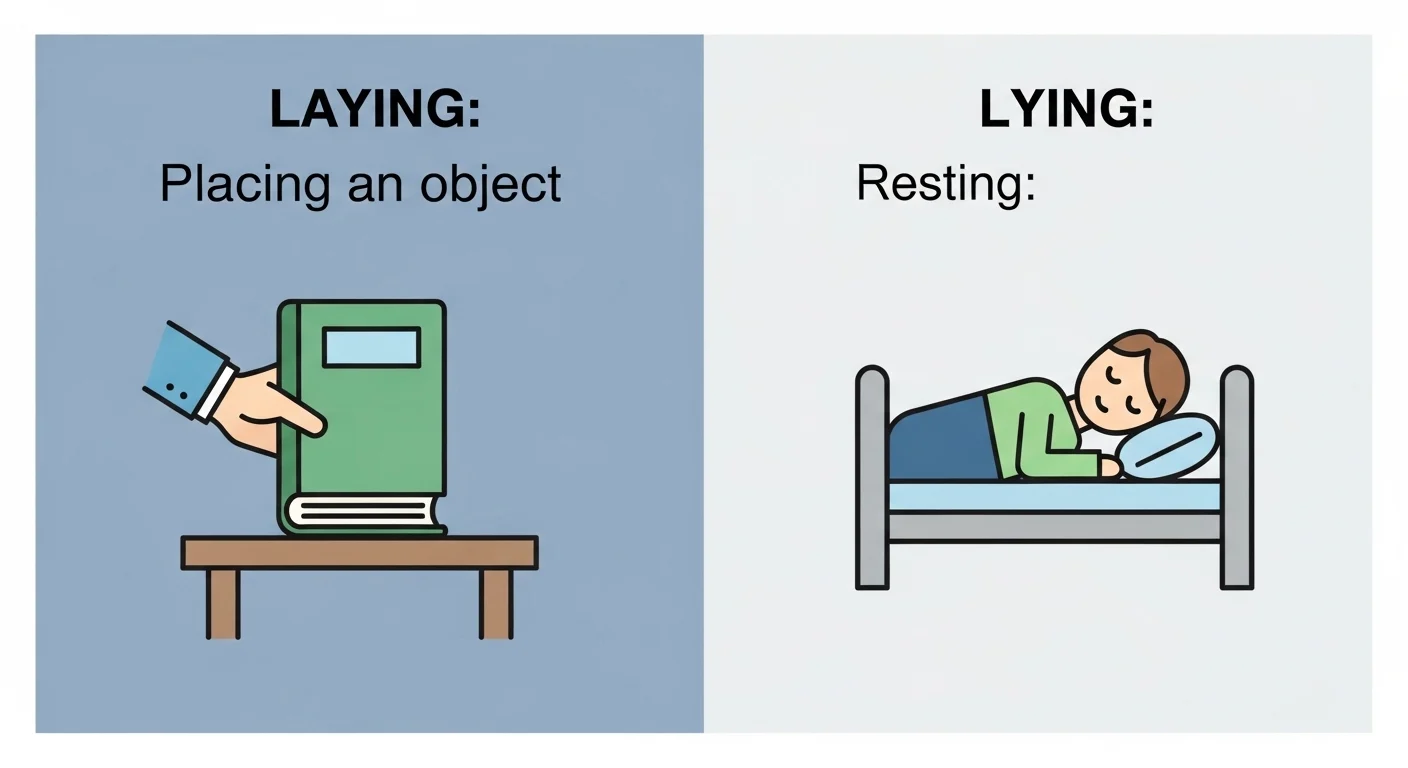
“Laying”
This means placing something down.
Examples:
- She is laying the book on the table.
- He is laying the clothes on the bed.
“Lying”
This means resting or being in a position.
Examples:
- She is lying on the bed.
- He is lying on the floor.
So the difference is placing vs resting.
Comparison Table
| Word | Verb | Meaning | Needs Object |
|---|---|---|---|
| Laying | Lay | Putting something down | Yes |
| Lying | Lie | Resting or reclining | No |
What “Laying” Means
“Laying” is used when someone is placing something somewhere.
Examples:
- She is laying the book down.
- He is laying the table for dinner.
- They are laying bricks.
Notice: something is being placed.
What “Lying” Means
“Lying” is used when someone is resting or staying in a position.
Examples:
- She is lying on the sofa.
- He is lying under the tree.
- The dog is lying on the floor.
No object is needed.
Which One to Use and When
Use “laying” when:
- You are putting something somewhere
- There is an object
Examples:
- She is laying the phone on the desk.
- He is laying the blanket down.
Use “lying” when:
- You are resting
- No object is used
Examples:
- I am lying on the bed.
- The cat is lying in the sun.
Easy Trick to Remember
Here is a simple rule:
Laying = placing something
Lying = resting
Memory tip:
If you can ask “what?” → laying
If not → lying
Example:
- She is laying what? → the book ✔️
- She is lying what? ❌
Why People Get Confused
Here are the main reasons:
Similar spelling
Only one letter difference.
Same topic
Both relate to position.
Irregular verbs
Past forms are confusing.
Fast speaking
Hard to notice difference.
Common Mistakes to Avoid
Here are mistakes to watch for:
Using “laying” without object
- I am laying on the bed ❌
Using “lying” with object
- She is lying the book down ❌
Correct vs incorrect examples:
- I am lying on the bed ✔️
- I am laying on the bed ❌
- She is laying the book down ✔️
- She is lying the book down ❌
Everyday Real Life Examples
Here are simple examples from daily life.
At home:
- I am lying on the sofa.
- She is laying the dishes on the table.
In daily life:
- The dog is lying outside.
- He is laying bricks.
In conversation:
- I am lying here
- She is laying the book
Easy Learning Section for Beginners
Here is a simple trick:
Ask yourself:
Is something being placed?
Memory tip:
Place = laying
Rest = lying
Practice sentences:
- I am lying on the bed
- She is laying the book
- The cat is lying here
Mini exercise:
Fill in the blanks:
- I am ______ on the bed
Answer: lying - She is ______ the book down
Answer: laying - The dog is ______ outside
Answer: lying
Frequently Asked Questions
1. What is the difference between “laying” and “lying”
“Laying” means placing something, while “lying” means resting.
2. Does “laying” need an object
Yes, it always needs an object.
3. Does “lying” need an object
No, it does not.
4. Why are they confusing
Because of similar spelling and irregular verbs.
5. Is this mistake common
Yes, very common.
6. How can I remember the difference
Check if there is an object.
7. Can I use them interchangeably
No, they have different meanings.
8. Will this mistake affect my writing
Yes, it can change meaning.
Conclusion
The difference between “laying” and “lying” is simple once you understand it.
“Laying” is used when placing something.
“Lying” is used when resting.
Just remember:
Laying = object
Lying = no object
With this simple rule, you can use both words correctly and confidently.