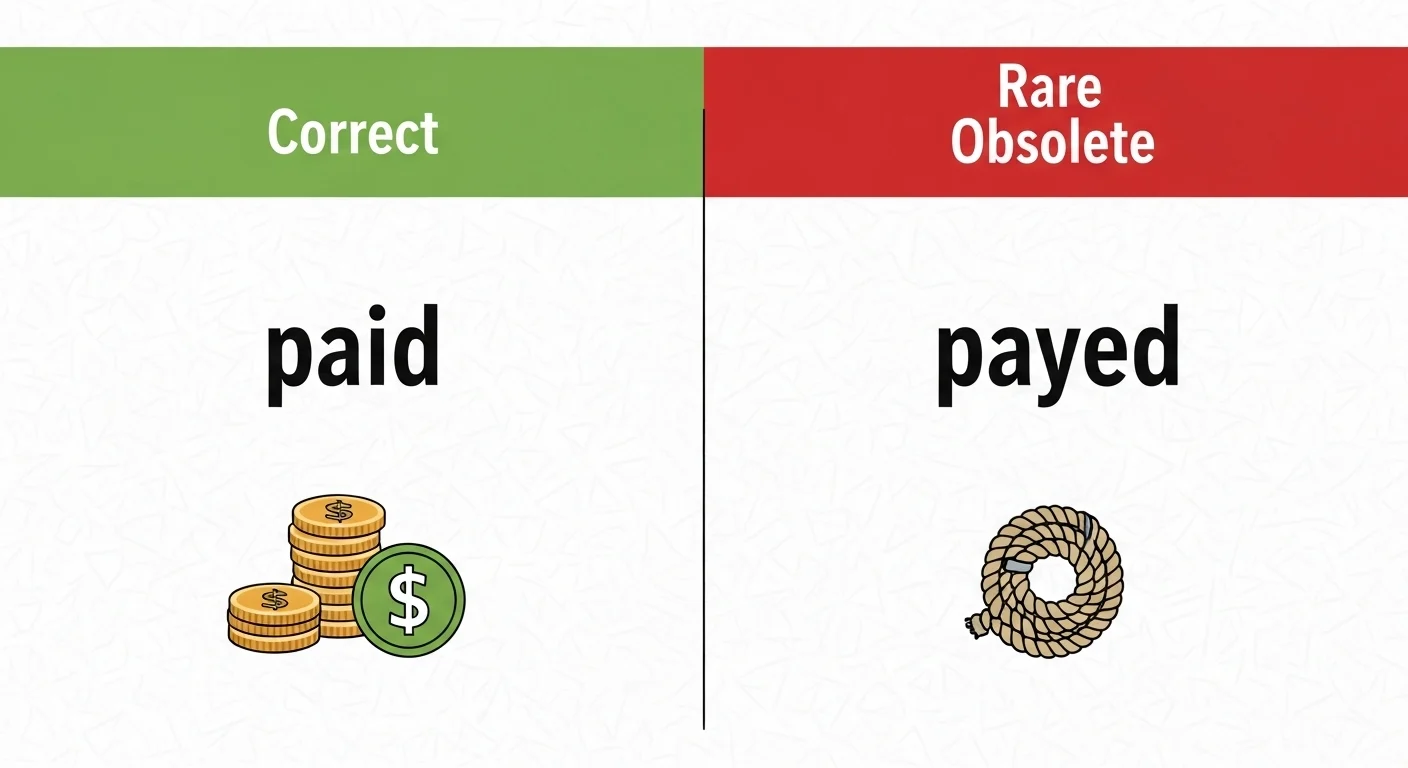
“Payed” and “paid” look very similar, so many learners feel unsure which one is correct. Since English often adds “-ed” for past tense, it is easy to think “payed” is right.
But English has irregular verbs, and this is one of them.
Let’s make this simple so you can understand and use the correct form every time.
Quick Answer
- “Paid” is the correct past tense of “pay”
- “Payed” is rarely used and only in a special technical meaning
- In everyday English, always use “paid”
- Avoid using “payed” in normal writing
Simple Background Explanation
The verb “pay” is irregular.
Instead of adding “-ed” like regular verbs, it changes form:
- pay → paid
The word “payed” exists, but it is used in a very specific technical sense related to ropes and ships, not everyday language.
Clear Explanation of the Difference
Let’s make it very simple.
“Paid”
This is the correct and common past form of “pay.”
Examples:
- I paid the bill.
- She paid for the food.
“Payed”
This is a rare word used in technical contexts, especially in sailing.
Example:
- The sailor payed out the rope.
In normal English, you should not use “payed.”
Comparison Table
| Word | Correct or Not | Meaning | When to Use |
|---|---|---|---|
| Paid | Correct | Past of pay | Everyday use |
| Payed | Rare/technical usage | To let out rope (sailing term) | Only in special context |
What “Paid” Means
“Paid” is the past tense of “pay.”
It is used for:
- Money
- Effort
- Giving something in return
Examples:
- He paid the rent.
- She paid attention.
- They paid for the tickets.
What “Payed” Means
“Payed” is used only in a special meaning:
- To release or let out rope or cable
Examples:
- The crew payed out the rope.
- He payed the line slowly.
This is not common in daily conversation.
Which One to Use and When
Use “paid” when:
- Talking about money
- Talking about effort or attention
- Writing normal sentences
Examples:
- I paid the bill.
- She paid attention in class.
Use “payed” only when:
- Talking about ropes or sailing
- Writing technical or specific content
Examples:
- The sailor payed out the rope.
Easy Trick to Remember
Here is a simple rule:
Pay → paid
Memory tip:
“ai” in paid = correct choice
Why People Get Confused
Here are the main reasons:
Regular verb pattern
People expect “-ed.”
Similar spelling
Only one letter difference.
Lack of awareness
Not knowing irregular forms.
Rare usage of “payed”
Makes it harder to understand.
Common Mistakes to Avoid
Here are mistakes to watch for:
Using “payed” for money
- I payed the bill ❌
Forgetting irregular form
Always use “paid.”
Not checking spelling
Review your writing.
Correct vs incorrect examples:
- I paid the bill ✔️
- I payed the bill ❌
- She paid attention ✔️
- She payed attention ❌
Everyday Real Life Examples
Here are simple examples from daily life.
In daily life:
- I paid for lunch.
- She paid her fees.
In school:
- He paid attention in class.
- Students paid their dues.
At work:
- The company paid salaries.
- He paid for the service.
In conversation:
- I already paid
- She paid yesterday
Easy Learning Section for Beginners
Here is a simple trick:
Always use “paid”
Memory tip:
No “e” in paid
Practice sentences:
- I paid the bill
- She paid attention
- They paid for tickets
Mini exercise:
Fill in the blanks:
- I ______ the bill
Answer: paid - She ______ attention
Answer: paid - They ______ for the food
Answer: paid
Frequently Asked Questions
1. Is “payed” correct
Only in rare technical use, not in everyday English.
2. What is the correct past tense of “pay”
The correct form is “paid.”
3. Can I use “payed” for money
No, it is incorrect.
4. Why do people write “payed”
Because they follow the “-ed” rule.
5. Is “paid” irregular
Yes, it is an irregular verb form.
6. Is this mistake common
Yes, very common.
7. How can I remember the correct form
Always use “paid.”
8. Will this mistake affect my writing
Yes, it makes your writing incorrect.
Conclusion
The difference between “payed” and “paid” is simple.
“Paid” is the correct and common past form of “pay.”
“Payed” is only used in rare technical contexts and should be avoided in everyday writing.
Just remember:
Pay → paid
With this simple rule, you can use the correct form confidently every time.