Many English learners confuse protestors and protesters because both spellings appear in English writing. Since the words look very similar, people often wonder if one is wrong or if both are acceptable.
The good news is simple:
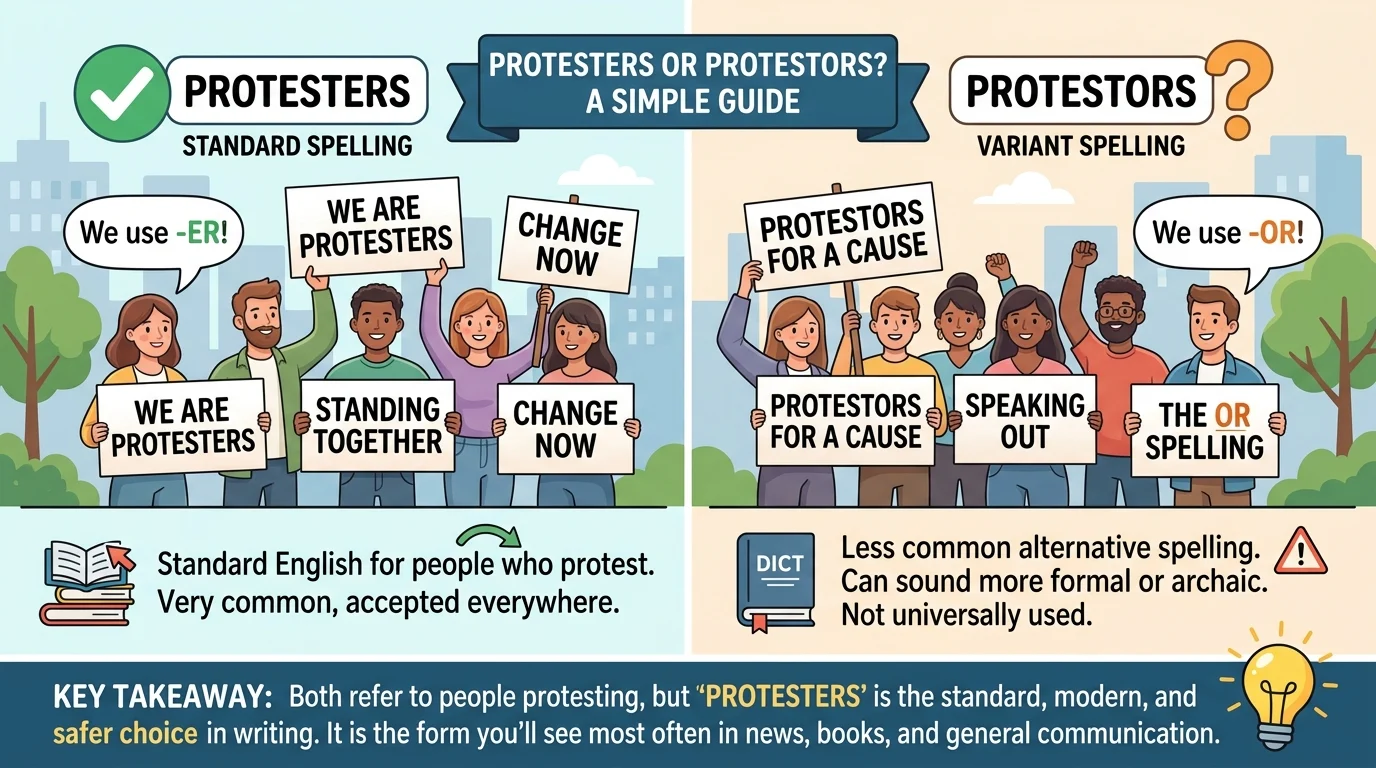
Both spellings are correct, but one is much more common in modern English.
This guide explains the difference in very simple English with clear examples and beginner friendly tips.
Quick Answer
- Protesters is the more common modern spelling
- Protestors is also correct but less common
- Both words mean people who protest
- Protesters is preferred in most everyday writing
Simple Origin or Background
The words come from the verb:
- protest
English created two noun forms over time:
- protester
- protestor
Both developed naturally and are accepted in dictionaries.
However, modern English now uses:
- protesters
far more often in newspapers, media, and daily communication.
Clear Explanation of the Difference
What does “protesters” mean
Protesters means:
- people who publicly express disagreement or opposition
Examples:
- Protesters gathered outside the building
- Thousands of protesters marched peacefully
- The protesters carried signs
This is the most common modern spelling.
What does “protestors” mean
Protestors has the same meaning:
- people who protest
Examples:
- Protestors blocked the road
- Several protestors spoke to reporters
Although correct, this spelling is less commonly used today.
Comparison Table
| Feature | Protestors | Protesters |
|---|---|---|
| Correct spelling | Yes | Yes |
| Common usage | Less common | More common |
| Meaning | People who protest | People who protest |
| Preferred style | Rare or formal preference | Standard modern usage |
Which One to Use and When
Use protesters in most situations because it is:
- more modern
- more natural
- more widely accepted
Examples:
- Protesters filled the streets
- Police spoke with protesters
You may still see:
- protestors
in some books, articles, or legal writing.
Common Mistakes People Make
1. Thinking “protestors” is wrong
It is not wrong. It is simply less common.
2. Mixing both spellings in the same article
Choose one style and stay consistent.
3. Assuming both spellings are equally common
Modern English strongly prefers:
- protesters
4. Confusing spelling preference with grammar mistakes
This difference is mostly about usage style.
Everyday Real Life Examples
In Emails
- Protesters gathered near the office
- Local protestors requested changes
In News
- Protesters marched peacefully downtown
- Protestors demanded government action
On Social Media
- The protesters carried colorful signs
- Protestors filled the public square
In Daily Conversations
- The protesters were loud but peaceful
- Several protestors spoke during the event
Short Learning Section for Students and Beginners
1. Learn the simple rule
- both are correct
- protesters is more common
2. Focus on modern usage
In everyday English:
- protesters is usually preferred
3. Practice simple examples
- Protesters marched downtown
- The protesters held banners
4. Use memory tricks
- protesters = modern common spelling
FAQ Section
1. Is “protestors” correct
Yes.
2. Is “protesters” correct
Yes.
3. Which spelling is more common
Protesters.
4. Do both words mean the same thing
Yes.
5. Which spelling should students use
Protesters is usually the best choice.
6. Why do two spellings exist
English developed both forms over time.
7. Is “protestors” old fashioned
Sometimes it may sound less modern.
8. How can I remember the preferred spelling
Remember:
- protesters is the more common modern form.
Conclusion
The difference between protestors and protesters is mainly about spelling preference.
- Both words are correct
- Both mean people who protest
- Protesters is the more common modern spelling
A simple memory trick:
- protesters = preferred everyday English form
With practice and clear examples, you can confidently use the spelling that fits your writing style.