Many English learners confuse abstain and refrain because both words involve stopping yourself from doing something. In many situations, they can seem very similar.
However, these words are not always used in the same way. One is often connected to formal decisions or avoiding something completely, while the other usually means holding yourself back from an action.
This guide explains the difference in very simple English with clear examples and beginner friendly tips.
Quick Answer
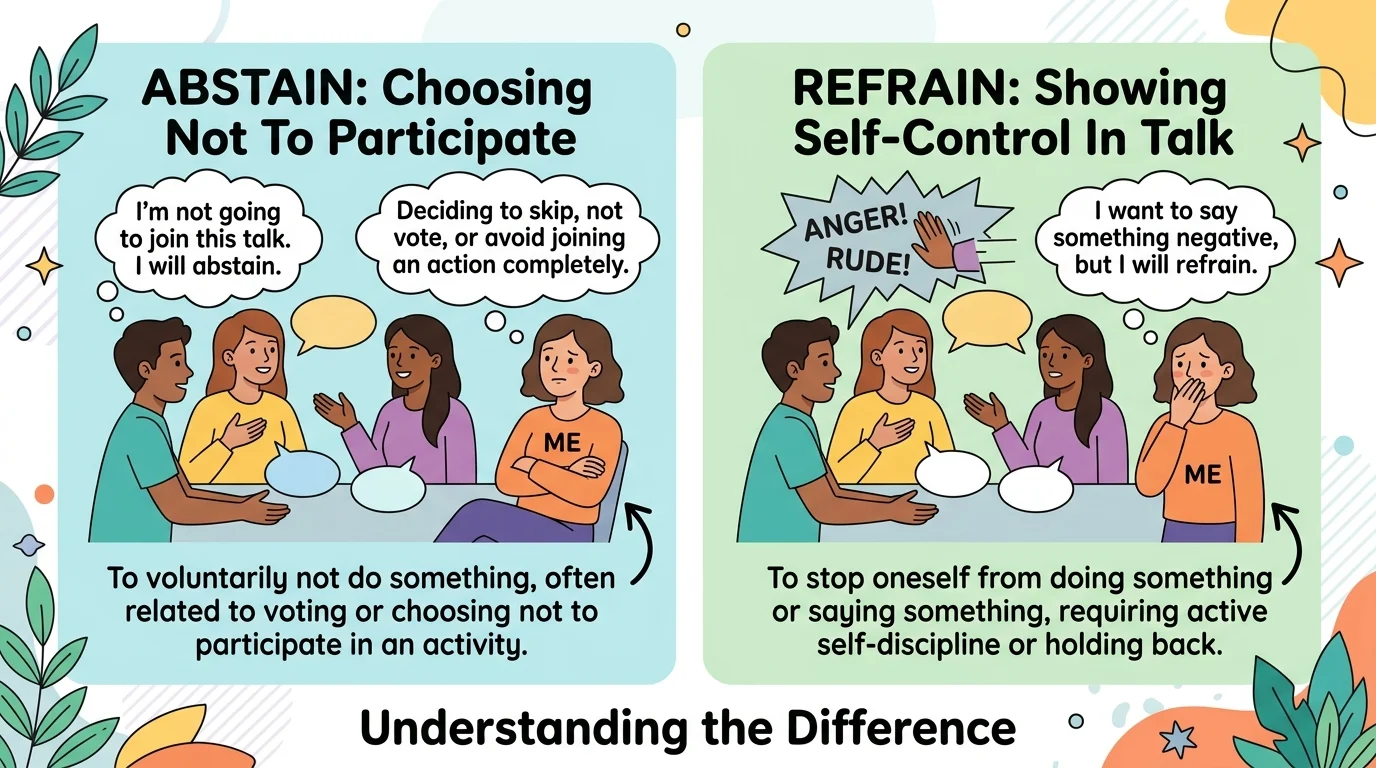
- Abstain means choosing not to do something, often formally or completely
- Refrain means stopping yourself from doing or saying something
- Abstain is more formal
- Refrain is more common in everyday English
Simple Origin or Background
Both words come from Latin roots connected to holding back or avoiding actions.
Over time:
- abstain became common in formal situations like voting, alcohol use, or avoiding activities
- refrain became common for self control in speech or actions
Because both involve avoiding something, learners often mix them up.
Clear Explanation of the Difference
What does “abstain” mean
Abstain is a verb.
It means:
- To choose not to do something
- To avoid taking part in something
- To formally refuse participation
Examples:
- He abstained from voting
- She abstains from alcohol
- Several members abstained during the decision
This word often sounds formal and serious.
What does “refrain” mean
Refrain is also a verb.
It means:
- To stop yourself from doing or saying something
- To control an action or reaction
Examples:
- Please refrain from shouting
- She refrained from making rude comments
- I could not refrain from laughing
This word focuses on self control.
Comparison Table
| Feature | Abstain | Refrain |
|---|---|---|
| Meaning | Choose not to participate | Hold yourself back |
| Tone | More formal | More everyday and flexible |
| Common use | Voting, alcohol, activities | Speech, actions, reactions |
| Example | Abstain from voting | Refrain from arguing |
Which One to Use and When
Use abstain when:
- Talking about formally avoiding something
- Referring to voting or habits
- Discussing complete avoidance
Examples:
- He abstained from smoking
- Two members abstained from the vote
Use refrain when:
- Talking about self control
- Preventing speech or actions
- Giving polite instructions
Examples:
- Refrain from touching the artwork
- She refrained from responding angrily
Common Mistakes People Make
1. Using “abstain” for small daily reactions
Wrong:
- I abstained from laughing
Better:
- I refrained from laughing
2. Using “refrain” for formal voting
Wrong:
- Three members refrained from voting
Better:
- Three members abstained from voting
3. Forgetting tone differences
Remember:
- abstain = formal avoidance
- refrain = self control
4. Thinking both words are identical
They are similar but used differently in many contexts.
Everyday Real Life Examples
In Emails
- Employees should refrain from sharing private information
- Several members abstained during the vote
In News
- Countries abstained from the agreement vote
- Officials asked citizens to refrain from panic buying
On Social Media
- I tried to refrain from commenting
- He abstains from junk food completely
In Daily Conversations
- Please refrain from interrupting
- She abstains from drinking coffee
Short Learning Section for Students and Beginners
1. Learn the simple meanings
- abstain = choose not to participate
- refrain = stop yourself
2. Think about the situation
Ask:
- Is it formal avoidance
or - Is it self control
3. Practice simple examples
- He abstained from voting
- She refrained from speaking
4. Use memory tricks
- abstain = avoid officially
- refrain = resist action
FAQ Section
1. What does “abstain” mean
It means choosing not to participate or take part.
2. What does “refrain” mean
It means stopping yourself from doing something.
3. Which word is more formal
Abstain.
4. Which word is common for self control
Refrain.
5. Which word is used for voting
Abstain.
6. Can “refrain” be used in polite instructions
Yes.
Example:
- Please refrain from smoking.
7. Why do learners confuse these words
Because both involve avoiding actions.
8. How can I remember the difference
Remember:
- abstain = formally avoid
- refrain = hold back
Conclusion
The difference between abstain and refrain becomes simple once you focus on context and tone.
- Abstain usually means formally choosing not to participate
- Refrain means holding yourself back from saying or doing something
A simple memory trick:
- abstain = avoid participation
- refrain = self control
With practice and clear examples, you can use both words correctly and naturally.