Many learners feel confused between unpure and impure because both words seem to mean the same thing. They both look like they describe something that is “not pure.” So it is natural to think they can be used in the same way.
But here is the truth: only one of these words is correct in standard English.
In this article, you will learn the difference in a very simple way. By the end, you will feel confident and never mix them up again.
Quick Answer
- Impure is the correct and widely used word in English
- Unpure is not standard and should usually be avoided
- Use impure when something is not clean, not perfect, or mixed with other things
- Avoid using unpure in writing, exams, or formal speaking
Simple Origin and Background
To understand the difference, let’s look at how these words are formed.
The word pure means clean, clear, or not mixed with anything else.
To make the opposite of a word in English, we often add a prefix like:
- un
- im
- in
- non
However, not all prefixes work with all words.
In this case:
- Impure is the correct opposite of pure
- It comes from older forms of English and Latin roots where “im” is used before certain letters
The word unpure may seem logical, but it is not accepted in modern standard English.
Clear Explanation of the Difference
What does “impure” mean?
Impure means something is:
- Not clean
- Mixed with something unwanted
- Not perfect or not fully honest
Examples:
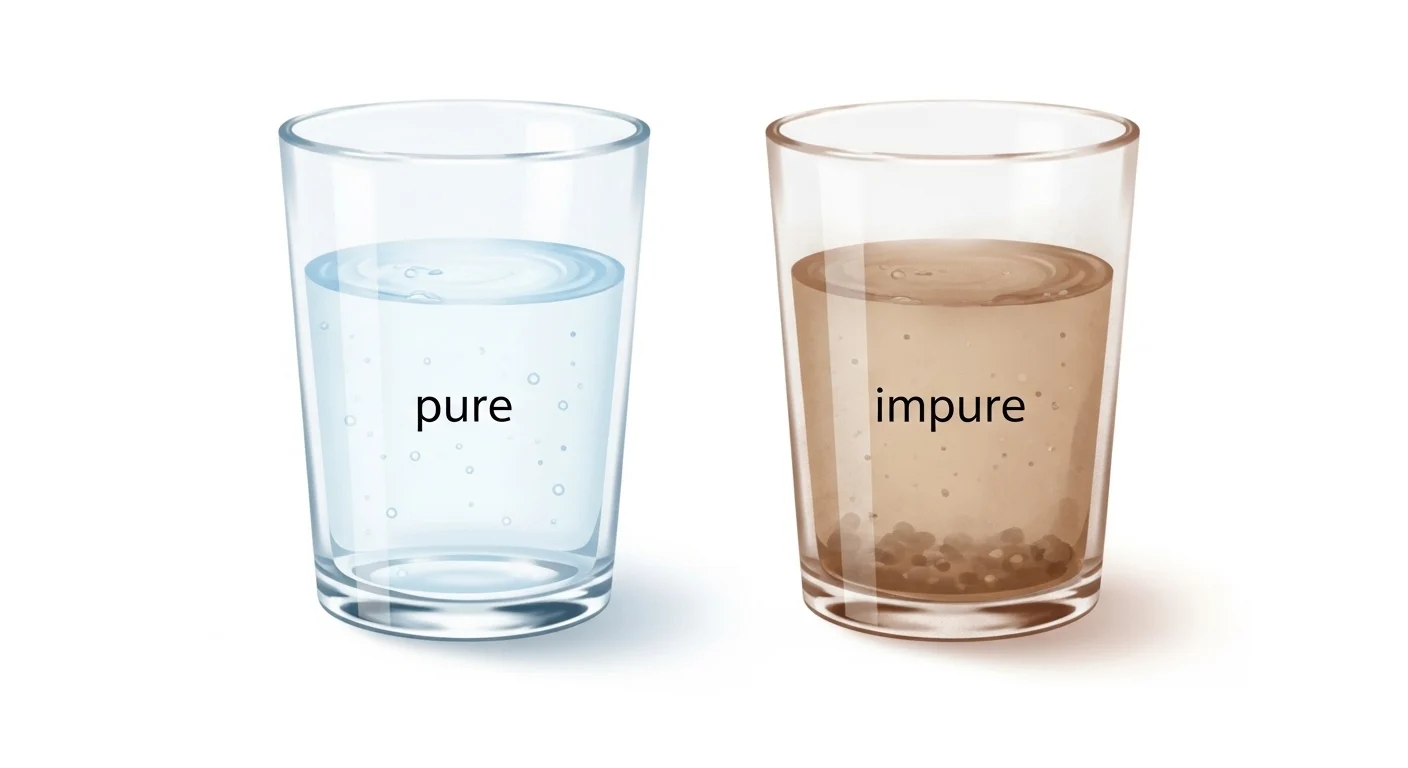
- Impure water (water with dirt or chemicals)
- Impure gold (gold mixed with other metals)
- Impure thoughts (not clean or not good)
This word is correct and used in both daily and formal English.
What about “unpure”?
Unpure is not commonly used in standard English.
- It sounds possible, but it is not correct in most situations
- You may rarely see it in very old texts or incorrect usage
- Teachers, exams, and dictionaries prefer impure
So, it is better to avoid using unpure completely.
Comparison Table
| Feature | Impure | Unpure |
|---|---|---|
| Correct word | Yes | No (not standard) |
| Common usage | Very common | Very rare |
| Meaning | Not clean or mixed | Same idea, but incorrect |
| Use in exams | Accepted | Not accepted |
| Use in writing | Strongly recommended | Should be avoided |
Which One Should You Use and When?
Always choose impure.
Use it when you want to describe:
- Something that is not clean
- Something mixed with other things
- Something not morally good
Examples:
- This milk is impure.
- The air in the city is impure.
- The metal is impure and needs cleaning.
Avoid unpure in:
- School work
- Exams
- Emails
- Formal writing
Even in casual speaking, it is better to use impure to sound correct and natural.
Common Mistakes People Make
Here are some mistakes learners often make:
1. Thinking both words are correct
Many people believe unpure and impure are equal.
This is not true. Only impure is correct.
2. Using “unpure” because of “un + word” rule
Some learners think:
- happy → unhappy
- fair → unfair
So they try:
- pure → unpure
But English does not always follow the same pattern.
3. Using “unpure” in exams
This can lead to losing marks. Teachers expect impure.
4. Mixing spelling in writing
Sometimes people write both forms in one text. This creates confusion.
Everyday Real Life Examples
Let’s look at how impure is used in daily life.
In Emails
- “The water supply seems impure. Please check it.”
- “We found impure materials in the product.”
In News
- “The factory released impure air into the environment.”
- “Authorities warned about impure drinking water.”
On Social Media
- “Avoid impure food to stay healthy.”
- “This product is not pure. It is impure.”
In Daily Conversations
- “This oil looks impure.”
- “The air here feels impure.”
You will notice that impure fits naturally everywhere.
Short Learning Section for Students and Beginners
Here is an easy way to remember:
- Pure = clean
- Impure = not clean
Think of it like this:
If something is not pure, it is impure.
Quick Practice
Choose the correct word:
- The gold is ______.
- This water is not safe. It is ______.
- The air in the room feels ______.
Answers:
- impure
- impure
- impure
Memory Tip
Just remember:
“Impure is the only correct opposite of pure.”
FAQ Section
1. Is “unpure” a real English word?
It exists, but it is not standard or correct in modern English. You should avoid it.
2. Which word is correct: unpure or impure?
Impure is correct.
3. Can I use “unpure” in speaking?
It is better not to use it. People may think it is wrong.
4. Why do we use “im” instead of “un”?
English sometimes uses different prefixes based on word history and sound.
5. Is “impure” formal or informal?
It can be used in both formal and informal situations.
6. What is the opposite of pure?
The correct opposite is impure.
7. Will using “unpure” affect my exam?
Yes, it can be marked as incorrect.
8. Are there other words like this?
Yes. For example:
- possible → impossible
- polite → impolite
Conclusion
The difference between unpure and impure is simple once you understand it.
Even though both words may seem similar, only impure is correct in standard English. It is the proper word to describe something that is not clean, not perfect, or mixed with something else.
The word unpure may look logical, but it is not accepted in modern use. So it is best to avoid it completely.
If you remember one thing from this article, let it be this:
Always use “impure” and never use “unpure.”
With this clear understanding, you can now write and speak with more confidence.