Many English learners get confused between apologizes and apologies because both words come from the same idea of saying sorry. Since they look similar, people often use one when they actually need the other.
The main difference is simple. One word is a verb that describes an action, while the other is a noun that names the apology itself.
This guide explains everything in very easy English with clear examples and helpful tips.
Quick Answer
- Apologizes is a verb
- Apologies is a noun
- Apologizes means someone says sorry
- Apologies means expressions of regret or sorry messages
Simple Origin or Background
Both words come from the word apology, which has roots in Greek and Latin. Over time, English created different forms of the word for different grammar uses.
Examples:
- apologize = action
- apology = thing or statement
Because the spellings are similar, learners often mix them up in sentences.
Clear Explanation of the Difference
What does “apologizes” mean
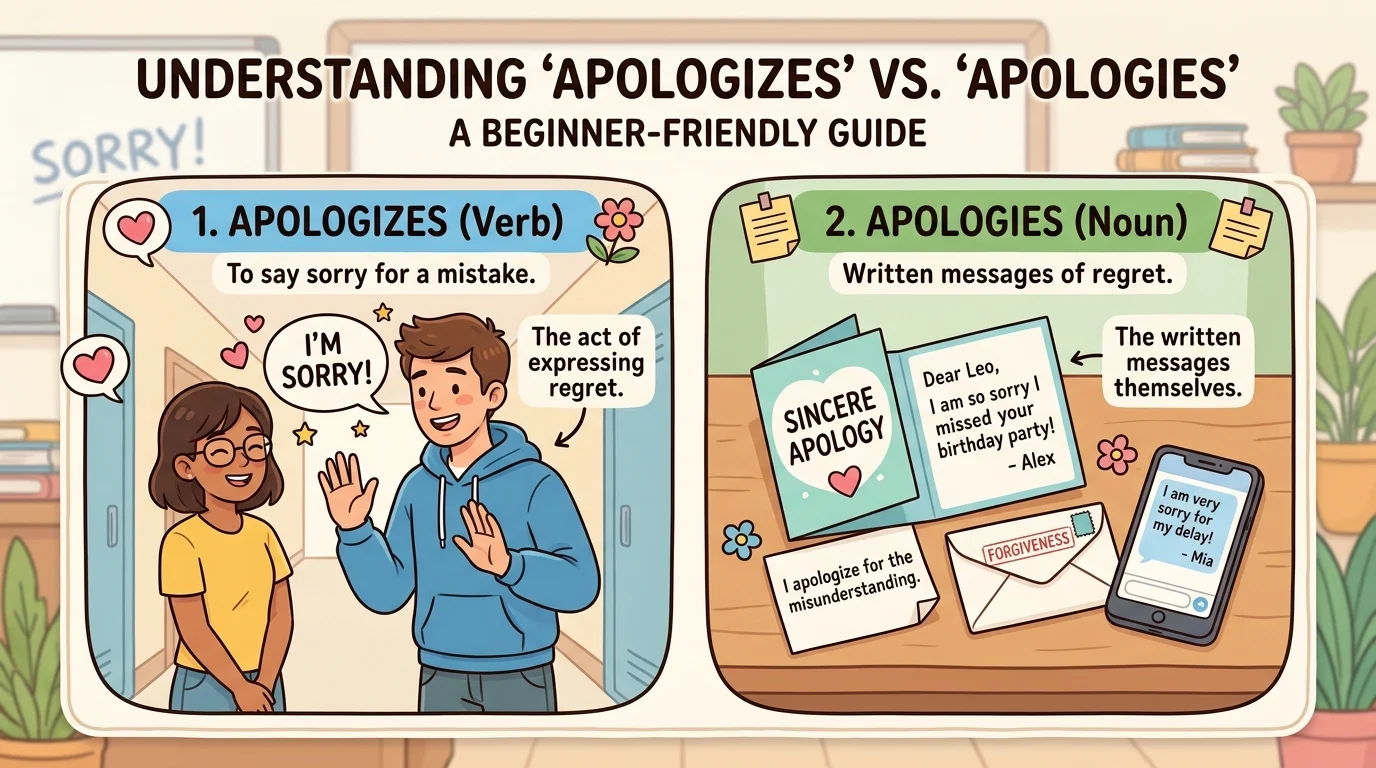
Apologizes is a verb.
It means:
- Someone says sorry
- Someone expresses regret
It is used with:
- he
- she
- it
Examples:
- She apologizes when she makes mistakes
- He apologizes to his teacher
- The company apologizes for the delay
This word shows an action.
What does “apologies” mean
Apologies is the plural form of apology.
It means:
- More than one apology
- Messages or expressions of regret
Examples:
- Please accept my apologies
- He sent apologies for missing the meeting
- Their apologies sounded sincere
This word names the apology itself.
Comparison Table
| Feature | Apologizes | Apologies |
|---|---|---|
| Type | Verb | Noun |
| Meaning | Says sorry | Expressions of regret |
| Used with | He, she, it | Singular or plural apology ideas |
| Example | She apologizes quickly | My apologies for the mistake |
Which One to Use and When
Use apologizes when:
- Talking about the action of saying sorry
Examples:
- He apologizes every time he is late
- She apologizes politely
Use apologies when:
- Referring to apology messages or regret
Examples:
- My apologies for the confusion
- We offer our apologies
Common Mistakes People Make
1. Using “apologies” as a verb
Wrong:
- She apologies for being late
Correct:
- She apologizes for being late
2. Using “apologizes” as a noun
Wrong:
- My apologizes for the error
Correct:
- My apologies for the error
3. Confusing grammar roles
Remember:
- apologizes = action
- apologies = thing or message
4. Spelling mistakes
Learners sometimes forget:
- apologize → apologizes
- apology → apologies
Everyday Real Life Examples
In Emails
- The manager apologizes for the delay
- My apologies for the late reply
In News
- The company apologizes to customers
- Public apologies were made after the mistake
On Social Media
- She apologizes openly when wrong
- Apologies for not posting yesterday
In Daily Conversations
- He apologizes often
- Please accept my apologies
Short Learning Section for Students and Beginners
1. Remember verb and noun
- apologizes = action
- apologies = thing
2. Look at the sentence
Ask:
- Is someone doing an action
or - Is it a message or expression
3. Practice simple examples
- He apologizes to his friend
- My apologies for the mistake
4. Focus on sentence structure
If someone is performing the action:
Use apologizes
If talking about the apology itself:
Use apologies
FAQ Section
1. What does “apologizes” mean
It means someone says sorry.
2. What does “apologies” mean
It means expressions or messages of regret.
3. Is “she apologies” correct
No.
Correct form:
- She apologizes.
4. Can “apologies” be singular
No. The singular form is “apology.”
5. Which word is a verb
Apologizes.
6. Which word is a noun
Apologies.
7. Why do learners confuse these words
Because they come from the same root word and look similar.
8. How can I remember the difference
Remember:
- apologizes = action
- apologies = message or regret
Conclusion
The difference between apologizes and apologies becomes easy once you understand grammar roles.
- Apologizes is a verb showing the action of saying sorry
- Apologies is a noun referring to apology messages or expressions
A simple memory trick:
- action = apologizes
- message = apologies
With practice and simple examples, you can use both words correctly and confidently.