Many English learners confuse relieve and relief because both words are closely connected in meaning. They are often used in situations involving pain, stress, worry, or help, so people sometimes use the wrong form in sentences.
The difference is actually simple. One word is a verb that describes an action, while the other is a noun that names the feeling or result.
This guide explains everything in very easy English with clear examples and beginner friendly tips.
Quick Answer
- Relieve is a verb
- Relief is a noun
- Relieve means to reduce pain, stress, or worry
- Relief means the feeling of comfort after pain or stress ends
Simple Origin or Background
Both words come from old Latin and French roots related to helping, easing pain, and making things better.
Over time, English created:
- relieve for the action
- relief for the result or feeling
Because the words look and sound similar, learners often confuse them.
Clear Explanation of the Difference
What does “relieve” mean
Relieve is a verb.
It means:
- To reduce pain, stress, pressure, or worry
- To make someone feel better
Examples:
- This medicine can relieve pain
- Talking to her relieved my stress
- A vacation may relieve tiredness
This word describes an action.
What does “relief” mean
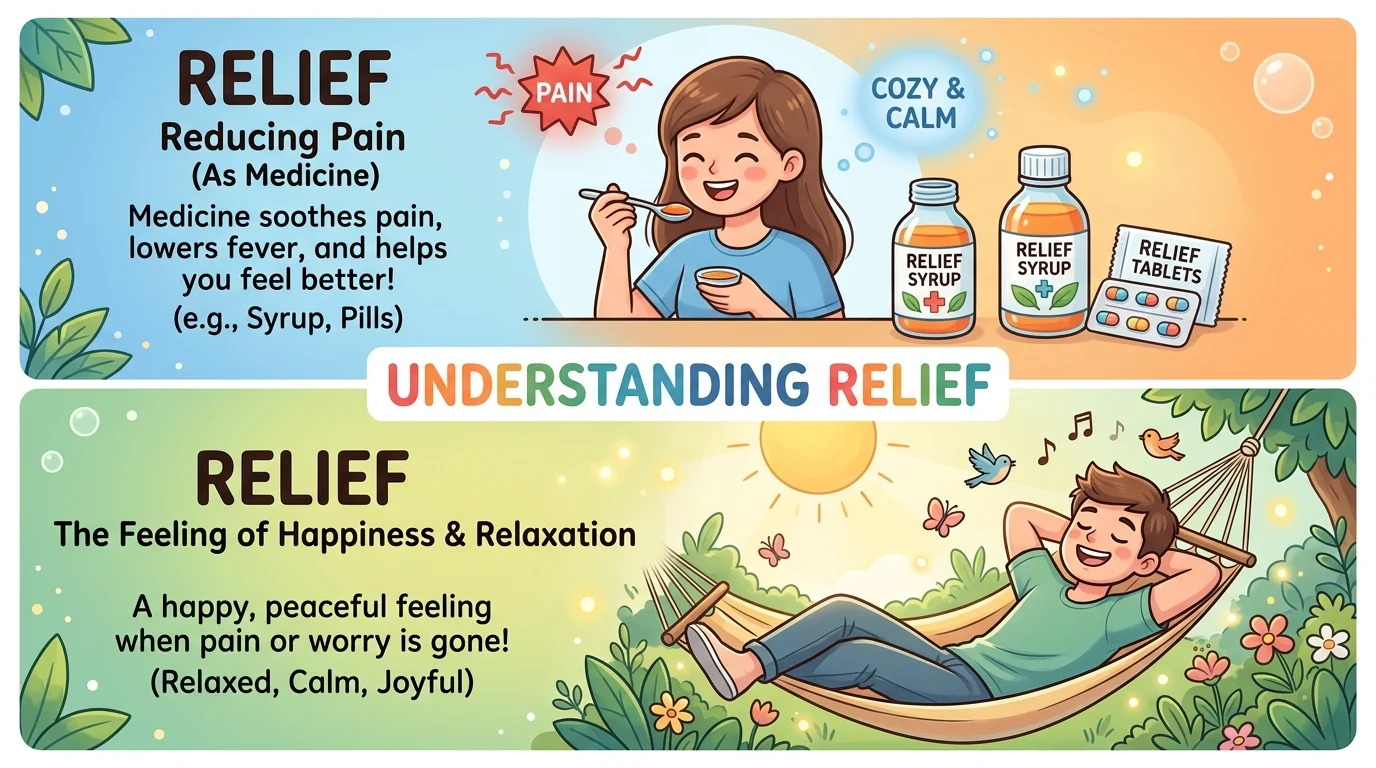
Relief is a noun.
It means:
- The feeling of comfort after pain, stress, or worry becomes less
- Help given during difficult situations
Examples:
- I felt relief after the exam ended
- The medicine brought quick relief
- Relief workers helped the families
This word names the feeling or result.
Comparison Table
| Feature | Relieve | Relief |
|---|---|---|
| Type | Verb | Noun |
| Meaning | Reduce pain or stress | Comfort after pain or stress |
| Shows | Action | Result or feeling |
| Example | The medicine relieves pain | I felt relief afterward |
Which One to Use and When
Use relieve when:
- Talking about reducing pain or stress
- Describing an action
Examples:
- Exercise can relieve stress
- The doctor relieved his pain
Use relief when:
- Talking about comfort or help
- Naming the feeling after difficulty ends
Examples:
- She sighed with relief
- We felt relief after hearing the news
Common Mistakes People Make
1. Using “relief” as a verb
Wrong:
- This medicine reliefs pain
Correct:
- This medicine relieves pain
2. Using “relieve” as a noun
Wrong:
- I felt relieve after the test
Correct:
- I felt relief after the test
3. Confusing action and result
Remember:
- relieve = action
- relief = feeling or result
4. Spelling mistakes
Learners sometimes forget:
- relieve ends with “eve”
- relief ends with “ief”
Everyday Real Life Examples
In Emails
- We hope this solution relieves the problem
- Thank you for your quick relief support
In News
- Aid groups worked to relieve suffering
- Flood relief arrived quickly
On Social Media
- Music helps relieve my stress
- What a relief the weekend is here
In Daily Conversations
- This tea relieves headaches
- I felt relief after talking to him
Short Learning Section for Students and Beginners
1. Remember verb and noun
- relieve = action
- relief = feeling
2. Think about sentence meaning
Ask:
- Is someone doing an action
or - Is it the result or comfort feeling
3. Practice simple examples
- The medicine relieved pain
- I felt relief afterward
4. Use memory tricks
- relieve = remove pain
- relief = comfort after pain
FAQ Section
1. What does “relieve” mean
It means to reduce pain, stress, or worry.
2. What does “relief” mean
It means comfort after pain or stress becomes less.
3. Which word is a verb
Relieve.
4. Which word is a noun
Relief.
5. Is “I feel relieve” correct
No.
Correct:
- I feel relief.
6. Can “relief” mean help during disasters
Yes.
Example:
- Relief workers helped the victims.
7. Why do learners confuse these words
Because they are closely related in meaning and spelling.
8. How can I remember the difference
Remember:
- relieve = action
- relief = feeling or result
Conclusion
The difference between relieve and relief becomes simple once you understand grammar roles.
- Relieve is a verb that describes reducing pain or stress
- Relief is a noun describing comfort or help after difficulty ends
A simple memory trick:
- relieve = action
- relief = result
With practice and simple examples, you can use both words correctly and confidently.