“Either” and “neither” often confuse learners because they are used in similar situations. Both are about choices, but they do not mean the same thing.
The difference is actually very simple once you understand it.
Let’s break it down in easy English so you can use both words correctly.
Quick Answer
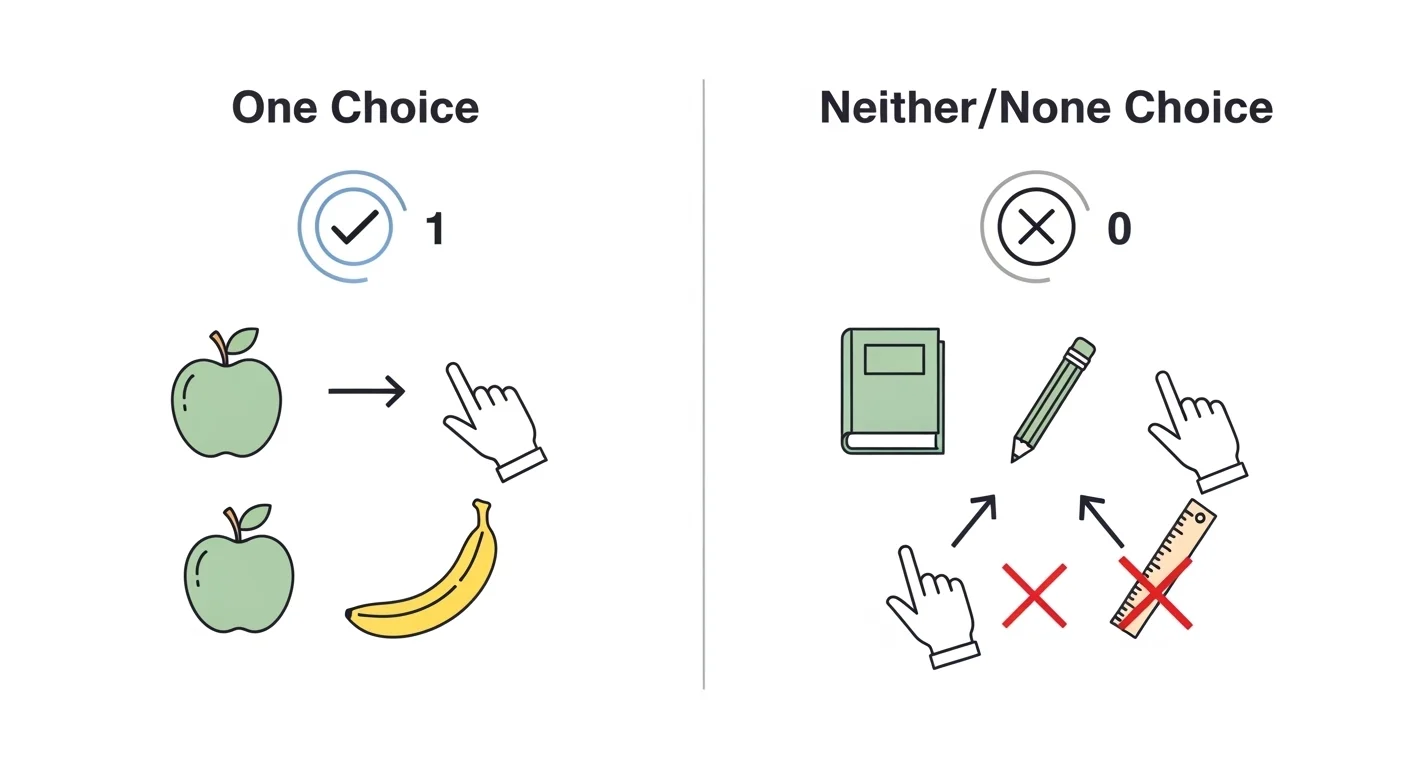
- “Either” means one or the other
- “Neither” means not one and not the other
- “Either” is positive
- “Neither” is negative
- Both are used when talking about two choices
Simple Background Explanation
Both words come from old English words related to “two.”
- “Either” developed to show a choice between two options
- “Neither” developed to show rejection of both options
That is why they are often used together but have opposite meanings.
Clear Explanation of the Difference
Let’s make it very simple.
“Either”
This word means one of two choices.
Examples:
- You can choose either option.
- Either tea or coffee is fine.
“Neither”
This word means not one and not the other.
Examples:
- Neither option is good.
- I like neither tea nor coffee.
So the difference is about choosing vs rejecting.
Comparison Table
| Word | Meaning | Type | When to Use |
|---|---|---|---|
| Either | One of two choices | Positive | Choosing one |
| Neither | Not one and not the other | Negative | Rejecting both |
What “Either” Means
“Either” is used when:
- You have two choices
- One of them is acceptable
Examples:
- You can sit on either chair.
- Either answer is correct.
- I can come either day.
What “Neither” Means
“Neither” is used when:
- You reject both choices
- You do not accept any option
Examples:
- Neither answer is correct.
- I like neither option.
- Neither of them is here.
Which One to Use and When
Use “either” when:
- Talking about two choices
- You accept one option
Examples:
- You can pick either one.
- Either road will take you there.
Use “neither” when:
- Talking about two choices
- You reject both
Examples:
- Neither road is safe.
- Neither answer is right.
Easy Trick to Remember
Here is a simple trick:
Either = one
Neither = none
Memory tip:
Neither starts with “ne” like “no”
Why People Get Confused
Here are the main reasons:
Similar structure
Both are used with two options.
Opposite meanings
Easy to mix them up.
Grammar patterns
Using “either or” and “neither nor.”
Listening confusion
They sound similar.
Common Mistakes to Avoid
Here are mistakes to watch for:
Using “either” when you mean none
- Either of them is wrong ❌
Using double negative
- I don’t like neither ❌
Correct vs incorrect examples:
- Neither of them is correct ✔️
- Either of them is correct ❌
- I like neither ✔️
- I don’t like neither ❌
Everyday Real Life Examples
Here are simple examples from daily life.
In conversation:
- You can choose either one.
- I like neither option.
At school:
- Either answer is fine.
- Neither answer is correct.
At home:
- You can sit either here or there.
- Neither room is clean.
In daily life:
- Either day works for me.
- Neither day works for me.
Easy Learning Section for Beginners
Here is a simple trick:
Ask yourself:
One or none?
Memory tip:
Either = one
Neither = none
Practice sentences:
- You can choose either
- I like neither
- Either option is fine
Mini exercise:
Fill in the blanks:
- You can choose ______ option
Answer: either - I like ______ of them
Answer: neither - ______ answer is correct
Answer: Either
Frequently Asked Questions
1. What is the difference between “either” and “neither”
“Either” means one of two, while “neither” means none of the two.
2. Can I use them interchangeably
No, they have opposite meanings.
3. What does “either or” mean
It shows a choice between two options.
4. What does “neither nor” mean
It shows rejection of both options.
5. Why are they confusing
Because they are used in similar situations.
6. Is this mistake common
Yes, very common.
7. How can I remember the difference
Think one vs none.
8. Will this mistake affect my writing
Yes, it can change meaning.
Conclusion
The difference between “either” and “neither” is simple.
“Either” is used when choosing one option.
“Neither” is used when rejecting both options.
Just remember:
Either = one
Neither = none
With this simple rule, you can use both words correctly and confidently.